
BY:SpaceEyeNews.
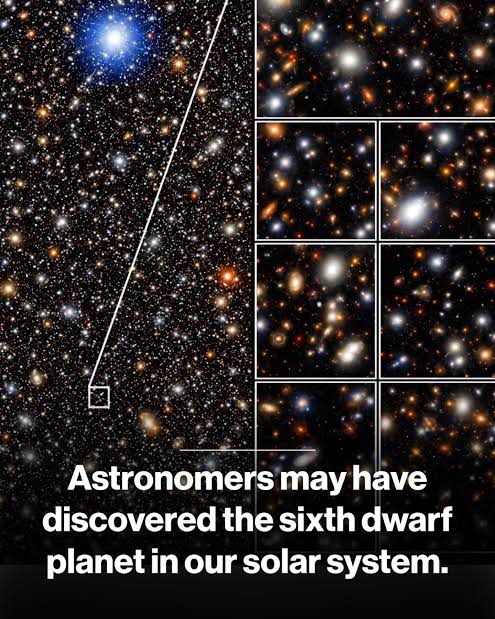
2026 ED138 spent years crossing telescope images without anyone recognizing the world behind those faint points of light. Now, astronomers have identified it as a large icy body beyond Neptune. Its estimated diameter stretches from 600 to 1,500 kilometers, making it a compelling dwarf planet candidate.
The discovery raises an immediate question: how could something so large escape attention for so long? The answer involves crowded skies, powerful software, and a search through forgotten observations. Together, those clues reveal an overlooked object with a measurable history. However, its exact size and possible place among the officially recognized dwarf planets remain unresolved.
Why 2026 ED138 Stayed Hidden
Distance alone does not explain this discovery’s delay. The object appeared near the plane of the Milky Way, where dense fields of stars complicate searches. Against that busy background, astronomers must distinguish a moving solar system body from countless unrelated sources.
A single image offers limited help. Repeated observations reveal changes in position, but software must connect the correct detections across different nights. Crowding makes that task harder, even when an object produces enough light for telescopes to record it.
Rubin Observatory combines repeated imaging with algorithms that identify movement across enormous datasets. That combination helped researchers recognize a pattern that earlier observations had not revealed.
Consequently, “hidden in plain sight” describes an overlooked signal within astronomical images. It does not mean people could have spotted this distant world without a telescope. The evidence existed; researchers needed a reliable way to connect it.
A Discovery Built From Earlier Observations
On October 13, 2026, astronomer Matthew Holman examined Rubin data collected earlier that year. He used search code developed with colleague Kevin Napier to link detections belonging to the same moving object.
One result stood out. Its brightness, combined with its distance, suggested an unusually large body. Holman checked the result carefully before the team pursued additional evidence.
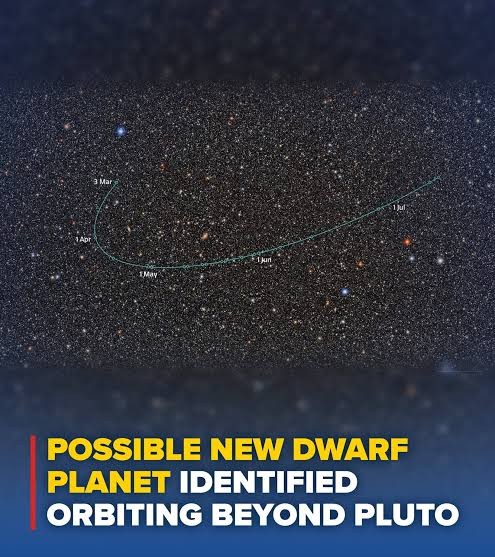
University of Washington astronomer Mario Jurić then searched Rubin’s catalogs and images. He recovered 20 additional observations extending back to March. In total, Rubin had recorded the object 30 times across 20 nights between March 4 and July 11.
The team announced the discovery on October 27, 2026. That date marks the public announcement, rather than the moment Rubin first captured the object.
Archives Extended the Orbital Record
Researchers also located earlier detections in Dark Energy Camera images dating to 2016. Those observations extended the available orbital record beyond ten years.
Astronomers call this process precovery: finding an object in images taken before its recognized discovery. Here, it supplied years of positional evidence immediately. The team could trace a much longer orbital path without waiting for another decade of observations.
How Large Is 2026 ED138?
The current estimate spans 600 to 1,500 kilometers across. That wide range reflects uncertainty about surface reflectivity, rather than doubt that the object exists.
A bright surface reflects more sunlight than a dark one. Therefore, a smaller reflective body can produce similar apparent brightness to a larger, darker body. Researchers must account for that difference when converting observed light into a size estimate.
Descriptions of a world roughly 1,000 kilometers wide offer a useful sense of scale. However, that figure is not a precise measurement. The full estimated range remains essential to understanding the discovery.
That distinction also matters when comparing it with other distant worlds. A firmer diameter would make those comparisons more meaningful. For now, brightness offers an important clue, but it leaves several physical possibilities open.
At present, the object sits approximately 46 astronomical units from the Sun. This exceeds Pluto’s average solar distance of about 40 astronomical units. Nevertheless, the comparison concerns its current location; it should not imply that both objects maintain fixed distances throughout their orbits.
Why Dwarf Planet Status Remains Open
An icy body within this size range could have enough gravity to become nearly round. That possibility makes the object a strong candidate for dwarf planet classification.
Yet an estimated diameter does not directly establish its shape or internal structure. Further measurements must clarify its physical properties. Official recognition also remains distinct from discovering and tracking the object.
For now, the accurate description is “dwarf planet candidate.” It could join Pluto, Ceres, Eris, Haumea, and Makemake on the officially recognized roster. Calling it the confirmed sixth dwarf planet would go beyond the evidence.
An Orbit With Clues to the Past
The scientific interest extends beyond the possibility of a new classification. Distant objects preserve information about the solar system’s development, including the gravitational influence of its giant planets.
This candidate follows an orbit tilted nearly 25 degrees relative to the solar system’s plane. Rubin’s discovery announcement links that inclination to possible past gravitational interactions with Neptune.
Such an interpretation helps researchers investigate how distant populations acquired their present orbits. It does not provide a complete account of this object’s individual history.
Comparing its orbit with those of other bodies may reveal broader patterns. Meanwhile, future measurements of its surface could add another line of evidence. Together, orbital and physical information can help astronomers evaluate possible origins more effectively than either approach alone.
What Scientists Need to Measure Next
The immediate priority is narrowing the size estimate. Rubin’s announcement highlights infrared observations as a way to constrain the object’s dimensions and assess its nature.
Better measurements would reduce uncertainty about reflectivity and strengthen the physical case for dwarf planet status. Until then, researchers should retain the estimated size range rather than promote a single value as settled.
The discovery also demonstrates why repeated surveys matter. Rubin plans to observe the southern sky over ten years, creating opportunities to identify additional overlooked bodies.
Each discovery can then lead researchers back into existing archives. This combination gives new observations greater reach: identifying an object today can unlock evidence collected years earlier.
Still, one successful detection does not establish how many comparable worlds remain undiscovered. Future searches must answer that question through observations.
2026 ED138 Expands the Search
2026 ED138 shows that even a substantial nearby world, by astronomical standards, can remain unrecognized in existing data. Its discovery combines careful software analysis with the lasting value of telescope archives.
The next stage will determine its physical properties more precisely. Whether it gains official dwarf planet status or remains a candidate, astronomers now have another important object to investigate. The outer solar system still holds discoveries within both new images and old ones.
Main Sources:
University of Washington — Rubin Observatory reveals its first dwarf planet candidate in our solar system:
https://www.washington.edu/news/2026/10/27/rubin-observatory-new-dwarf-planet-candidate/
Rubin Observatory — NSF–DOE Vera C. Rubin Observatory Reveals Its First Dwarf Planet Candidate in Our Solar System:
https://rubinobservatory.org/news/rubin-first-dwarf-planet-candidate
U.S. National Science Foundation — New dwarf planet candidate discovered by NSF–DOE Rubin Observatory:
https://www.nsf.gov/news/new-dwarf-planet-candidate-discovered-nsf-doe-rubin
Center for Astrophysics | Harvard & Smithsonian — New Dwarf Planet Candidate Discovered in Our Solar System:
https://www.cfa.harvard.edu/news/new-dwarf-planet-candidate-discovered-our-solar-system
You Might Also Like:
Planetary-Mass Brown Dwarf Shows Signs of a World-Building Disk
Red Dwarf Stars Consume Earth-Like Planets, Astronomers Find New Evidence
HIP 61637 b Brown Dwarf Challenges Formation Models