
BY:SpaceEyeNews.
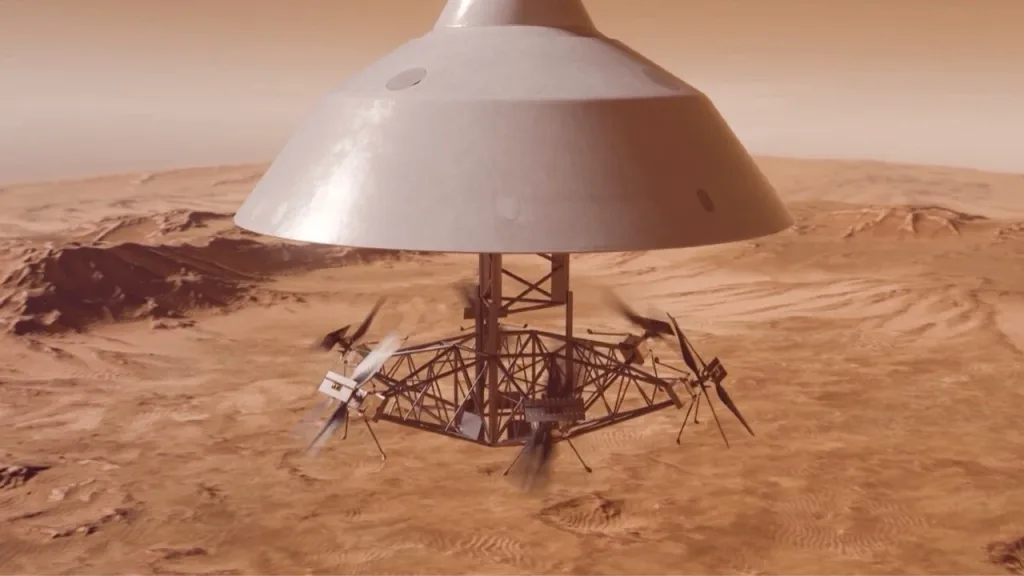
The NASA nuclear spacecraft Mars mission marks a major shift in how space agencies approach deep space travel. NASA has confirmed that its Skyfall mission will launch in 2028. This mission will use a nuclear-powered spacecraft called SR-1 Freedom. It will carry a fleet of advanced helicopters to Mars.
This is not just another mission. It introduces a new propulsion system and a new exploration strategy. The goal is clear. Prepare Mars for future human exploration using smarter tools and stronger technology.
🛰️ Skyfall Mission in the NASA Nuclear Spacecraft Mars Mission
From Ingenuity to Operational Exploration
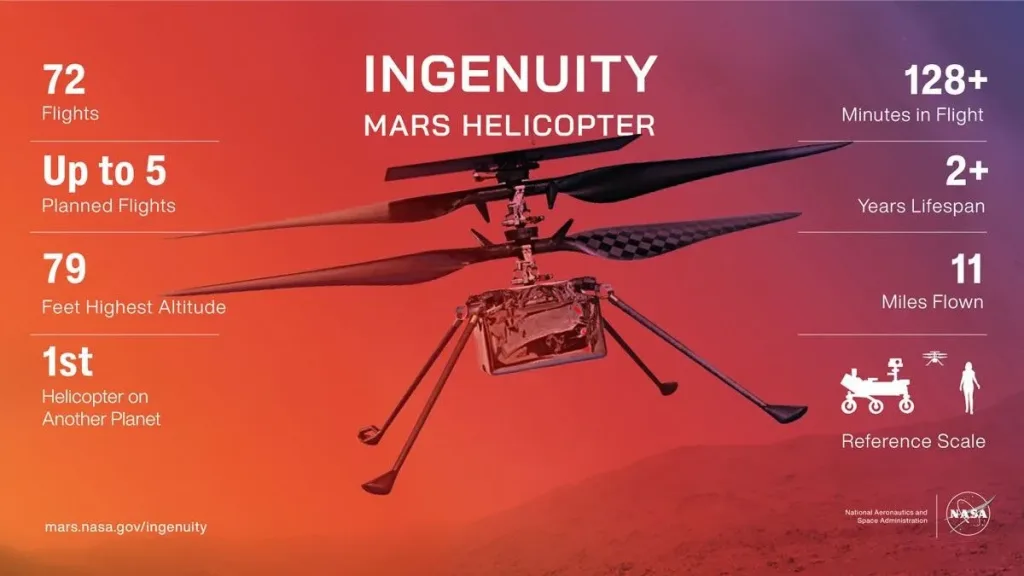
The NASA nuclear spacecraft Mars mission builds on earlier success. The Ingenuity helicopter proved that powered flight works on Mars. It completed dozens of flights and showed that aerial exploration is possible.
Skyfall takes this idea further. It is not a test. It is a mission with clear objectives. NASA plans to deploy multiple helicopters instead of one. This creates a system that can cover more ground quickly.
Advanced Capabilities for Real Tasks
Each helicopter will carry cameras and ground-penetrating radar. These tools allow detailed mapping of the Martian surface. They also help detect what lies beneath it.
Water ice is a key target. It is essential for future missions. It can support life systems and fuel production. Finding it is a major step toward long-term presence on Mars.
Faster and Smarter Exploration
Rovers move slowly across rough terrain. Helicopters can fly over obstacles and scan wide areas in less time. This gives mission planners better data faster.
They can identify safe landing zones for future spacecraft. They can also detect hazards such as steep slopes and unstable ground.
Preparing Mars for Future Missions
This part of the NASA nuclear spacecraft Mars mission focuses on preparation. It is not just about discovery. It is about enabling future missions to succeed.
NASA is moving from exploration to planning infrastructure. Skyfall plays a key role in that transition.
⚛️ SR-1 Freedom in the NASA Nuclear Spacecraft Mars Mission
What Makes SR-1 Freedom Different
At the center of the NASA nuclear spacecraft Mars mission is SR-1 Freedom. This spacecraft uses nuclear electric propulsion. This is very different from traditional systems.
Instead of relying on solar panels, it uses a nuclear reactor. The reactor generates electricity. That electricity powers efficient electric thrusters.
How Nuclear Electric Propulsion Works
The system operates in a simple but powerful way. The reactor produces thermal energy. That energy converts into electricity. The electricity then drives ion thrusters.
These thrusters provide steady and efficient propulsion over long periods. This allows the spacecraft to travel farther with less fuel.
Advantages Over Traditional Systems
Solar-powered spacecraft depend on sunlight. As distance increases, power decreases. This limits mission capabilities.
Nuclear propulsion removes that limitation. It works at any distance from the Sun. This makes it ideal for deep space missions.
It also supports longer mission durations. Spacecraft can operate for years without major power loss.
A Platform for Future Missions
SR-1 Freedom is more than a transport system. It serves as a test platform for future technologies. NASA aims to establish a foundation for long-term exploration.
This includes setting technical standards and building experience with nuclear systems in space.
The NASA nuclear spacecraft Mars mission uses SR-1 Freedom as a stepping stone toward more advanced missions across the solar system.
🌌 Strategic Importance of the NASA Nuclear Spacecraft Mars Mission
A Shift Toward Long-Term Exploration
The NASA nuclear spacecraft Mars mission reflects a broader change in strategy. Space missions are no longer isolated events. They are part of a long-term plan.
NASA is focusing on sustainability. It aims to create systems that support continuous exploration.
Connection to the Artemis Program
This mission aligns with NASA’s Artemis program. The goal of Artemis is to build a lasting presence on the Moon. This will serve as a testing ground for Mars missions.
Instead of focusing only on orbiting stations, NASA is prioritizing surface infrastructure. This approach prepares for long-duration missions.
Building Space Infrastructure
Skyfall and SR-1 Freedom contribute to a larger system. This system includes propulsion, scouting, and resource identification.
These elements form the backbone of future exploration. They allow missions to build on each other instead of starting from scratch.
Extending Missions Beyond Mars
There is also potential for extended use. After delivering the Skyfall helicopters, SR-1 Freedom could continue its journey. It may explore deeper regions of the solar system.
This flexibility highlights the value of nuclear propulsion. It supports missions that go beyond a single destination.
Toward a Space Economy
The NASA nuclear spacecraft Mars mission also supports the idea of a space economy. Reliable systems enable repeated missions. This creates opportunities for long-term activity in space.
It moves exploration closer to continuous presence rather than occasional visits.
🎯 Conclusion: NASA Nuclear Spacecraft Mars Mission Signals the Future
The NASA nuclear spacecraft Mars mission introduces two major breakthroughs. First, the Skyfall helicopters bring a new way to explore Mars. They provide faster and more detailed data. They also prepare the planet for future missions.
Second, SR-1 Freedom introduces nuclear electric propulsion. This technology enables longer missions and greater flexibility. It removes key limitations of current systems.
Together, these innovations mark a turning point. NASA is not just exploring Mars. It is building the foundation for future exploration across the solar system.
The real impact goes beyond this mission. It shows how space travel is evolving toward sustainability and long-term presence.