
BY:SpaceEyeNews.
Astronomers have spent decades searching for the Universe’s first stars. None has been directly confirmed so far. Now, a newly studied object called Ancient Star PicII-503 may offer the next best thing. Hidden inside the relic dwarf galaxy Pictor II, this rare star appears to preserve the chemical imprint left behind by some of the earliest stars ever formed.
That is what makes this discovery stand out. Ancient Star PicII-503 is not just another old star. It may be one of the clearest surviving records of how the first light in the cosmos began to reshape the young Universe.
Ancient Star PicII-503 May Trace the First Stars
The earliest stars, known as Population III stars, formed when the Universe was still chemically simple. At that stage, space contained almost only hydrogen and helium. Those first stars likely lived fast and disappeared early. Because of that, astronomers do not expect many, if any, to have survived to the present day.
That is why Ancient Star PicII-503 matters so much. It is not believed to be a first-generation star itself. Instead, researchers think it formed soon after the first stars ended their lives. In effect, it may preserve the material they left behind.
That distinction is important. Scientists may still not have found a true Population III star, but they may have found a stellar fossil that carries the chemical evidence of that lost generation. This shifts the story from simple age to something more powerful: origin.
Ancient Star PicII-503 Shows Extreme Chemical Poverty
What makes Ancient Star PicII-503 extraordinary is its elemental makeup. It contains an exceptionally low amount of iron, making it the most iron-poor star yet identified outside the Milky Way. That alone places it among the most chemically ancient stars ever discovered.
In astronomy, a lack of heavy elements usually points to great age. As generations of stars form and fade, they enrich space with heavier elements. Younger stars therefore tend to contain more metals. Older stars contain less. In the case of Ancient Star PicII-503, the iron shortage is so extreme that it suggests the star formed very early, before many rounds of chemical enrichment had taken place.
But the chemistry becomes even more revealing when carbon enters the picture. Despite its severe lack of iron and calcium, the star appears strongly enhanced in carbon. That imbalance is not random. It points to a very specific kind of origin.
Researchers believe the gas that formed Ancient Star PicII-503 may have been enriched by a faint early supernova. In that scenario, lighter elements such as carbon escaped into the surrounding gas, while much of the heavier iron fell back into the stellar remnant. The result was a chemically unusual environment from which this star was born.
That makes Ancient Star PicII-503 more than an extreme data point. Its chemistry may preserve direct evidence of how one of the earliest stellar explosions unfolded.
Ancient Star PicII-503 Gains Value From Pictor II
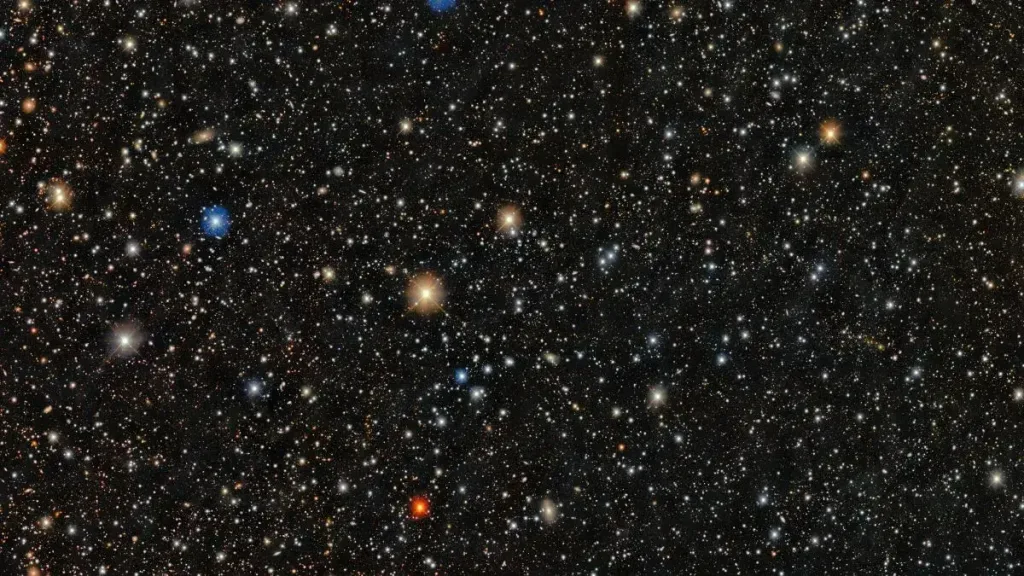
The discovery would already be remarkable based on chemistry alone. But its location makes it even more valuable. Ancient Star PicII-503 was found inside Pictor II, an ultra-faint dwarf galaxy that appears to be a relic from the early Universe.
These tiny galaxies matter because they are much simpler than large systems like the Milky Way. They contain very old stars and usually show limited chemical evolution. In other words, they preserve ancient conditions better than large galaxies shaped by billions of years of mergers, inflows, and internal mixing.
That gives astronomers something rare: context.
Many ancient stars in the Milky Way halo are also chemically simple. However, the Milky Way has absorbed smaller galaxies over a very long time. That makes it harder to know where those stars originally formed or what kind of environment shaped them. Ancient Star PicII-503 offers a cleaner case because it still appears to sit within the small relic galaxy that preserves its history.
Pictor II is not just the place where the star was found. It is part of the reason the finding is so important. The galaxy acts like a cosmic time capsule. It preserves not only an ancient star, but also the kind of early setting in which the first chemical enrichment took place.
Ancient Star PicII-503 Points to a Faint Supernova
One of the most compelling parts of this discovery is what it suggests about the death of an earlier star. The chemical pattern in Ancient Star PicII-503 fits the idea of a weak or faint supernova in the early Universe.
That matters because not all stellar explosions enrich their surroundings in the same way. A high-energy explosion can throw heavy elements far into space. In a tiny galaxy like Pictor II, much of that material could even escape the system entirely. But a weaker explosion behaves differently. Lighter elements can spread outward while heavier ones fall back inward.
That seems to match what astronomers see here.
The strong carbon signal and extreme iron shortage suggest that Ancient Star PicII-503 formed from gas enriched by exactly this kind of event. If that interpretation holds, the star is effectively preserving the aftermath of one of the earliest known enrichment episodes in an early galaxy.
This is where the discovery becomes especially powerful. It does not show us the first stars directly. It shows us the kind of chemical trail they may have left behind. For researchers studying the first stages of cosmic evolution, that is a major advantage.
Ancient Star PicII-503 May Explain Halo Star Origins
The importance of this discovery may extend far beyond Pictor II. The Milky Way halo contains some of the oldest and most metal-poor stars known. Many of them also show unusually strong carbon relative to iron. Astronomers have long tried to understand where those stars came from and what kind of early events produced their chemistry.
Ancient Star PicII-503 offers a valuable clue. It strengthens the idea that at least some of the Milky Way’s oldest halo stars may have originated in small dwarf galaxies that were later absorbed by our galaxy. If so, relic systems like Pictor II may preserve the original environments that created the stars we now see scattered through the halo.
That creates an important bridge between near-field archaeology and early-Universe cosmology. By studying tiny ancient galaxies, astronomers may be able to reconstruct the first episodes of element production that later shaped much larger systems.
In that sense, Ancient Star PicII-503 is not only a story about one rare star. It may also help explain part of the Milky Way’s deepest ancestry.
Ancient Star PicII-503 Offers a Rare Early-Universe Record
The strongest part of this discovery is its clarity. Ancient Star PicII-503 is not being presented as a direct first-generation star, and that distinction matters. But it may be one of the clearest second-generation stars ever identified in such an early environment. Its chemistry makes sense. Its location makes sense. And together, they tell a larger story about the earliest transition from a simple Universe to a chemically richer one.
That is why this finding deserves attention. Ancient Star PicII-503 may preserve one of the best surviving records of how the first stars changed the cosmos. Inside the tiny relic dwarf galaxy Pictor II, astronomers may have found a rare observational bridge between the cosmic dark ages and the structured Universe that followed.
For a field still chasing the first stars themselves, that is a meaningful step forward.
Main Sources
NOIRLab coverage of the discovery: https://noirlab.edu/public/news/noirlab2607/
University of Chicago coverage of the study: https://news.uchicago.edu/story/ancient-star-opens-window-early-days-universe
Research preprint describing PicII-503: https://arxiv.org/html/2508.04053v1
Background on relic dwarf galaxies and early chemical enrichment: https://arxiv.org/abs/1010.1261