BY:SpaceEyeNews.
Optical Satellite Navigation System Enters a New Era
The optical satellite navigation system is quickly emerging as a breakthrough in positioning technology. Instead of relying on radio signals, this system uses coded light beams from satellites to determine location with high precision.
That shift matters more than it may seem. Today’s navigation systems power everything from smartphones to advanced transport and space missions. Yet, in complex environments, their performance can weaken. As a result, researchers are now exploring alternatives that can maintain accuracy where traditional systems struggle.
This is where the optical satellite navigation system stands out. It introduces a new way to calculate position, opening the door to more reliable navigation across Earth and beyond.
How Optical Satellite Navigation System Works
Light-Based Positioning Explained
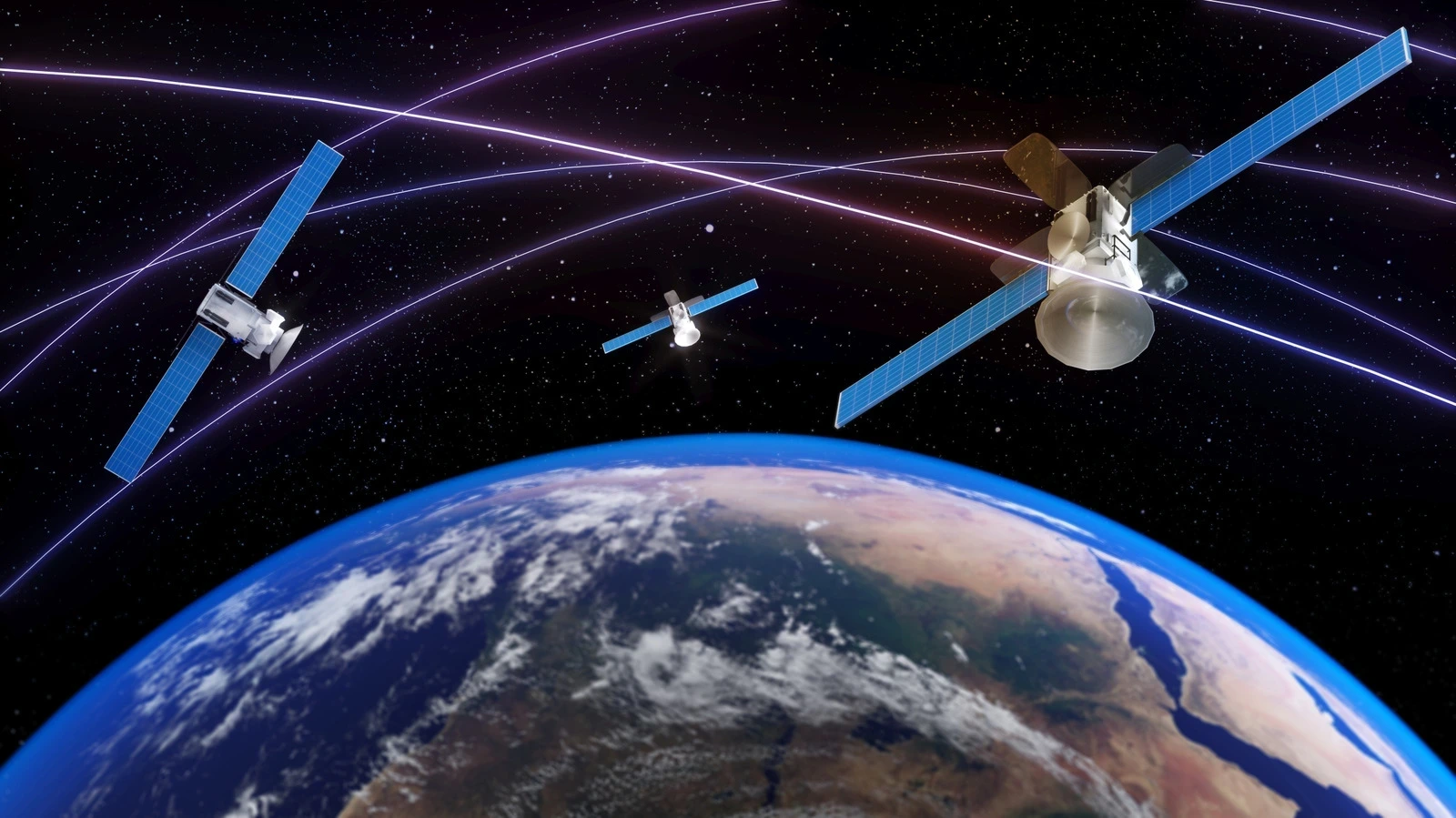
The optical satellite navigation system replaces radio waves with directed light signals. A network of satellites acts as “lighthouses in space,” emitting coded beams toward Earth. Receivers detect the direction of these beams and calculate their position based on geometry rather than timing alone.
This approach changes the foundation of navigation. Traditional systems measure how long signals take to arrive. In contrast, this system focuses on where the signal comes from. That difference allows for more precise positioning and reduces errors linked to signal distortion.
From Concept to Scalable System
Development of the optical satellite navigation system spans more than two decades. Early research focused on basic orientation in space. Over time, the technology evolved into a complete positioning system capable of supporting multiple satellites.
A major milestone came with the miniaturization of optical sensors. Engineers reduced them from heavy components to compact units weighing only grams. This made large-scale deployment possible and allowed the system to expand into a network of approximately 11 satellites.
The technology has also moved beyond research. Standardized aerospace products based on this system have already reached international markets, confirming its practical value.
Why Light Improves Accuracy
Light travels in straight, narrow paths, which limits signal spread. This improves precision and reduces interference compared to radio signals. Because the beams are highly directional, positioning becomes more stable and predictable.
In simple terms, the optical satellite navigation system delivers cleaner signals and sharper results. It adds a new layer of accuracy that traditional methods cannot fully achieve.
Why Optical Satellite Navigation System Matters Now
Limits of Traditional Navigation Systems
Modern positioning depends on systems such as GPS and BeiDou, both of which rely on radio signals transmitted from satellites. These systems are highly capable, but they share a key limitation. Radio signals weaken over distance and can be affected by surrounding environments.
In dense cities, signals may reflect off buildings and reduce accuracy. Underground spaces can block signals entirely. These challenges highlight the need for complementary solutions that can operate under different conditions.
Rising Demand for Reliable Positioning
Demand for precise navigation is increasing rapidly. Autonomous vehicles, drones, and intelligent systems require consistent accuracy to function effectively. Even small positioning errors can affect performance in complex environments.
The optical satellite navigation system addresses this need by providing an additional layer of positioning. It does not replace existing systems. Instead, it enhances reliability by offering an alternative method that operates independently of radio signals.
Real-World Applications Expanding
Optical navigation has already proven useful in environments where traditional signals are limited. This demonstrates its potential beyond theoretical research. As infrastructure becomes more advanced, multi-layer navigation will become essential.
The optical satellite navigation system fits naturally into this future. It strengthens positioning capabilities and supports the next generation of intelligent systems.
Future of Optical Satellite Navigation System
Expanding Beyond Earth
One of the most promising aspects of the optical satellite navigation system is its role in space exploration. Traditional systems do not extend beyond Earth’s orbit, creating challenges for missions traveling farther into space.
Light-based navigation introduces a new solution. Spacecraft can use optical signals as reference points, enabling more accurate positioning during critical . Even a single light-emitting satellite could serve as a navigation beacon.
Building on Proven Techniques
Optical navigation is not entirely new. Previous missions have used visual systems to guide spacecraft during landing. The current system advances this concept by introducing active light signals, which improve control and reduce uncertainty.
This evolution represents a shift from passive observation to active navigation, increasing both precision and reliability.
Integration with Earth Infrastructure
Back on Earth, the optical satellite navigation system can integrate with communication networks to support navigation in challenging environments. This includes tunnels, dense urban areas, and indoor spaces.
Such integration creates a seamless experience across different environments. It also supports the growth of smart infrastructure and advanced mobility systems.
Challenges and Limitations
Despite its advantages, the system faces limitations. It requires a clear line of sight, which means weather conditions such as clouds can affect performance. Physical obstacles can also block signals.
For this reason, the optical satellite navigation system is designed to complement existing technologies. Combining multiple systems ensures greater reliability across all scenarios.
What This Breakthrough Means
The rise of the optical satellite navigation system reflects a broader shift in technology. Navigation is no longer built around a single solution. Instead, it is evolving into a layered system that combines multiple methods.
This approach increases resilience and ensures continuous operation across different environments. It also supports the rapid expansion of autonomous technologies and space exploration.
Rather than replacing existing systems, this innovation strengthens the entire navigation ecosystem.
Conclusion: A New Layer of Precision
The optical satellite navigation system marks a significant step forward in positioning technology. By using light instead of radio signals, it introduces a new method that enhances accuracy and reliability.
It will not replace GPS or similar systems. However, it adds a critical layer that improves performance where traditional methods fall short. As navigation continues to evolve, this technology could play a key role in shaping how we move, explore, and connect in the future.
Sources:
MSN / South China Morning Post:
https://www.msn.com/en-xl/news/other/lighthouses-in-space-the-chinese-jam-proof-satellite-network-to-fill-gps-gaps/ar-AA1ZGrm5
Beijing Youth Daily (via SCMP reporting)