
BY:SpaceEyeNews.
Introduction: A Rare Aircraft Appears at a Historic Moment
The NT-43A Artemis II mission has drawn attention after one of the most secretive aircraft in the United States appeared over Florida. Known as RAT55, this modified Boeing 737 rarely leaves restricted airspace. Yet, just before NASA’s Artemis II, it was flying near the Kennedy Space Center.
Such a sighting is far from routine. Instead, it points to something deeper. When a classified airborne platform joins a public space mission, it usually means one thing—precision matters more than ever.
NT-43A Artemis II Mission: What Is This Aircraft?
A Flying Sensor Platform Unlike Any Other
At first glance, the NT-43A looks like a standard airliner. In reality, it is anything but ordinary. Built on a Boeing 737-200 frame, the aircraft has been transformed into a high-end airborne measurement system.
Large radar arrays define its structure. A prominent radome extends from the rear, while the nose features major modifications. These additions allow it to collect extremely detailed data during flight.
Why It Rarely Appears in Public
Most operations involving the NT-43A take place far from public view. The aircraft is closely associated with secure testing locations and advanced aerospace programs.
Its primary mission focuses on analyzing radar signatures and supporting complex flight evaluations. Because of this, sightings are extremely uncommon.
That rarity is exactly what makes the NT-43A Artemis II mission so compelling. When this aircraft shows up, it is never случайно.
NT-43A Artemis II Mission Role Explained
Unusual Activity Over Florida
Flight tracking revealed the aircraft moving in controlled patterns around Kennedy Space Center. It followed a structured orbit near Launch Complex 39B before returning to base.
This type of flight profile is deliberate. It strongly suggests active support for mission preparation rather than routine transit.
What Artemis II Is Designed to Achieve
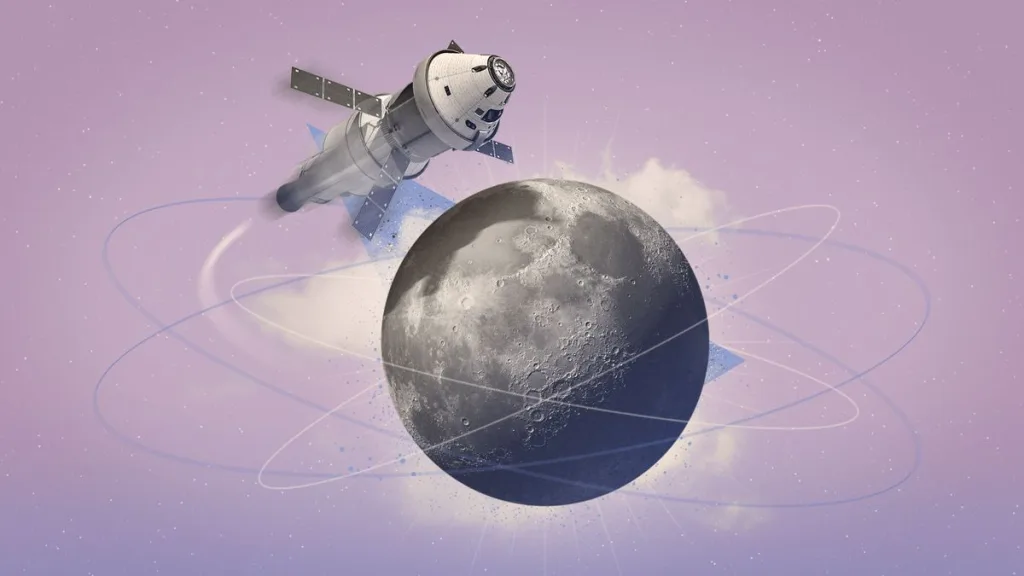
Artemis II will send four astronauts aboard the Orion spacecraft on a journey around the Moon. The mission is expected to last roughly nine and a half days.
Unlike future missions, it will not attempt a landing. Instead, it will validate systems and procedures needed for deeper lunar exploration.
Why NASA Might Need the NT-43A
NASA already operates specialized aircraft for launch observation. The WB-57F, for example, captures high-altitude imagery.
However, the NT-43A offers capabilities that go beyond visual tracking.
It enables:
- Precision radar measurements
- Infrared and thermal observation
- Advanced telemetry collection
Because of this, the NT-43A Artemis II mission likely fills critical data gaps that standard platforms cannot cover alone.
Advanced Data Collection During Launch
Capturing Critical Flight Behavior
Every launch produces a complex set of conditions. Engineers must understand how systems respond in real time.
The NT-43A can monitor:
- Surface temperature changes
- Structural stress patterns
- Material performance under extreme conditions
This level of detail helps refine both design and safety margins.
The Importance of Material Performance
Thermal protection plays a central role in any space mission. Even small variations can affect overall performance.
The NT-43A has a history of analyzing specialized coatings on advanced aircraft. That same capability can be applied to spacecraft and launch vehicles.
As a result, the NT-43A Artemis II mission may provide insight into how well critical materials perform during ascent.
NT-43A Artemis II Mission and NASA’s Operational Needs
Balancing Limited Resources
NASA’s fleet of high-altitude research aircraft is relatively small. Among them are three WB-57F planes.
Following a recent incident involving one of these aircraft, availability may have been affected. That situation could have influenced mission planning.
Adding Redundancy and Capability
Introducing the NT-43A expands the range of available tools. It also adds redundancy, which is essential during major missions.
Rather than relying on a single system, NASA can now combine multiple data sources.
This approach strengthens mission reliability. It also ensures that no critical detail is missed.
Historical Context: Military Support in Space Missions
From Apollo to Artemis
Military aircraft have supported space missions before. During the Apollo era, specialized tracking aircraft monitored launches and spacecraft trajectories.
These platforms carried powerful radar systems and played a key role in mission success.
A New Generation of Technology
Today’s systems are far more advanced. The NT-43A combines multiple sensing technologies within a single aircraft.
Radar, infrared, and electronic measurement tools now work together in real time.
This makes the NT-43A Artemis II mission both familiar and forward-looking. It continues a legacy while introducing new capabilities.
NT-43A Artemis II Mission: A Shift in Space Operations
Where Aerospace Meets Space Exploration
Modern space missions no longer operate in isolation. Instead, they rely on a network of technologies drawn from different domains.
Military and civilian systems are increasingly integrated. This combination improves performance while expanding capabilities.
Why This Moment Matters
Artemis II represents a critical step toward future lunar missions. The data collected during this flight will shape what comes next.
Because of that, every measurement matters.
The NT-43A Artemis II mission reflects a broader shift. It shows how advanced sensing platforms are becoming essential to space exploration.
Looking Ahead: A New Standard for Launch Monitoring
Expanding Roles for Specialized Aircraft
The NT-43A has long been associated with aerospace testing. Its involvement in a space mission suggests a wider role may be emerging.
Future launches could rely on similar platforms for enhanced monitoring.
A More Complete Picture of Every Launch
Ground systems provide valuable data. However, airborne platforms add flexibility and perspective.
They can capture information from angles and frequencies that ground-based systems cannot fully reach.
This added layer of observation may become increasingly important.
The NT-43A Artemis II mission could mark the beginning of that transition.
Conclusion: The Quiet Technology Behind a Major Milestone
The NT-43A Artemis II mission highlights an often overlooked truth. Behind every major space milestone lies a network of advanced technologies working together.
A once-hidden aircraft now plays a visible role in one of NASA’s most significant missions in decades.
Its presence underscores the importance of precision, preparation, and data-driven decision-making.
As Artemis II moves forward, one question remains:
Is this simply support—or a glimpse into the future of how space missions will be observed and understood?
Sources:
- https://www.twz.com/space/worlds-most-secretive-737-is-supporting-nasas-historic-artemis-ii-launch
- https://www.nasa.gov/artemis-ii
- https://www.nasa.gov/specials/artemis