
BY:SpaceEyeNews.
Introduction
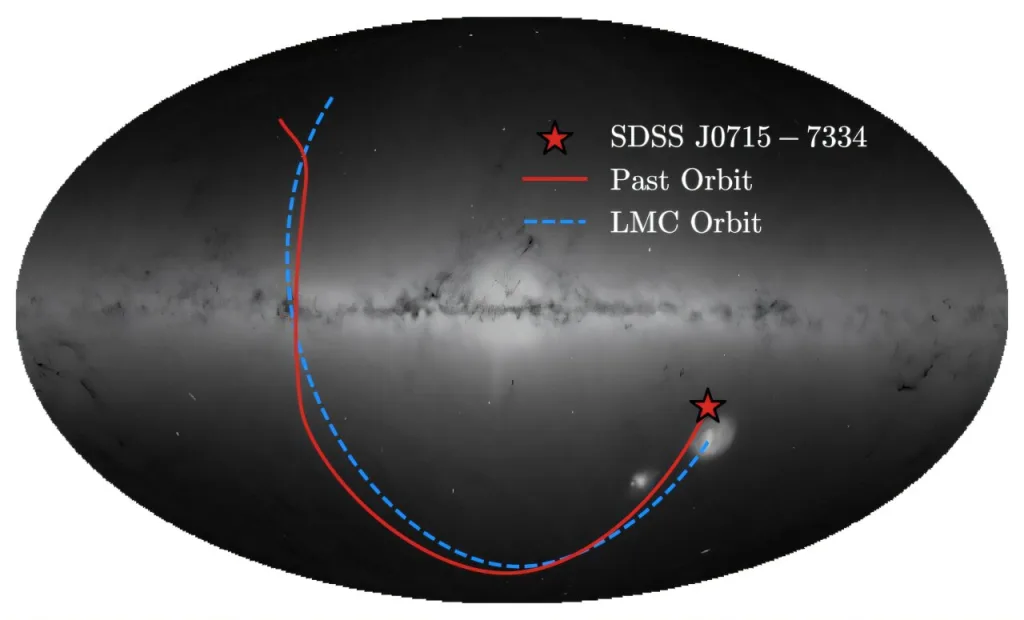
The most pristine star ever discovered has given astronomers a rare glimpse into the universe’s earliest chapter. Known as SDSS J0715-7334, this star contains almost no heavy elements, making it one of the closest known examples of the first generation of stars.
This discovery arrives at a crucial moment for astronomy. It offers a direct way to test how the earliest stars formed and how the universe evolved from simple elements into complex structures. In the sections ahead, we explore what makes this star unique and why it could reshape our understanding of cosmic origins.
Most Pristine Star Ever Discovered: What Makes It Unique
The most pristine star ever discovered, SDSS J0715-7334, stands apart because of its extreme chemical purity. Astronomers define “metals” as all elements heavier than hydrogen and helium. This star contains almost none of them.
A Record-Breaking Metal-Poor Star
SDSS J0715-7334 has less than 0.005% of the Sun’s metal content. That places it beyond all previously known stars in terms of purity. Most stars form from material enriched by earlier generations. This one did not.
Its composition closely matches the conditions that existed shortly after the Big Bang. That alone makes it a rare and valuable object for study.
Why “Pristine” Matters
“Pristine” signals age, not youth. The star formed so early that it avoided contamination from earlier stellar processes. Because of that, it preserves a nearly untouched chemical record.
This makes SDSS J0715-7334 a direct link to the earliest stage of star formation. It offers a level of clarity that modern stars cannot provide.
A Time Capsule from the Early Universe
The most pristine star ever discovered acts as a true cosmic time capsule. It formed when the universe was still simple and largely unchanged by stellar activity.
Born from the First Elements
In the early universe, hydrogen and helium dominated. Heavier elements had not yet formed. Those elements emerged later inside stars through nuclear processes.
SDSS J0715-7334 reflects that original state. Its composition shows almost no trace of later enrichment. That makes it one of the clearest observational links to early cosmic conditions.
Connecting to the First Stars
The first stars were likely massive and short-lived. They created heavier elements and dispersed them into space. Over time, those elements shaped future generations of stars.
This star appears to have formed before that enrichment became widespread. As a result, it offers a rare opportunity to study the transition from simple to complex cosmic environments.
Why These Stars Are So Rare
Pristine stars are difficult to find because the universe has evolved. Most regions are now enriched with heavier elements. Over billions of years, untouched environments became scarce.
That scarcity makes discoveries like this both rare and highly significant.
What This Discovery Reveals About Cosmic Evolution
The most pristine star ever discovered does more than reveal the past. It sharpens our understanding of how the universe evolved.
Tracing the Origins of Elements
Every heavy element in the universe formed inside stars. These elements are essential for planets, atmospheres, and life.
By studying SDSS J0715-7334, scientists can better understand when and how those elements first appeared. This helps map the timeline of chemical evolution across the universe.
Refining Star Formation Models
The earliest stages of star formation remain difficult to observe directly. Most evidence comes from models and indirect data.
This discovery provides real-world data that can validate or challenge those models. It allows scientists to refine their predictions and improve accuracy.
Insights into Galaxy Formation
Early stars influenced how galaxies formed and evolved. They affected gas dynamics and triggered new star formation. They also enriched their surroundings.
By examining this star, researchers gain insight into how galaxies developed in their earliest phases. That knowledge helps explain the structure of the universe today.
How Scientists Found This Rare Stellar Relic
Finding the most pristine star ever discovered required both scale and precision. It is not a simple task.
The Power of Large Sky Surveys
The Sloan Digital Sky Survey V (SDSS-V) scans the sky and collects detailed data on millions of stars. It analyzes light to determine chemical composition.
This approach allows astronomers to identify rare candidates among vast datasets. Without such surveys, this discovery would not have been possible.
Precision Observations in Chile
After identifying the candidate, scientists used the Magellan telescopes at Las Campanas Observatory. These instruments provide high-resolution measurements.
They confirmed the star’s extremely low metal content with precision. That confirmation turned a candidate into a verified discovery.
Searching for Needles in a Haystack
Stars like SDSS J0715-7334 are exceptionally rare. They are hidden among countless ordinary stars.
This discovery highlights the importance of combining large surveys with detailed follow-up observations. Together, they make it possible to uncover these rare cosmic relics.
Why This Changes How We View the Universe
The most pristine star ever discovered offers more than data. It reshapes how we think about cosmic history.
A Direct Link to Cosmic Origins
This star connects modern astronomy to the earliest phase of the universe. It shows what the building blocks of everything looked like before complexity emerged.
Understanding that stage provides essential context for everything that followed.
Clues About the Origins of Life
Heavy elements are necessary for planets and life. Their formation marked a turning point in cosmic history.
By tracing their origins, scientists gain insight into the conditions that eventually made life possible.
Looking Ahead
This discovery opens new paths for exploration. It suggests that more pristine stars may still exist, waiting to be found.
Future missions and surveys will likely uncover additional examples. Each one will add detail to the story of how the universe evolved.
Conclusion
The most pristine star ever discovered stands as a rare and powerful window into the universe’s earliest era. SDSS J0715-7334 preserves a chemical record that dates back to the dawn of star formation.
It helps scientists understand how simple elements gave rise to complex structures. It also provides a clearer view of how galaxies and stars evolved over time.
If such ancient relics still exist nearby, the question is no longer whether we can learn from them—but how many more remain hidden, waiting to be revealed.
Main Sources
- https://dailygalaxy.com/2026/04/astronomers-discover-most-pristine-star/
- https://www.sdss.org
- https://carnegiescience.edu
- https://www.nature.com/natureastronomy