BY:SpaceEyeNews.
🌕 Introduction: A Future You Can Almost See
Living on the Moon in the 2030s is no longer a distant idea. It is becoming a serious plan backed by governments and private companies. Picture looking up at the night sky and noticing faint lights on the lunar surface. That possibility is now part of real discussions inside the space industry. Leaders in the field suggest that humans could begin living and working on the Moon within the next decade. This moment signals a shift from brief missions to a lasting human presence beyond Earth.
🚀 Why Living on the Moon in the 2030s Is Now Realistic
From Short Missions to Long-Term Presence
Earlier lunar missions focused on exploration. The goal was to land, study, and return. There was no plan to remain. Today, that approach has changed. The new objective is clear: build a sustainable presence that allows humans to stay.
Modern space programs are designed for continuity. They aim to establish infrastructure that supports repeated missions and extended stays. This shift transforms the Moon from a destination into a working environment.
Building the Foundation for the Future
Recent missions have tested the systems needed for longer journeys. Each step builds confidence in navigation, communication, and life support. These developments bring the timeline for living on the Moon closer to reality.
The Moon also plays a strategic role. It acts as a proving ground for deeper space missions. Technologies tested there will later support journeys to Mars and beyond.
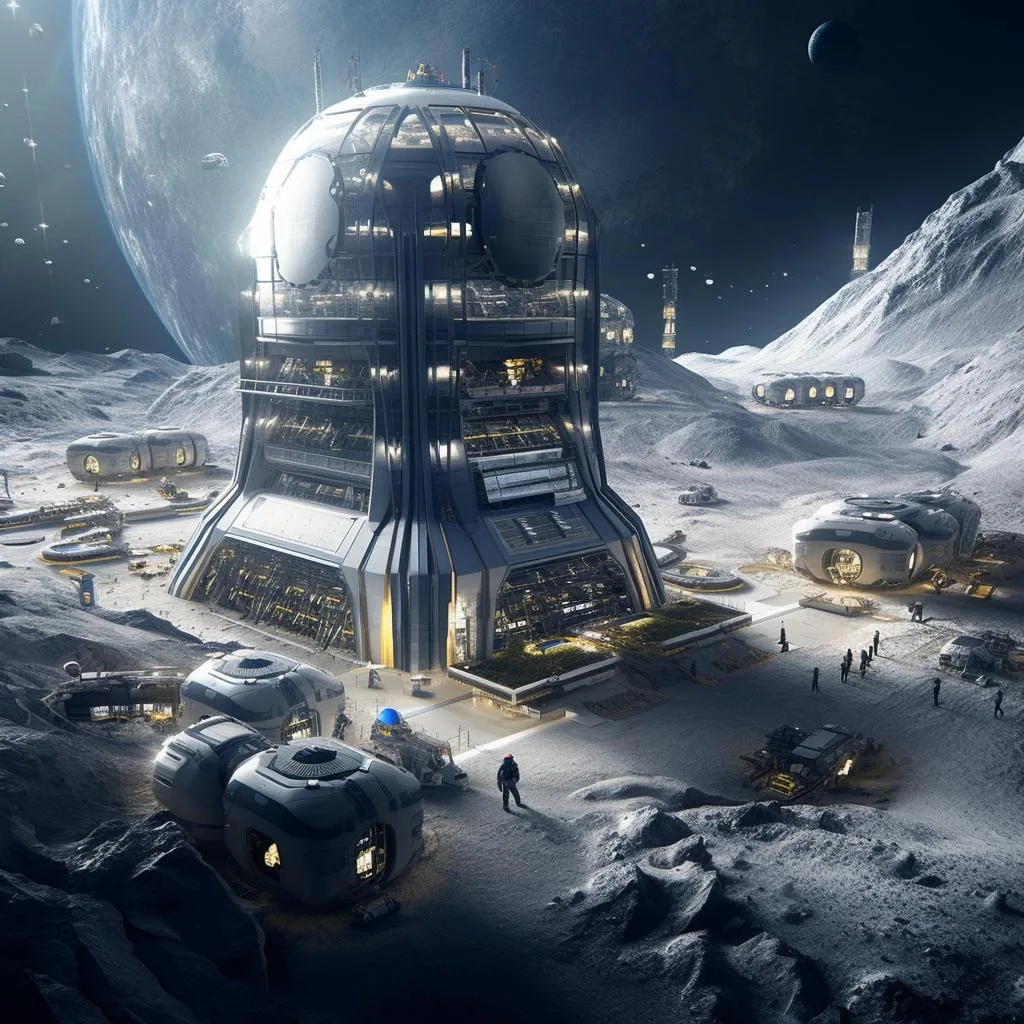
🏠 What Living on the Moon in the 2030s Will Look Like
Inside the First Lunar Habitats
The first lunar bases will be simple and efficient. Early designs focus on compact structures that are easy to transport and assemble. Inflatable habitats are one of the leading concepts. They offer flexibility and reduce launch weight.
Inside, every system must function with precision. Air, water, and temperature control are essential. These habitats will operate as closed environments, where resources are carefully managed.
Daily Life Beyond Earth
Life on the Moon will be structured. Crews will follow strict routines. Their work will include research, maintenance, and system checks. Every task will support survival and long-term stability.
Conditions will resemble remote research stations on Earth. Isolation, limited resources, and extreme environments will define daily life. However, the stakes will be higher.
Overcoming Harsh Conditions
The Moon presents serious challenges:
- High radiation levels due to lack of atmosphere
- Extreme temperature swings between day and night
- Fine dust that can damage equipment
Engineering Solutions Taking Shape
To address these risks, engineers are exploring practical solutions. Some concepts include building habitats below the surface for protection. Others involve using lunar soil as shielding material. Equipment is also being redesigned to withstand harsh conditions.
These innovations are critical. Without them, long-term habitation would not be possible.
🚀 The Companies Driving the Moon Economy
A New Era Led by Private Industry
Private companies are now central to space development. Their speed and innovation are accelerating progress.
Organizations like SpaceX are working toward large-scale lunar operations. Their long-term vision includes self-sustaining systems beyond Earth. At the same time, Blue Origin is focusing on building a continuous human presence on the Moon.
From Exploration to Economic Opportunity
The idea of a “Moon economy” is gaining momentum. It extends beyond exploration into practical use. Potential areas include:
- Infrastructure development
- Communication networks
- Scientific research platforms
- Future resource utilization
Preparing for the Post-ISS Era
Commercial space stations are also part of this transition. Projects designed to replace the International Space Station will support future missions. These platforms will act as staging points for lunar operations.
Together, these developments show that living on the Moon is becoming both a scientific goal and an economic strategy.
💰 Why Governments Are Investing Heavily in Space
Expanding Budgets and Strategic Focus
Government investment remains essential. Increased funding supports missions, research, and infrastructure. Space is now viewed as a long-term priority.
Space as Critical Infrastructure
The role of space has evolved. It now supports communication, navigation, and data systems. Satellites form the backbone of global connectivity.
Investment in low Earth orbit has grown rapidly. Billions of dollars are flowing into space-based technologies. This trend highlights the rising importance of orbital infrastructure.
The Next Step: Data Centers in Space
One emerging concept involves operating data centers in orbit. Processing data in space could improve efficiency and reduce delays. Some early capabilities already exist.
However, challenges remain. Managing heat in a vacuum is complex. Engineers must develop new cooling methods to make these systems practical.
🧠 Reality Check: Is Living on the Moon in the 2030s Achievable?
Technical Challenges Still Matter
Several key hurdles remain. Life support systems must operate reliably over long periods. Energy systems must be efficient and stable. Transportation between Earth and the Moon must become routine.
Financial and Logistical Pressures
Sustaining a lunar presence will require consistent funding. Costs remain high. In addition, supply chains must function across vast distances.
Learning From Past Timelines
Space programs often face delays. Unexpected technical issues can slow progress. While timelines may shift, the broader goal remains intact.
Progress With Caution
Despite these challenges, momentum is strong. Advancements in technology and growing investment support continued progress. Living on the Moon in the 2030s is not guaranteed, but it is increasingly plausible.
🌌 Conclusion: A Turning Point for Humanity
Living on the Moon in the 2030s marks a new phase in human history. The focus is no longer limited to exploration. It now includes expansion and long-term presence.
The journey will require persistence and collaboration. Each mission brings new lessons. Each investment pushes the boundary further.
If these efforts succeed, the Moon will become more than a distant object in the sky. It will become a place where humans live, work, and build the next chapter of exploration.
🔗 Main Sources:
- CNBC article: https://www.cnbc.com/2026/04/24/when-will-people-live-on-the-moon-in-the-2030s-says-voyager-technologies-ceo.html
- NASA Artemis Program: https://www.nasa.gov/artemis
- Reuters (Artemis II context): https://www.reuters.com
- Blue Origin updates: https://www.blueorigin.com
- SpaceX developments: https://www.spacex.com