BY:SpaceEyeNews.
Artemis III Delay: NASA Resets Its Path Back to the Moon
The Artemis III delay is not just a schedule update. It signals a clear reset in how NASA plans to return humans to the Moon. Instead of rushing toward a complex landing, the agency now targets late 2027 for a mission focused on testing critical systems in Earth orbit.
At first glance, delaying a flagship mission may feel like a setback. In reality, it reflects a deeper shift in priorities. NASA is choosing reliability over speed. That decision could define the future of lunar exploration for years to come.
Artemis III Delay Explained: From Landing to Orbital Testing
A Mission Redefined
The Artemis III delay comes with a major change in mission design. NASA no longer plans to land astronauts on the Moon during this mission. Instead, Artemis III will operate in Earth orbit, where astronauts will test key technologies.
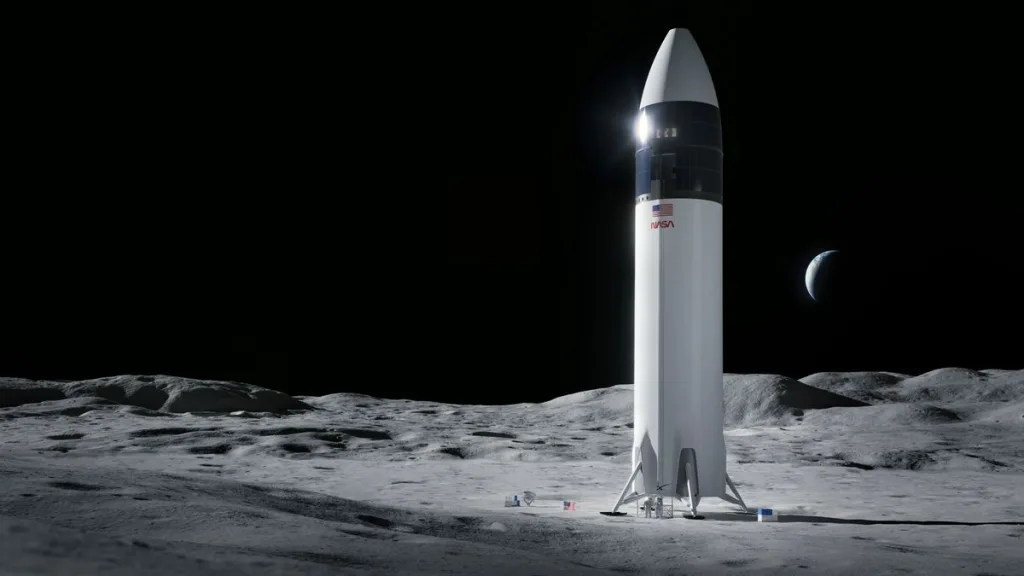
The mission will launch the Orion spacecraft aboard the Space Launch System. Once in orbit, the crew will rendezvous and dock with lunar landers developed by SpaceX and Blue Origin.
This approach allows NASA to validate how these systems interact before committing to a lunar descent.
Why Earth Orbit Matters
Testing in Earth orbit offers a clear advantage. If an issue arises, astronauts remain close to home. Recovery options exist within hours, not days.
NASA followed a similar path during the Apollo era. The Apollo 9 mission tested the lunar module in orbit before the first Moon landing. Artemis III now adopts that same logic for a more complex generation of spacecraft.
A Safer First Step
This redesigned mission reduces risk while delivering valuable data. Engineers will analyze docking systems, crew operations, and spacecraft integration in real conditions.
The key point is simple. The Artemis III delay shifts the mission from a symbolic milestone to a technical foundation.
Why the Artemis III Delay Happened
Complex Technology Requires Time
The Artemis III delay reflects the scale of modern space systems. Today’s lunar landers are far more advanced than those used during Apollo. Both Starship and Blue Moon require entirely new capabilities that must perform reliably in space.
These include in-space refueling, human-rated life support, precision docking, and advanced flight control systems. Each element demands careful validation.
Lander Readiness Drives the Timeline
NASA depends on its commercial partners to deliver operational landers. Both SpaceX and Blue Origin continue to develop and test their systems.
Starship, for example, relies on multiple refueling operations in orbit before heading to the Moon. Blue Moon must also complete uncrewed demonstrations before supporting astronauts.
These timelines play a direct role in the Artemis III delay.
Integration Adds Another Layer
Beyond development, NASA must integrate these landers with Orion and SLS. This process introduces another level of complexity.
Engineers must align docking interfaces, flight profiles, communication systems, and safety procedures. Even minor mismatches can affect mission readiness.
NASA is choosing to resolve these challenges now rather than risk complications later.
Hardware Progress Continues
Despite the delay, progress across the Artemis program remains steady. Orion continues through assembly and refinement, including updates to its heat shield. Engineers are also addressing technical issues identified during earlier missions.
At the same time, NASA is preparing the SLS rocket for upcoming flights. These parallel efforts ensure the program continues moving forward.
Artemis III Delay and NASA’s Bigger Strategy
From Single Mission to Long-Term Vision
The Artemis III delay reflects a broader strategic shift. NASA is moving beyond a single landing milestone toward a sustained presence on the Moon.
This vision requires reusable systems, reliable logistics, and frequent missions. Artemis III now serves as a critical step toward that long-term goal.
Why Two Landers Matter
NASA is working with both SpaceX and Blue Origin. This dual-provider approach adds flexibility and resilience.
If one system faces delays, the other can continue progressing. At the same time, competition encourages faster development and innovation.
Supporting Systems Take Shape
The Artemis program extends beyond rockets and landers. New spacesuits from Axiom Space are also in development. These suits will support future lunar surface operations and are currently undergoing testing.
Together, these systems form a complete exploration framework.
Building Toward Sustainability
The long-term objective is clear. NASA aims to enable continuous exploration rather than short visits. That requires infrastructure, coordination, and reliability at every level.
The Artemis III delay supports this goal by ensuring each component works before scaling up operations.
What Happens Next After the Artemis III Delay
Key Milestones Ahead
The next phase of the Artemis program will focus on several milestones. These include continued Starship testing, Blue Moon demonstration missions, Orion assembly, and SLS preparation.
Each step will shape the final structure of Artemis III.
Mission Design Decisions
NASA must also finalize several mission details. These include the orbit for docking operations, the number of landers involved, and the extent of crew interaction with these systems.
These decisions will define the mission’s final scope.
Risks and Opportunities
The Artemis III delay introduces both risks and advantages. While timelines extend, the likelihood of mission success increases.
Artemis III also presents a unique opportunity. It will test, for the first time, a multi-company system working together in space.
Looking Toward 2027
If development continues as planned, Artemis III will launch in late 2027. This mission will validate the systems needed for future lunar landings.
Those landing missions could follow shortly after, building on the data collected in orbit.
Conclusion: Artemis III Delay as a Strategic Reset
The Artemis III delay represents a strategic correction, not a setback. NASA is choosing to test and refine its systems before attempting a complex lunar landing.
This approach reflects both experience and ambition. By focusing on orbital validation, Artemis III reduces risk and strengthens future missions.
Its success may ultimately matter more than the landing itself. As 2027 approaches, Artemis III stands as the moment NASA proves it is ready not just to return to the Moon, but to build a lasting presence there.