BY:SpaceEyeNews.
Ozone Layer Recovery Delay: A Breakthrough With a New Warning
For years, the recovery of the ozone layer stood as one of the clearest examples of global success. Coordinated action reduced harmful chemicals and set Earth on a path toward atmospheric repair.
That progress remains real. However, new research now reveals a critical adjustment. The ozone layer recovery delay is emerging as an unexpected consequence of industrial activity that was once considered negligible.
Scientists have identified emissions from chemical processes that are quietly slowing the pace of recovery. These emissions do not reverse progress, but they stretch the timeline.
The focus has shifted. The question is no longer whether the ozone layer will heal. It will. The real question is how efficiently we can complete that recovery.
Montreal Protocol Success and the Ozone Layer Recovery Delay
The Montreal Protocol remains one of the most effective environmental agreements ever implemented. It led to the global phaseout of ozone-depleting substances and significantly reduced atmospheric damage.
Yet one exception was built into the system. Certain chemicals were allowed to continue as industrial feedstocks. These substances are used to produce plastics, coatings, and modern materials.
At the time, experts believed the environmental impact would be minimal. Only a small fraction of these chemicals was expected to escape into the atmosphere.
New measurements now show that assumption underestimated reality.
A Small Exception With Global Impact
Recent data indicates that leakage rates are several times higher than originally projected. What was once seen as a minor issue is now a measurable contributor to the ozone layer recovery delay.
Why This Gap Went Unnoticed
Industrial output increased over time. Demand for chemical-based products expanded. At the same time, atmospheric monitoring improved. These advances allowed scientists to detect emissions with far greater precision.
The result is a clearer picture. The system worked, but it relied on outdated assumptions that no longer reflect real-world conditions.
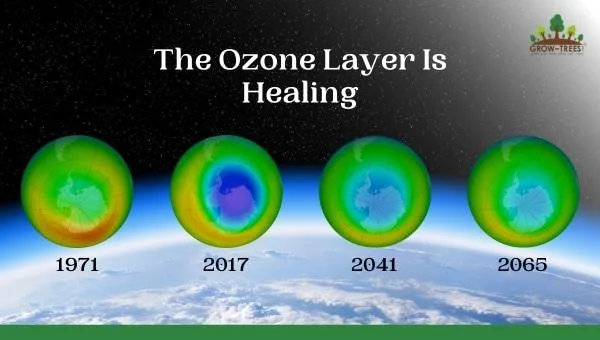
Industrial Emissions and the Ozone Layer Recovery Delay
Modern atmospheric science depends on global monitoring networks that track trace gases with high accuracy. These systems provide real-world data that reshapes scientific understanding.
From Estimates to Evidence
Earlier models assumed most feedstock chemicals remained contained during production. New observations show that a larger share escapes into the atmosphere.
Understanding Feedstock Emissions
Feedstocks are intermediate chemicals used to create other materials. They are not final products. They exist within manufacturing processes and can leak during handling, conversion, or transport.
Even small percentages of leakage can accumulate over decades. These emissions contribute to ongoing ozone depletion.
Why Small Percentages Matter
The difference between expected and actual leakage may appear minor. Over time, however, it translates into a meaningful increase in atmospheric emissions.
Scientists analyzing long-term data found that emissions decline under existing regulations but begin to stabilize mid-century if current leakage continues. This plateau is the core driver behind the ozone layer recovery delay.
Revised Timeline: How the Ozone Layer Recovery Delay Changes Expectations
Recovery timelines have always been central to measuring progress. Earlier projections suggested a return to 1980 ozone levels within the mid-21st century.
New findings adjust that expectation.
Updated Recovery Outlook
If emissions are reduced, recovery remains on track within earlier estimates. Under current conditions, however, the timeline extends further into the future.
The shift amounts to roughly a seven-year delay.
Why a Few Years Matters
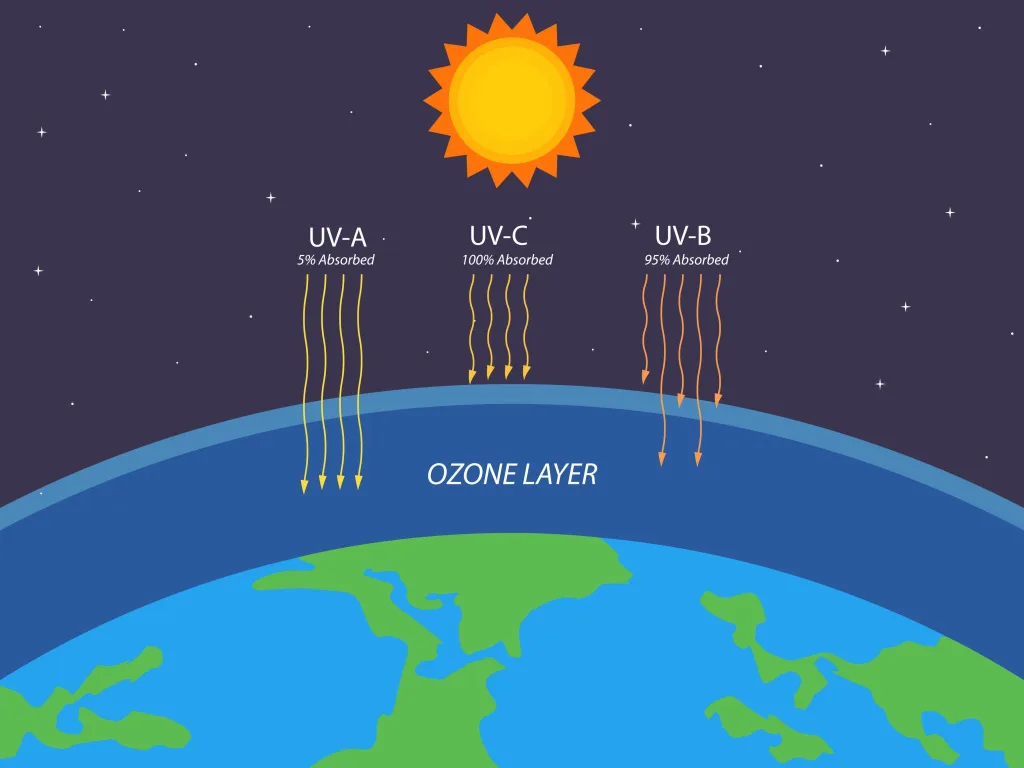
A delay of several years may appear small. In reality, it has cumulative effects. The ozone layer acts as Earth’s shield against ultraviolet radiation. Any extension in recovery increases long-term exposure risks.
Scenario Comparison
Different scenarios highlight the importance of action. Reducing leakage accelerates recovery. Eliminating emissions shortens the timeline even further.
The outcome is not fixed. It depends on how quickly adjustments are made.
Global Impact of the Ozone Layer Recovery Delay
The ozone layer protects life by absorbing harmful ultraviolet radiation. Its condition directly affects human health and environmental stability.
Human Health Considerations
Higher exposure to ultraviolet radiation is linked to increased risks of skin damage and eye conditions. A slower recovery extends these risks over time.
Environmental Sensitivity
Ecosystems also respond to changes in UV levels. Marine environments, crops, and natural habitats can experience stress when exposure increases.
A Planet-Wide System
The ozone layer operates as a global shield. Changes in one region affect the entire system. This makes the ozone layer recovery delay a shared global concern.
For broader context on atmospheric systems and monitoring, see our coverage of space-based Earth observation technologies on SpaceEyeNews.
Fixing the Ozone Layer Recovery Delay: Practical Solutions
The encouraging aspect of this discovery is that it identifies a solvable problem. The same global cooperation that enabled initial success can address this new challenge.
Improving Industrial Processes
Reducing leakage during manufacturing is one of the most direct solutions. Even incremental improvements can lower emissions significantly.
Adopting Alternative Chemicals
The chemical industry has a strong history of innovation. Safer alternatives already exist. Transitioning to these options can reduce reliance on problematic substances.
Policy Adjustments and Global Coordination
Future discussions under the Montreal Protocol framework may focus on tightening controls around feedstock emissions.
The Role of Awareness and Data
In many cases, emissions result from inefficiencies rather than intent. Improved awareness, combined with precise monitoring, allows industries to refine processes and reduce losses.
For related insights, explore our analysis of climate and atmospheric science developments on SpaceEyeNews.
What Comes Next for Ozone Recovery
Scientific monitoring will remain central to tracking progress. Data-driven insights will guide future decisions and policy adjustments.
International cooperation continues to be essential. Countries meet regularly to review findings and refine strategies.
The discovery of the ozone layer recovery delay highlights an important principle. Environmental solutions are not static. They require continuous refinement as new data emerges.
Conclusion: Refining a Proven Success
The ozone layer is still on a path to recovery. That outcome remains one of the most important environmental achievements of modern history.
The ozone layer recovery delay does not change that success. It refines it. It reveals a remaining gap that can be addressed with targeted action.
Humanity has already shown that global coordination can solve complex environmental challenges. The next phase is about precision—closing the final gap and accelerating recovery once again.
The story is not about failure. It is about finishing what has already been started.
Main Sources:
- https://scitechdaily.com/the-ozone-layer-is-healing-but-theres-a-hidden-catch/
- https://www.nature.com/articles/s41467-026-70533-w
- https://www.unep.org/ozonaction/who-we-are/about-montreal-protocol