BY:SpaceEyeNews.
For decades, Venus has remained one of the strangest worlds in the solar system. Its crushing atmosphere, toxic clouds, and extreme heat already make it feel alien compared to Earth. Now, scientists believe they have solved another major Venus mystery. A massive cloud system stretching nearly 3,700 miles across the planet appears to be powered by the largest known hydraulic jump in the solar system.
The discovery could reshape how researchers understand planetary atmospheres. It also reveals that familiar physics from Earth can behave on unimaginable scales on other worlds.
The finding comes from scientists studying data collected by Japan Aerospace Exploration Agency’s Akatsuki spacecraft. Researchers now think a giant atmospheric process drives Venus’ enormous sulfuric acid cloud banks high above the planet’s surface.
Venus Hydraulic Jump Reveals a Giant Atmospheric Mystery
Scientists first spotted the unusual cloud structure in 2016. The Akatsuki spacecraft observed a huge cloud wall roughly 31 miles above Venus. The formation stretched nearly 6,000 kilometers across the equatorial region of the planet.
Researchers immediately noticed something unusual. The cloud bank had a very sharp leading edge. It also moved in a stable pattern around Venus every few days. Scientists struggled to explain how such a large atmospheric structure could maintain its shape and speed.
The Venus hydraulic jump may finally answer that question.
A Cloud System Unlike Earth’s Weather
Venus already hosts one of the harshest environments in the solar system. Surface temperatures exceed 860 degrees Fahrenheit. Atmospheric pressure reaches around 92 times that of Earth.
The planet’s atmosphere also behaves strangely. While Venus itself rotates very slowly, its atmosphere races around the planet in just four Earth days. Scientists call this phenomenon “super-rotation.”
Inside this chaotic environment, sulfuric acid clouds dominate the upper atmosphere. These clouds reflect sunlight efficiently, which is why Venus appears bright in the night sky.
However, the newly explained cloud system stands apart from normal Venus weather. Its enormous size and organized structure suggest a deeper atmospheric engine at work.
Why Scientists Could Not Explain It Earlier
Earlier climate models of Venus could simulate many atmospheric features. Yet they failed to reproduce the giant cloud wall seen by Akatsuki.
Researchers lacked a mechanism capable of linking large horizontal atmospheric motion with strong vertical transport. That missing connection prevented scientists from fully understanding how sulfuric acid vapor could rise so high and form such dense cloud structures.
The Venus hydraulic jump changes that picture completely.
How the Venus Hydraulic Jump Works
The phrase “hydraulic jump” may sound complicated, but most people have seen one before. A simple example appears in a kitchen sink.
When water flows from a tap into the sink basin, it initially spreads out quickly in a thin layer. Then, at a certain distance, the water suddenly slows and becomes deeper. That sudden transition is called a hydraulic jump.
Scientists now believe a similar process happens inside Venus’ atmosphere, but on a planetary scale.
A Giant Kelvin Wave Powers the Process
The new study focuses on an atmospheric feature called a Kelvin wave. On Earth, Kelvin waves can form in oceans and atmospheres. On Venus, the process happens entirely in the atmosphere because the planet has no liquid oceans.
The Kelvin wave moves eastward through Venus’ dense carbon dioxide atmosphere. It stretches thousands of kilometers across the equatorial region.
As the wave travels, it eventually slows down. That slowdown triggers the Venus hydraulic jump.
Once the jump forms, powerful upward motion develops inside the atmosphere. Sulfuric acid vapor then rises rapidly toward higher altitudes.
Sulfuric Acid Clouds Rise 31 Miles Above Venus
The updraft created by the Venus hydraulic jump pushes sulfuric acid vapor to an altitude of roughly 50 kilometers. At that height, the vapor cools and condenses into giant sulfuric acid clouds.
Those clouds then trail behind the leading edge of the Kelvin wave. This process creates the enormous cloud bank observed by Akatsuki.
Researchers say this is the largest hydraulic jump ever identified in the solar system.
That finding surprised atmospheric scientists because hydraulic jumps usually involve smaller local systems. Venus demonstrates that the same physics can scale to global atmospheric dimensions.
Why the Discovery Shocked Researchers
Study leader Takeshi Imamura from the University of Tokyo explained that the discovery connects two atmospheric processes scientists normally treat separately.
One process involves large horizontal atmospheric movement. The other involves localized vertical motion.
On Venus, both processes appear tightly linked.
That unexpected connection could force scientists to rethink how atmospheric circulation works on extreme planets.
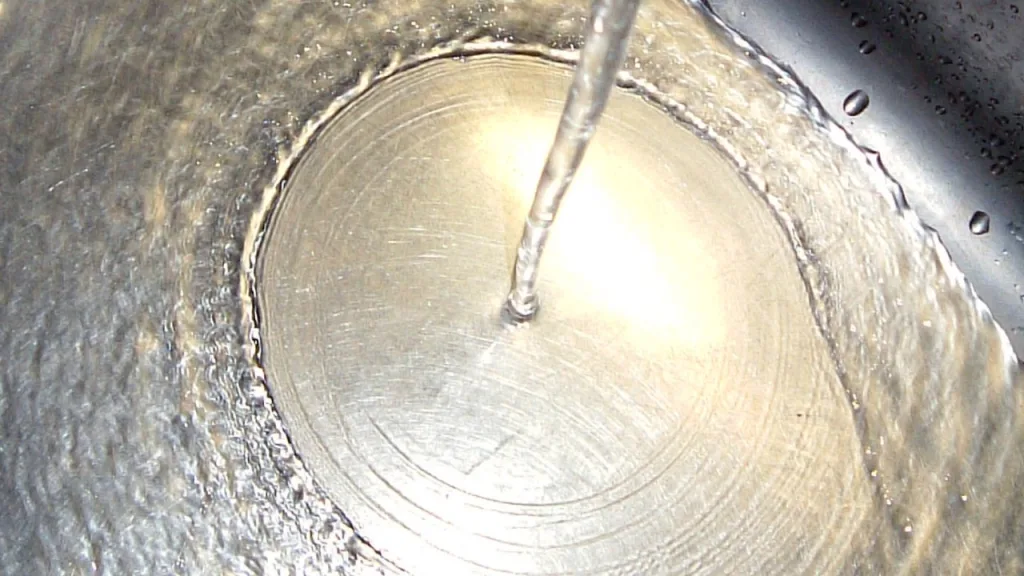
30-mile-high clouds of acid on Venus are made by the largest ‘hydraulic jump’ in the solar system.
Venus Hydraulic Jump Could Transform Climate Models
The discovery does more than explain one strange cloud formation. It also exposes major limitations in existing Venus climate models.
Scientists now realize current simulations may miss critical atmospheric physics.
Why Existing Venus Models Were Incomplete
Many Venus circulation models were originally adapted from Earth climate systems. They successfully reproduced several broad atmospheric patterns. However, they did not include hydraulic jump dynamics.
Without that mechanism, researchers could not accurately model the giant cloud wall.
Adding the Venus hydraulic jump into future simulations could improve predictions of atmospheric motion, cloud formation, and energy transport throughout the planet’s atmosphere.
The Computational Challenge Ahead
Modeling Venus remains extremely difficult. Its atmosphere is dense, fast-moving, and chemically complex.
Researchers say future simulations will require enormous computing power. Even modern supercomputers struggle to process Venus-scale atmospheric calculations.
Still, scientists believe the effort is worthwhile. Venus may hold important clues about atmospheric evolution on rocky planets.
Why Venus Matters More Than Ever
Interest in Venus has grown rapidly in recent years. Multiple future missions aim to study the planet’s atmosphere, geology, and climate history.
NASA plans future Venus missions including DAVINCI and VERITAS. Meanwhile, European Space Agency is preparing the EnVision mission.
These missions could help scientists test the Venus hydraulic jump theory directly. Future observations may reveal even more atmospheric surprises hidden beneath Venus’ thick clouds.
Venus Hydraulic Jump May Help Scientists Study Other Worlds
The discovery may also influence exoplanet research.
Many rocky exoplanets orbit extremely close to their stars. Those planets likely experience violent atmospheric circulation patterns similar to Venus.
By studying the Venus hydraulic jump, scientists may better understand how dense atmospheres transport heat, chemicals, and clouds on distant worlds.
That makes Venus an important laboratory for planetary science.
Earth Physics Behaves Differently on Other Planets
One of the most fascinating parts of the discovery is its familiarity. The same physical effect seen in a kitchen sink appears to shape clouds on another planet.
Yet Venus transforms that ordinary process into something colossal.
This reminds scientists that universal physics can produce dramatically different outcomes depending on environmental conditions.
Venus continues to challenge assumptions about how planetary atmospheres behave.
Conclusion
The Venus hydraulic jump discovery may represent one of the most important atmospheric breakthroughs in years. Scientists now believe a giant hydraulic jump powers the enormous sulfuric acid cloud banks circling Venus.
The finding explains a mystery that puzzled researchers since Akatsuki first observed the clouds in 2016. It also reveals how ordinary physics can create extraordinary planetary phenomena.
Most importantly, the Venus hydraulic jump could improve future climate models and deepen our understanding of atmospheric systems across the universe.
As new missions prepare to explore Venus, scientists may soon uncover even more hidden processes shaping one of the solar system’s most extreme worlds.
Main Sources:
- Space.com
https://www.space.com/astronomy/venus/30-mile-high-clouds-of-acid-on-venus-are-made-by-the-largest-hydraulic-jump-in-the-solar-system - JAXA Official Website
- NASA Venus Exploration Program
- European Space Agency Venus Missions