
BY:SpaceEyeNews.
Blue Origin has secured one of the most important victories in its history after being selected by NASA for the first cargo operations tied to the agency’s future lunar base program.
The decision places Blue Origin at the center of NASA’s next phase of Moon exploration. More importantly, it signals a major shift in how the United States plans to operate beyond Earth orbit during the coming decade.
Instead of short visits to the lunar surface, NASA now wants to establish long-term infrastructure near the Moon’s south pole. The agency believes this region could eventually support continuous human activity, scientific research, and future deep-space missions.
The upcoming cargo flights are expected to launch in 2026. They will test systems, deliver equipment, and prepare the surface for later Artemis operations.
While SpaceX remains deeply involved in the Artemis program, Blue Origin’s latest contract represents a major moment in the growing commercial race to shape the future of lunar exploration.
NASA’s Lunar Base Strategy Moves Into Reality
NASA awarded Blue Origin a contract worth $230.4 million for the first two cargo missions connected to its future Moon base initiative.
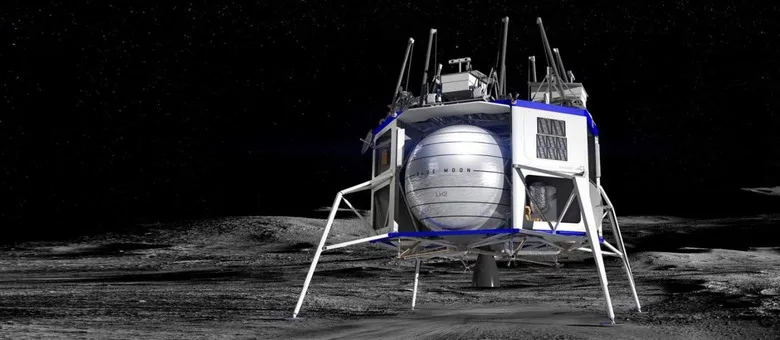
The company will use its Endurance cargo lander to transport scientific instruments and technology to the region between the Shackleton and De Gerlache craters near the Moon’s south pole.
This area has become one of the most valuable targets in lunar exploration.
Why the Moon’s South Pole Matters
Scientists believe permanently shadowed craters near the south pole contain frozen water ice. That resource could become essential for future lunar operations.
Water ice may eventually support:
- Drinking water systems
- Oxygen production
- Rocket fuel generation
Some elevated regions near the craters also receive long periods of sunlight. These locations could support solar power systems for future lunar infrastructure.
NASA sees the south pole as the best location for long-duration operations on the Moon.
Cargo First, Astronauts Later
NASA’s current strategy follows a gradual approach.
Before astronauts establish a long-term presence, the agency wants to test cargo systems, surface equipment, communication networks, and mobility technologies.
The process includes:
- Cargo deliveries
- Technology demonstrations
- Rover deployments
- Surface infrastructure testing
- Long-term crewed operations
NASA officials describe this method as iterative. The goal is to reduce risk before larger Artemis missions begin operating near the lunar surface for extended periods.
This approach also reflects a major change in NASA’s broader philosophy.
The Moon is no longer treated as a short-term destination. It is now viewed as a long-term operational environment.
Blue Origin Gains Ground in the Artemis Program
For years, SpaceX dominated public attention around lunar exploration. The company’s Starship system became a central part of NASA’s Artemis architecture.
However, Blue Origin’s new role shows NASA wants multiple companies competing inside the lunar economy.
A Major Win for Jeff Bezos’ Space Company
NASA Administrator Jared Isaacman described one of the planned missions as potentially becoming the first privately funded lunar landing in history.
That statement immediately elevated the importance of the project.
Blue Origin has often faced criticism for slower development timelines compared with SpaceX. Yet NASA’s decision confirms the company remains a critical partner in America’s long-term lunar plans.
Blue Origin will also contribute additional private funding beyond NASA’s contract value. The partnership reduces financial pressure on the government while expanding commercial investment in lunar infrastructure.
SpaceX Still Holds Key Advantages
Despite Blue Origin’s momentum, SpaceX continues to play a major role in Artemis.
NASA still plans to evaluate:
- SpaceX’s Starship Human Landing System
- Blue Origin’s Blue Moon lander
The comparison will help determine future landing systems for later Artemis missions, including Artemis IV.
SpaceX maintains significant strengths:
- Extensive launch experience
- Rapid testing cycles
- Reusable rocket systems
- Established NASA partnerships
Even so, NASA appears determined to avoid relying on a single company for lunar transportation and infrastructure.
Competition between multiple providers could accelerate innovation while improving mission flexibility.
New Glenn’s Earlier Setback Did Not Change NASA’s Direction
Blue Origin recently faced difficulties after a payload from its New Glenn rocket failed to reach the planned orbit during a previous mission.
However, federal regulators later cleared the company to resume operations.
NASA’s latest contract shows the agency still has confidence in Blue Origin’s long-term capabilities.
The cargo missions could now become a defining moment for the company’s future in deep-space logistics.
The Moon Is Becoming a Long-Term Infrastructure Project
NASA’s lunar plans now extend far beyond exploration alone.
The agency wants to build the foundation for sustainable operations that could continue well into the 2030s.
Future Lunar Systems Are Already Being Planned
Future infrastructure could include:
- Surface habitats
- Power systems
- Communication networks
- Scientific laboratories
- Mobile exploration vehicles
NASA hopes these systems will eventually support continuous human operations after 2032.
This marks a dramatic evolution from the Apollo era, when astronauts visited the Moon for short periods before returning home.
Under Artemis, NASA wants to create lasting operational capability on the lunar surface.
Commercial Industry Is Expanding Beyond Launches
Private companies are no longer serving only as launch providers.
Many are now developing:
- Lunar landers
- Surface mobility systems
- Resource technologies
- Deep-space logistics networks
NASA believes commercial partnerships can lower costs while accelerating technological development.
At the same time, the Moon is increasingly viewed as a possible staging area for future missions to Mars and deeper parts of the Solar System.
China’s Lunar Ambitions Continue to Shape NASA’s Timeline
The United States is also moving faster because of growing international competition.
China continues expanding its lunar exploration program through robotic missions, long-term research projects, and future crewed landing plans.
That competition has added urgency to NASA’s Artemis schedule.
As a result, the next few years may become one of the most important periods in modern lunar exploration.
A Defining Moment for the Future of Lunar Exploration
Blue Origin’s selection for NASA’s early cargo missions represents more than a commercial contract.
It reflects the beginning of a broader transition toward permanent lunar operations, commercial infrastructure, and long-term human expansion beyond Earth.
SpaceX remains a dominant force in the Artemis era. However, Blue Origin has now secured one of the most symbolic victories in the modern Moon race.
If NASA’s strategy succeeds, the upcoming cargo launches in 2026 may eventually be remembered as the moment humanity stopped preparing for temporary lunar visits and started building a permanent future on the Moon.