
BY:SpaceEyeNews.
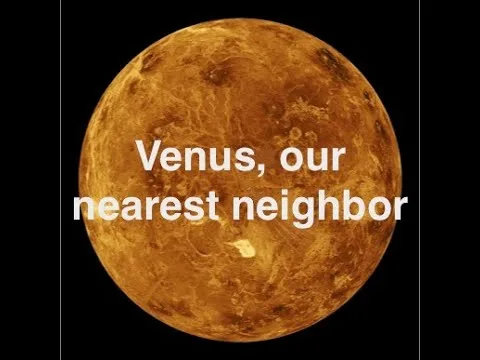
For decades, most people believed Venus was Earth’s nearest planetary neighbor. The idea appears in textbooks, documentaries, and even educational material from major space organizations. After all, Venus can approach Earth more closely than any other planet in the Solar System.
However, a study that gained widespread attention has challenged that long-standing assumption. According to researchers, the answer depends on how we define the word “closest.” When scientists measured average distance over long periods instead of focusing on the nearest approach, they found something unexpected: Mercury closest planet to Earth is actually the correct answer.
The finding surprised many astronomy enthusiasts. It also revealed how a small change in perspective can completely alter our understanding of familiar facts.
Why Venus Became Earth’s Closest Neighbor
Venus Holds the Record for Closest Approach
The traditional answer is easy to understand. Venus can come within roughly 38 million kilometers of Earth. No other planet gets closer.
Because of this, Venus has long been described as Earth’s closest planetary neighbor. The planet also shares similarities with Earth in size and composition. These similarities strengthened the idea that Venus occupies the position of our nearest companion in space.
By the closest-approach definition, that statement remains correct.
The Traditional View Is Not Wrong
An important detail often gets overlooked. The old answer is not inaccurate. Instead, it answers a different question.
If someone asks which planet can get closest to Earth at any moment, Venus wins.
If someone asks which planet stays closest to Earth on average over time, the answer changes.
That distinction forms the foundation of the new research.
Mercury Closest Planet to Earth: A Different Way to Measure Distance
The Problem With a Common Shortcut
Many people assume planetary distances can be estimated by comparing average orbital distances from the Sun.
For example, Earth orbits at about 150 million kilometers from the Sun, while Venus orbits at about 108 million kilometers. Subtracting those values suggests Venus remains relatively close to Earth.
The problem is that planets do not stay lined up on the same side of the Sun.
They constantly move along their orbits. Sometimes they are near each other. At other times, they sit on opposite sides of the Solar System.
A simple subtraction ignores those changing positions.
Looking at Every Possible Position
Researchers Tom Stockman, Gabriel Monroe, and Samuel Cordner approached the problem differently.
Instead of using a shortcut, they developed a method that considered every possible position two planets could occupy in their orbits.
This approach examined average distances across all orbital configurations.
The result provided a much more complete picture of how far planets remain from one another over long periods.
The 10,000-Year Simulation
The team also created a long-term simulation.
They modeled planetary positions every 24 hours across a period of 10,000 years. The simulation recorded which planet remained closest to Earth at each step.
The results surprised many observers.
Mercury was Earth’s nearest planet approximately 47 percent of the time.
Venus ranked second at around 36 percent.
Mars came third at roughly 17 percent.
These numbers supported the conclusion that Mercury closest planet to Earth is the most accurate description when average distance becomes the key measurement.
Why Mercury Stays Closer Than Venus
Mercury’s Orbit Creates an Advantage
At first glance, the result seems impossible.
Mercury never comes as close to Earth as Venus does. Yet it wins the average-distance calculation.
The explanation lies in Mercury’s position within the Solar System.
Mercury travels in the innermost orbit around the Sun. It never strays far from the Solar System’s center.
Because of that, Mercury avoids many of the extremely large separations that affect other planets.
The Geometry Behind the Discovery
Planetary distance depends on geometry.
Venus and Earth sometimes occupy opposite sides of the Sun. When that happens, the distance between them increases dramatically.
The same pattern affects every planet.
Outer planets spend long periods far away from Earth because their orbits cover much larger regions of space.
Mercury behaves differently. Its compact orbit keeps it relatively near the center at all times.
That consistency lowers its average distance.
Consistency Beats Occasional Close Encounters
A useful comparison involves two neighbors.
One neighbor occasionally visits your house but spends most of the year far away.
The other lives nearby all year long but never comes extremely close.
The second neighbor remains closer on average.
Mercury wins for the same reason.
It does not rely on dramatic close approaches. Instead, it remains reasonably close most of the time.
Mercury Closest Planet to Earth and Every Other Planet
The Study Revealed an Even Bigger Surprise
Researchers discovered something even more remarkable.
Mercury is not only the planet closest to Earth on average.
It is also the closest planet on average to every other planet in the Solar System.
That includes the giant planets far beyond Mars.
At first, the result appears counterintuitive.
Many people expect neighboring planets to remain closest to one another. The calculations show otherwise.
Why Mercury Dominates the Rankings
Mercury’s small orbit explains the phenomenon.
Because it stays close to the Sun, it avoids spending extended periods at enormous distances from other planets.
Meanwhile, planets with larger orbits frequently find themselves separated by vast stretches of space.
Over time, those large separations increase their average distances.
Mercury benefits from remaining near the center of planetary activity.
As a result, it consistently achieves the smallest average separation from every planet in the Solar System.
A Lesson About Scientific Assumptions
The discovery highlights an important lesson.
Many accepted facts depend on definitions.
People often assume familiar answers remain correct because they seem obvious.
Science encourages researchers to examine assumptions carefully.
In this case, changing the definition of “closest” revealed an unexpected result hidden within the mathematics of planetary motion.
What This Means for Space Exploration
Venus Still Matters
The discovery does not change the practical importance of Venus.
Space agencies still use close approaches when planning missions.
Launch opportunities depend on orbital alignment rather than average distance.
For many missions, Venus remains one of the most accessible destinations beyond Earth.
Mercury Is Not Suddenly Easier to Reach
Mercury presents significant challenges for spacecraft.
Its proximity to the Sun creates intense thermal conditions.
Reaching Mercury also requires complex trajectories that reduce a spacecraft’s orbital energy.
As a result, Mercury remains a difficult destination despite being closest on average.
The Real Significance
The study matters because it changes how we think about planetary relationships.
It demonstrates that average distance can tell a different story than minimum distance.
Neither measurement is wrong.
They simply answer different questions.
Understanding that distinction helps improve public understanding of astronomy and orbital mechanics.
Conclusion
The idea that Venus is Earth’s closest planetary neighbor has survived for generations. In one sense, it remains true. Venus still achieves the closest approach to Earth of any planet in the Solar System.
However, when scientists examined average distance over long periods, they reached a different conclusion. Their calculations showed that Mercury closest planet to Earth is the more accurate answer under that definition.
The same method revealed that Mercury is also the closest planet on average to every other planet in the Solar System.
That finding does not rewrite the Solar System. Instead, it reminds us that science often depends on how questions are asked. Sometimes a new perspective can transform one of astronomy’s most familiar facts into one of its most surprising discoveries.
Main Sources:
- SpaceDaily (June 2026)
https://spacedaily.com/t-almost-everyone-assumes-venus-is-our-nearest-neighbour-but-averaged-across-its-orbit-the-planet-closest-to-earth-is-actually-mercury/ - Physics Today (2019) – Tom Stockman, Gabriel Monroe, Samuel Cordner
https://physicstoday.scitation.org - NASA Solar System Exploration
https://solarsystem.nasa.gov - NASA Jet Propulsion Laboratory (JPL)
https://www.jpl.nasa.gov