BY:SpaceEyeNews.
The far side of the Moon may offer scientists something increasingly rare: genuine silence. Its surface blocks much of the radio interference produced on Earth. It also offers long, dark nights without cities, aircraft, or bright satellite networks crossing the sky.
However, that environment may not remain untouched for long.
New landers, relay satellites, navigation systems, and commercial projects could bring electromagnetic noise and artificial light. Astronomers are therefore discussing whether a far side of the Moon scientific reserve should be created before large-scale lunar development begins.
The proposal raises a difficult question. Can humanity explore and use the Moon while protecting one of the Solar System’s most valuable locations for astronomy?
Astronomers Debate a Far Side of the Moon Scientific Reserve
The issue received renewed attention during the 2026 National Astronomy Meeting in Birmingham, United Kingdom.
During a public debate organized by the Royal Astronomical Society, scientists discussed whether the lunar far side should remain primarily available for research. Professor Joe Silk and astrophysicist Dr Jonathan McDowell supported stronger protection. Dr Nikita Chiu argued that science and commercial activity could coexist under effective rules.
Before the debate, 68% of audience members supported reserving the far side for science. That figure rose to 76% after the discussion.
The result does not create a new law or international agreement. It was an audience vote. Still, it shows growing concern among astronomers about the speed of lunar development.
Scientists believe decisions made within the next few years could shape the far side for decades.
Why the Lunar Far Side Is Scientifically Unique
The Moon acts as a giant natural barrier between the far side and Earth.
Our planet constantly produces radio signals. Television broadcasts, radar systems, mobile networks, satellites, and navigation services all contribute to this background noise. Even remote observatories on Earth cannot fully escape it.
The lunar far side offers much stronger isolation. NASA describes it as the only known place in the Solar System that remains permanently shielded from Earth’s radio noise.
This does not mean every location there is completely silent. Spacecraft and lunar equipment can still generate interference. Yet the region begins with conditions that no Earth-based site can match.
Listening Below Earth’s Radio Limit
A far-side observatory could study extremely low radio frequencies.
Some signals below about 30 megahertz cannot reach ground-based telescopes clearly. Earth’s ionosphere absorbs or distorts them. Human radio activity creates another obstacle.
Scientists hope these frequencies could reveal neutral hydrogen from the cosmic Dark Ages. This period came after the Big Bang but before the first stars and galaxies fully illuminated the Universe.
Studying those signals could help researchers understand how early cosmic structures formed and evolved.
Far-side instruments could also examine solar activity, planetary magnetic fields, and possible radio emissions from worlds orbiting other stars.
Proposed Telescopes Could Transform Astronomy
NASA has supported early studies of several lunar radio observatory concepts.
One example is the Lunar Crater Radio Telescope. The concept would use robots to suspend a wire mesh inside a crater on the Moon’s far side. The crater would provide natural support for an enormous radio dish.
NASA funded further design work through its Innovative Advanced Concepts program. However, the telescope is still a concept, not an approved mission.
Another proposal, called FarView, would create a huge low-frequency radio array across the lunar surface. Its developers have studied using lunar soil to manufacture many of the observatory’s components.
The proposed system could include around 100,000 antennas spread across an area roughly 20 by 20 kilometres. Scientists say such an array could map stages of the early Universe before the first stars appeared.
These concepts show why astronomers want protection before construction accelerates.
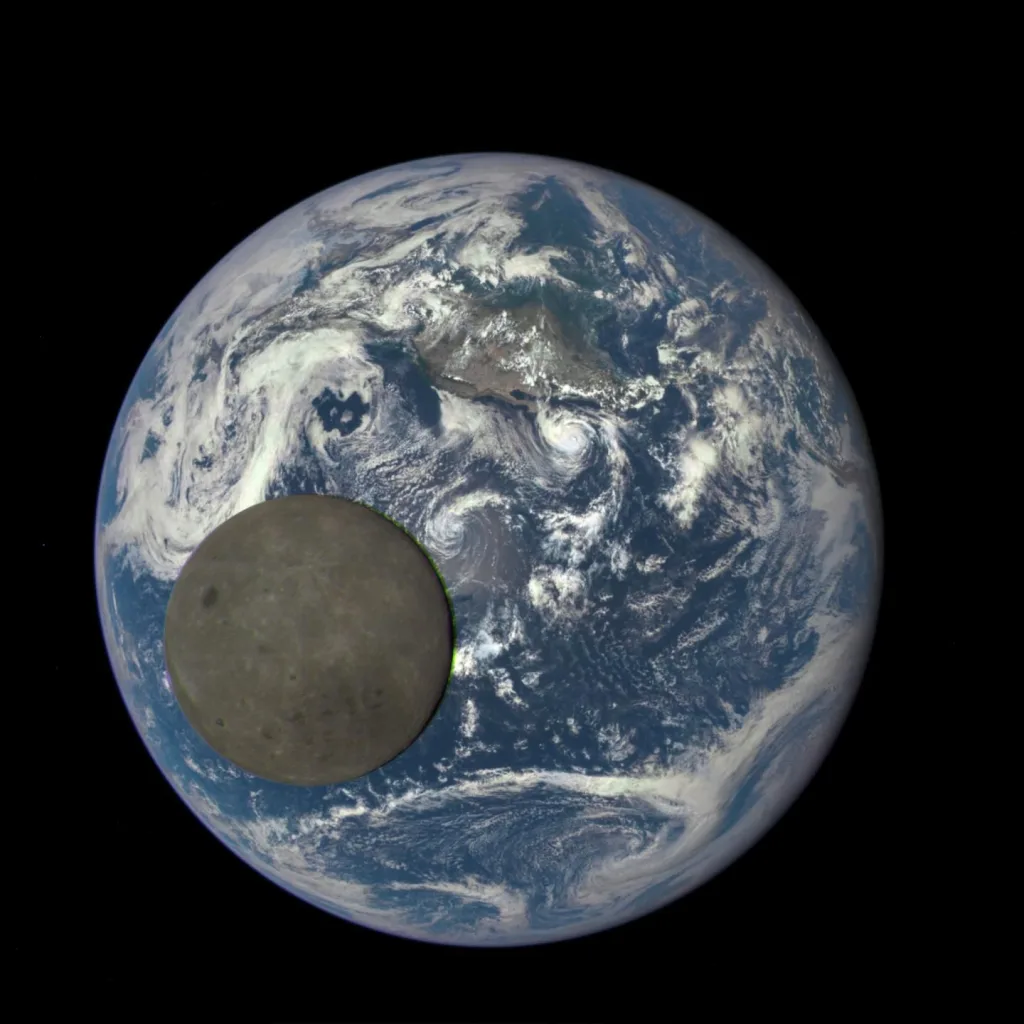
Why is the far side of the moon so weird? Scientists may have solved a lunar mystery.
What Could Damage the Moon’s Radio Silence?
The main concern is not traditional pollution. Scientists are worried about electromagnetic and optical contamination.
Almost every modern spacecraft contains electronics. Computers, motors, power systems, communication equipment, and scientific instruments can release unwanted radio emissions.
Future sources of interference could include:
- Lunar communication towers
- Navigation beacons
- Relay satellites
- Surface vehicles and landers
- Resource-processing equipment
- Power stations
- Artificial lighting
- Poorly shielded electronics
The problem becomes more complex because far-side missions cannot communicate directly with Earth. The Moon blocks that connection as well.
Operators usually need relay satellites positioned where they can communicate with both Earth and far-side equipment. Those satellites make exploration possible, but their transmissions may also disturb nearby radio telescopes.
Even a scientific mission could harm another scientific project if planners fail to coordinate their systems.
Existing Rules Offer Only Partial Protection
The International Telecommunication Union already recognizes the Shielded Zone of the Moon.
This zone covers part of the lunar surface and an adjoining volume of space protected from direct radio transmissions originating near Earth. The ITU also maintains recommendations for protecting radio astronomy frequencies in this region.
However, the shielded zone does not automatically function as a complete lunar nature reserve.
Existing radio rules mainly address spectrum use and interference. They do not settle every question involving construction, mining, lighting, surface access, or the placement of commercial infrastructure.
Creating a true far side of the Moon scientific reserve would therefore require broader international cooperation.
The Case for Protecting the Far Side Now
Supporters argue that governments should identify the most valuable scientific locations before permanent infrastructure arrives.
Once transmitters, roads, power systems, and satellite networks become established, moving them may prove difficult and expensive. Restoring the original radio environment could become impossible.
Joe Silk also highlighted the value of the Moon’s dark nights for optical astronomy. Observatories on Earth face growing light pollution and an expanding population of satellites in low Earth orbit.
Jonathan McDowell presented an even broader argument. He said decisions made on the Moon could establish a precedent for the entire Solar System.
Future generations may face similar choices on Mars, asteroids, and other scientifically important locations. The Moon could become the first major test of whether exploration includes preservation from the beginning.
Could Science and Commercial Activity Coexist?
Dr Nikita Chiu presented the alternative view.
She argued that protecting science does not require excluding every other activity from the entire far side. Instead, international rules could support a controlled lunar economy while preserving key observatory zones.
Possible measures could include strict transmitter limits, protected frequencies, minimum distances, and mandatory electromagnetic shielding.
Authorities could also restrict lighting near optical observatories. Satellite operators might coordinate communication schedules or avoid transmitting while sensitive observations take place.
This approach could allow exploration, infrastructure, and astronomy to develop together.
Yet enforcement remains the largest challenge.
No single country owns or controls the Moon. Future projects may involve governments, private companies, universities, and international partnerships. Voluntary rules may struggle when scientific priorities conflict with financial or strategic goals.
What a Lunar Scientific Reserve Would Need
A workable reserve would require more than a declaration.
International partners would need to define its location and boundaries. They would also need measurable limits for radio emissions, lighting, and nearby surface operations.
Monitoring equipment could identify sources of interference. A transparent process would then handle disputes and violations.
Rules must cover satellites as well as surface hardware. They must also allow emergency communication and safe mission operations.
Most importantly, planners should protect the best sites rather than applying one rigid rule to the entire lunar far side.
Conclusion: Preserving a Rare Cosmic Window
A far side of the Moon scientific reserve could protect one of humanity’s clearest windows into the early Universe.
Lunar exploration may bring major scientific, technological, and economic gains. Yet careless development could erase the radio silence and natural darkness that make the far side so valuable.
The debate should not become a simple choice between progress and preservation. Careful zoning, technical standards, and international cooperation may allow both.
However, those rules must arrive before major infrastructure changes the environment. Once true lunar silence disappears, humanity may never recover it.
Main Sources:
Royal Astronomical Society — NAM 2026 debate:
https://ras.ac.uk/news-and-press/news/nam-2026-debate-should-far-side-moon-be-reserved-science
International Telecommunication Union — Safeguarding radio astronomy on the Moon:
https://www.itu.int/hub/2022/05/moon-based-radio-astronomy-spectrum/
ITU Recommendation RA.479:
https://www.itu.int/rec/R-REC-RA.479/en
NASA — Lunar science and the cosmic Dark Ages:
https://science.nasa.gov/lunar-science/focus-areas/platform-to-study-the-solar-system/
NASA — Lunar Crater Radio Telescope:
https://www.nasa.gov/solar-system/lunar-crater-radio-telescope-illuminating-the-cosmic-dark-ages/
NASA — FarView Observatory concept:
https://www.nasa.gov/general/farview-observatory-a-large-in-situ-manufactured-lunar-far-side-radio-array/