BY:SpaceEyeNews.
The August 2026 solar eclipse will briefly turn daylight into darkness across parts of the Arctic and Europe. On August 12, the Moon’s shadow will cross Greenland, Iceland, Spain, and a small section of Portugal.
For the public, the eclipse will offer a rare sight. For scientists, it will provide a valuable chance to examine the Sun’s hidden outer atmosphere. Researchers will use aircraft, balloons, ground observatories, and space missions to capture the event from several viewpoints.
The eclipse will also mark a historic moment for mainland Spain. At the same time, NASA and European teams will study how the sudden loss of sunlight affects Earth’s atmosphere.
Where the August 2026 Solar Eclipse Will Be Visible
The path of totality will begin in the Arctic region and cross northern Russia. It will then move over eastern Greenland and western Iceland before continuing across the Atlantic Ocean.
Later, the shadow will reach northern Spain and a small area of northeastern Portugal. According to NASA, the longest period of totality will last about two minutes and 18 seconds.
Only observers inside the narrow path of totality will see the Sun completely covered. However, a much larger region will experience a partial eclipse.
Most of Europe will see at least part of the Sun disappear. Partial phases will also reach northwestern Africa, most of Canada, Alaska, and sections of the northern United States.
The amount of coverage will depend on the observer’s location. Even outside the totality path, the eclipse could remain visually impressive.
Spain Prepares for a Historic Solar Eclipse
Spain will provide one of the most accessible locations for viewing the August 2026 solar eclipse. The path will cross a large part of the country from west to east.
The event will become especially significant because mainland Spain has not experienced a total solar eclipse since 1905. Millions of residents and visitors may therefore witness an event absent from the mainland for more than a century.
A low Sun creates viewing challenges
The eclipse will occur late in the day across Spain. As a result, the Sun will appear relatively low above the western horizon during totality.
That position could create dramatic views. However, it may also produce practical problems. Buildings, hills, trees, clouds, or haze could block the Sun.
Observers will need an open location with a clear western horizon. Weather conditions will also play a major role in deciding which regions receive the best view.
The European Space Agency plans public activities in León. ESA will also provide coverage connected with the Astrophysical Observatory of Javalambre.
The Eclipse Will Expose the Sun’s Hidden Corona
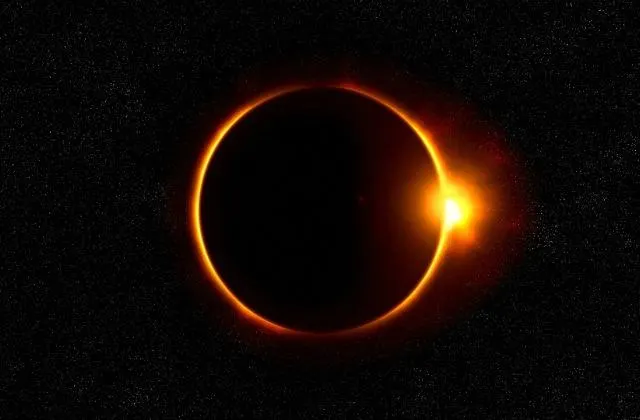
This August Solar Eclipse Will Create Minutes of Darkness Across These Countries While Revealing the Sun’s Hidden Atmosphere.
During totality, the Moon will cover the Sun’s bright visible surface. That brief alignment will reveal the solar corona, the faint outer atmosphere surrounding the Sun.
Scientists can observe the corona with space-based instruments called coronagraphs. These instruments block the Sun’s bright disk. However, they often struggle to reveal the region closest to the solar surface.
A natural total eclipse can expose this difficult area with unusual clarity. That makes totality valuable for studying structures near the inner corona.
Why the corona remains a mystery
The corona reaches temperatures close to one million degrees Celsius. By comparison, the Sun’s visible surface remains much cooler.
Researchers still want to understand how energy moves through the Sun’s atmosphere and produces such extreme heating. Eclipse observations can help them follow fine structures, waves, and changes that ordinary instruments may miss.
Scientists will also examine solar prominences. These large loops of glowing material extend outward from the Sun while remaining linked to its magnetic field.
Studying the corona could improve models of the solar wind. This continuous stream of charged particles travels through the solar system and can affect satellites, navigation systems, communications, and space missions.
Each total eclipse captures the Sun under different conditions. The 2026 observations can therefore complement data gathered during earlier eclipses.
NASA Will Chase the Eclipse From High Altitude
One of the most advanced observing campaigns will take place aboard a NASA WB-57 research aircraft.
The aircraft will fly at an altitude of about 50,000 feet. From there, the team can operate above most clouds and much of the water vapor in Earth’s lower atmosphere.
NASA says the aircraft will travel along the eclipse path at around 460 miles per hour. Its movement will help extend the observation period to almost three minutes. Ground observers will receive no more than about two minutes and 18 seconds.
Four cameras will examine the corona
The aircraft will carry four cameras designed to observe the corona in visible and infrared wavelengths. The instruments will capture at least 20 images each second.
Infrared measurements are especially valuable because Earth’s lower atmosphere absorbs some infrared wavelengths. Flying at high altitude reduces that interference.
Researchers hope to study small-scale changes in the corona and the behavior of solar prominences. The campaign builds on similar NASA observations made during the April 2024 total solar eclipse.
Scientific Balloons Will Study Earth’s Atmosphere
The Sun will not be the only focus of the research. Teams will also examine what happens inside Earth’s atmosphere when daylight suddenly fades.
NASA-supported groups plan to launch dozens of high-altitude balloons from Iceland. Additional balloons will rise from Spain before, during, and after the eclipse.
The instruments will record temperature, pressure, altitude, ozone levels, and other atmospheric conditions. Cameras will also capture the Moon’s shadow moving across Earth.
A rapid natural experiment
Sunlight continuously heats Earth’s surface and lower atmosphere. During an eclipse, that energy drops sharply for a short period.
Scientists can track how quickly temperatures change and how different atmospheric layers respond. The event acts like a controlled experiment, although it occurs on a much larger natural scale.
Previous eclipse campaigns detected temporary changes in atmospheric structure and ozone. Iceland offers a particularly interesting setting because of its long summer daylight conditions.
Comparing data from Iceland and Spain could show how local environments influence the atmosphere’s response.
The Perseid Meteor Shower Adds Another Highlight
The eclipse will occur on the same date as another major skywatching event.
The Perseid meteor shower will peak during the night of August 12 into August 13. A New Moon will keep the sky dark, creating favorable viewing conditions away from city lights.
The eclipse and meteor shower are separate events. Still, their timing could make August 12 an exceptional day for observers.
After watching the eclipse safely, skywatchers may see Perseid meteors later that night. Weather, location, and light pollution will determine the quality of the view.
How to Watch the Eclipse Safely
Certified solar eclipse glasses are essential during every partial phase. Ordinary sunglasses do not provide enough protection.
Observers inside the totality path may remove eclipse glasses only when the Sun becomes completely covered. They must put them back on as soon as any bright sunlight reappears.
Cameras, telescopes, and binoculars also need proper solar filters. Those filters must sit over the front of the equipment rather than behind the eyepiece.
Minutes of Darkness Could Deliver Years of Data
The August 2026 solar eclipse will last only a few minutes at any single location. Yet the scientific value could continue for years.
Aircraft will examine the corona above the clouds. Balloons will measure Earth’s changing atmosphere. Ground teams and space missions will add observations from other angles.
For Spain, the eclipse will also bring a historic return to totality after more than a century. For researchers, it offers a rare look at the region where the Sun’s visible surface meets its mysterious outer atmosphere.
On August 12, temporary darkness will reveal far more than a dramatic sky. It may also provide new clues about the Sun and its influence on Earth.
Main Sources:
NASA — Total Solar Eclipse on August 12, 2026
https://science.nasa.gov/eclipses/future-eclipses/total-solar-eclipse-on-august-12-2026/
NASA — NASA Science Soars During August Total Solar Eclipse
https://science.nasa.gov/science-research/heliophysics/nasa-science-soars-during-august-total-solar-eclipse/
NASA — Eclipse Science and Research
https://science.nasa.gov/eclipses/nasa-research/
ESA — Join ESA for a Total Solar Eclipse on 12 August 2026
https://www.esa.int/Science_Exploration/Space_Science/Join_ESA_for_a_total_solar_eclipse_on_12_August_2026
NASA — August 2026 Skywatching Tips
https://science.nasa.gov/solar-system/whats-up-august-2026-skywatching-tips-from-nasa/