
BY:SpaceEyeNews.
The eROSITA X-ray catalog has opened a much deeper view of the high-energy Universe. Its second public data release, known as DR2, lists nearly two million cosmic X-ray sources. That total is roughly twice the number in eROSITA’s first release. Active supermassive black holes dominate the distant population. More importantly, DR2 gives astronomers a consistent foundation for tracking black-hole growth and cosmic structure.
What the eROSITA X-Ray Catalog Contains
DR2 draws its main results from the energy range between 0.2 and 2.3 kiloelectronvolts. The primary catalog includes exactly 1,911,744 point-like sources and 63,796 extended sources.
Most point-like detections represent stars or active galactic nuclei containing supermassive black holes. Extended sources include galaxy clusters, nearby galaxies, and supernova remnants.
A separate hard-band catalog adds almost 15,000 detections between 2.3 and 5.0 kiloelectronvolts. Higher-energy observations can expose obscured or intrinsically energetic systems that appear faint in softer X-rays.
ROSAT’s all-sky catalogs from the 1990s contained about 125,000 sources. The new release contains around 16 times that number, although survey methods differ.
Three Sky Surveys Revealed Fainter Sources
The eROSITA telescope began surveying the sky aboard the Spektrum-Roentgen-Gamma observatory in December 2019. It completed a new all-sky scan about every six months.
DR2 combines the first three completed surveys. The observations span 556 days, from December 12, 2019, through June 16, 2021. Stacking repeated scans increased the survey’s depth. As a result, astronomers could detect weaker X-ray signals and measure known sources more accurately.
DR1 used only the initial six-month survey and listed nearly 930,000 sources. Two additional passes allowed DR2 to reach fainter objects.
Unlike DR1, however, DR2 is a catalog-only release. It provides validated source lists and an updated service for calculating upper flux limits. It does not include the calibrated event files and other higher-level products released with DR1.
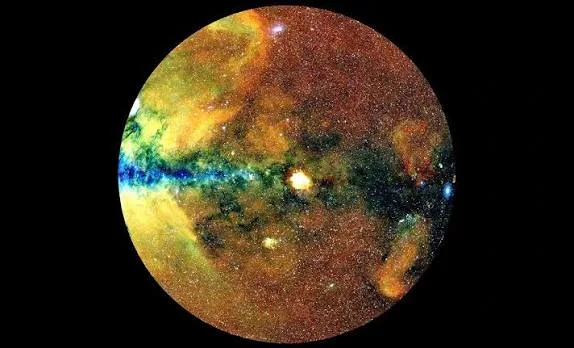
Astronomers reconstruct cosmic evolution with x-ray galaxy clusters.
Active Black Holes Lead the Distant Population
The greatest scientific value may come from the catalog’s huge sample of active supermassive black holes. Matter near these objects becomes extremely hot as it moves inward, producing strong X-ray emission.
A consistently selected sample lets researchers compare black holes across vast distances. They can examine when growth peaked and how activity changed over time. The data may also clarify links with host-galaxy development.
Early DR2 research suggests that highly luminous, rapidly growing black holes at large redshifts were more common than expected. This could refine models of their early emergence. Still, DR2 does not contain two million black holes. Many entries represent stars and other X-ray systems.
Optical Matches Give the X-Ray Sources Identities
An X-ray position alone cannot always reveal an object’s identity or distance. Therefore, the team released six additional catalogs that connect point-like detections with likely optical and infrared counterparts.
Within the imaging footprint of the DESI Legacy Surveys, researchers identified about 1.4 million counterparts. They estimate that roughly 88% of this matched sample is extragalactic. Active supermassive black holes dominate that group.
That distinction matters. The 88% figure applies to the matched sources inside a defined survey footprint, not automatically to every DR2 entry.
Multiwavelength matches help scientists separate stars from distant galactic nuclei. They also support distance estimates and more reliable classifications. In this way, the release becomes more than an X-ray map. It becomes a tool for reconstructing how different cosmic populations changed over billions of years.
eROSITA X-Ray Catalog Joins the Sloan Survey
The DR2 publication coincided with Data Release 20 from the Sloan Digital Sky Survey. SDSS provides optical spectra for large numbers of eROSITA sources through its SPIDERS program.
Spectra reveal an object’s composition, classification, and redshift. Redshift allows astronomers to place distant sources at different stages of cosmic history. Combining those measurements with eROSITA’s X-ray data creates three-dimensional maps of active black holes.
Researchers can then study where those objects cluster, how their activity depends on their surroundings, and how the population evolved. Galaxy clusters provide another major opportunity. Their hot gas shines in X-rays, while their distribution traces some of the Universe’s largest structures. Large cluster samples can support tests involving cosmic evolution, dark matter, and dark energy.
The Public Map Covers Half the Sky
Despite its scale, DR2 has an important boundary. The public catalog covers the western Galactic hemisphere, where the German eROSITA Consortium holds scientific data rights. It should not be described as a complete public catalog of the entire celestial sphere.
The telescope completed four of its eight planned all-sky surveys before entering safe mode on February 26, 2022. Science operations remain paused. DR2 uses only the first three surveys, leaving additional collected material for later analysis.
The consortium plans DR3 for the second half of 2028. Meanwhile, DR2 is already available through the project’s scientific archive. Its main study appeared as an arXiv preprint, while official eROSITA information lists the paper as accepted in 2026.
Conclusion: A New X-Ray Census
The eROSITA X-ray catalog marks a major advance because of its scale, sensitivity, and consistent source selection. It gives astronomers an unmatched public dataset for studying active black holes, energetic stars, galaxy clusters, and rare objects. Optical and infrared matches add identities and distances to many detections. The Sloan partnership extends that work into three dimensions. Although the release covers only one Galactic hemisphere, it already reshapes the public view of the high-energy Universe. Future studies—and DR3—should reveal how much discovery space remains inside this enormous cosmic inventory.
Main Sources:
- Max Planck Society — Most Comprehensive Census of the High-Energy Universe
- Official eROSITA-DE Data Release 2
- eROSITA DR2 Research Paper — arXiv
- Sloan Digital Sky Survey — Data Release 20
- Official eROSITA Future Data-Release Schedule