
BY:SpaceEyeNews.
The world has decided to stop making tiny corrections that keep our clocks closely aligned with Earth’s rotation. Leap seconds will disappear from international timekeeping under a new framework starting on May 20, 2027.
The decision marks a significant shift in how humanity measures time. However, it will not change Earth’s rotation, move sunrise, or suddenly give anyone an extra hour.
Instead, timekeepers want a steadier global clock for the technologies that increasingly shape daily life. The surprising part is how much trouble a single second can cause.
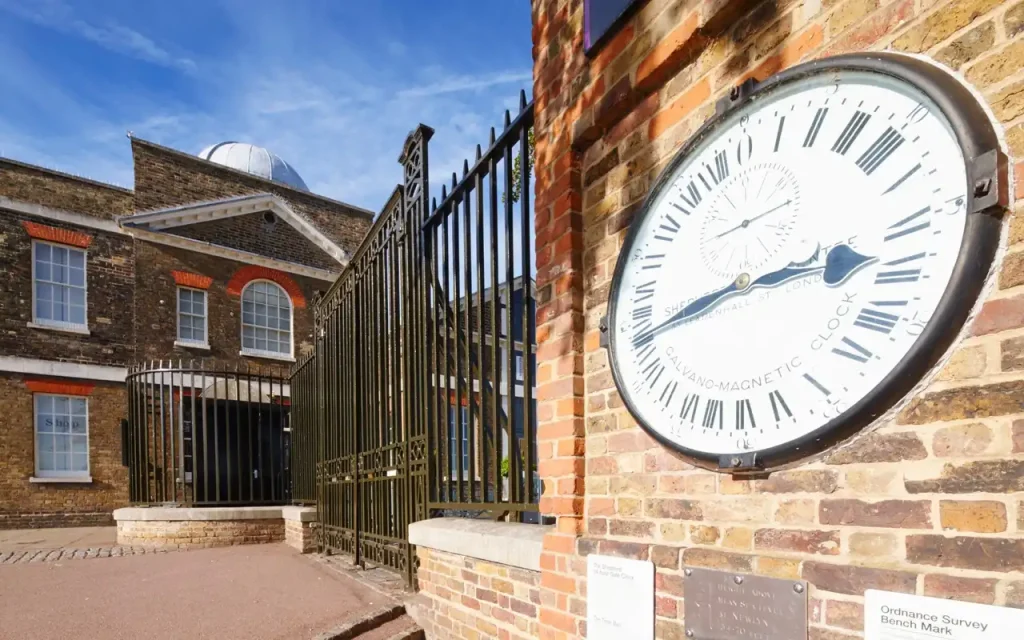
Leap Seconds Are Ending: Greenwich’s Historic Clock.
What the Leap Seconds Decision Changes
On October 15, 2026, the General Conference on Weights and Measures approved the move to continuous Coordinated Universal Time, or UTC. This international reference underpins civil time across much of the world.
Previously, timekeepers used leap seconds to keep UTC within 0.9 seconds of UT1, the timescale that follows Earth’s rotation. The new framework increases that permitted difference to 3,600 seconds, or one hour.
That hour represents an accumulated difference between two timescales. It does not mean clocks will jump by an hour next May.
The decision also brings forward an earlier agreement. In 2022, timekeepers committed to increasing the permitted difference by or before 2035. Now, they have established an earlier implementation date and a specific limit.
Why a Single Second Became a Problem
Since 1972, timekeepers have inserted 27 leap seconds. The most recent addition came at the end of December 2016.
For most people, those adjustments passed unnoticed. Computer networks, however, must coordinate events at much finer intervals.
A financial transaction, network message, or electricity-grid measurement needs a reliable timestamp. When connected systems handle a time correction differently, their records can disagree.
Different Systems, Different Solutions
Some services insert the extra second directly. Others spread the adjustment across a longer period through a technique called leap smearing.
These approaches can reduce particular technical difficulties. Yet different methods can also leave systems temporarily showing different times.
The challenge therefore extends beyond adding one number to a clock. Many independent networks must interpret and apply the same correction consistently.
Continuous UTC removes that recurring complication from the international reference timescale.
A Faster Earth Added Urgency
Earth’s rotation does not follow a perfectly steady rhythm. Although the planet has slowed over long timescales, shorter periods can show different trends.
Recent acceleration raised the possibility of a negative leap second. Instead of adding a second, timekeepers would remove one from UTC.
Nobody has ever implemented that adjustment.
Why a Negative Leap Second Matters
Many systems already struggle with occasional extra seconds. Removing one would introduce an unfamiliar situation across infrastructure that depends on synchronized time.
The official resolution cites an expert estimate of a 30 percent probability of needing a negative leap second by 2035.
That figure describes a possibility, not a scheduled event. Nevertheless, it strengthened the argument for acting sooner.
By advancing continuous UTC to 2027, timekeepers aim to avoid introducing this additional complication.
What Changes for Everyday Life?
For ordinary users, the transition should bring no noticeable change to daily routines. Your calendar will still organize days into 24 hours.
The decision does not change time zones or daylight-saving policies. It also does not require everyone to reset their clocks by an hour.
Instead, the intended benefits sit behind familiar services. Telecommunications, transport networks, energy systems, and other technologies depend on consistent timing.
Removing leap-second adjustments reduces one source of synchronization problems. Engineers must still maintain accurate clocks and reliable networks, but they will have fewer exceptional timing events to handle.
Meanwhile, sunrise and sunset will continue following Earth’s motion. A timekeeping resolution cannot change the physical relationship between our planet and the Sun.
Does the New Rule Create a Leap Hour?
Several headlines describe the decision as replacing leap seconds with a “leap hour.” That wording needs care.
The official resolution establishes a maximum difference of one hour between UTC and UT1. It does not prescribe an automatic future one-hour jump.
Nor does it announce a date when such an adjustment must happen.
An Accumulating Gap, Not a Longer Day
The distinction matters because the difference builds across time. It does not mean a single solar day will eventually become 25 hours because of this decision.
Under the new framework, atomic clocks can continue their steady count while Earth’s rotation follows its variable rhythm.
The resolution anticipates continuous UTC lasting for several centuries. However, precise claims about when the difference will reach an hour depend on forecasts of Earth’s rotation.
Those forecasts contain uncertainty. Treating the drift as a fixed number of minutes every few centuries oversimplifies the issue.
Astronomy Will Still Track Earth’s Rotation
Ending leap seconds does not make Earth-rotation time obsolete. Astronomers and celestial navigators still need to know how our planet turns.
Scientists will continue monitoring UT1 and publishing its difference from UTC through established international services.
Specialist applications can therefore obtain the information they need without requiring everyday clocks to follow every correction.
This preserves a practical connection between atomic time and astronomical time. The change relaxes their required agreement rather than making Earth’s rotation irrelevant.
It also highlights an important distinction: a dependable clock and a measurement of planetary rotation serve related but different purposes.
Leap Seconds End, but the Sun Keeps Its Role
The May 2027 transition changes a global timekeeping convention. It leaves the natural cycle of daylight untouched.
Leap seconds once helped reconcile precise clocks with an irregularly rotating planet. Modern infrastructure has made those occasional corrections increasingly difficult to coordinate.
Continuous UTC offers a steadier reference while scientists keep tracking the astronomical difference.
For readers, the central point is straightforward: our clocks will no longer make frequent tiny adjustments to follow Earth. They will keep counting steadily, while specialists continue measuring the planet’s changing rhythm.
Main sources:
- International Bureau of Weights and Measures — Resolution 5 of the 28th CGPM (2026):
https://www.bipm.org/en/cgpm-2026/resolution-5 - National Physical Laboratory — The future of timekeeping and the use of leap seconds:
https://www.npl.co.uk/news/the-future-of-timekeeping - AOL / Sarah Knapton — The sun will no longer dictate the length of a day:
https://www.aol.com/articles/sun-no-longer-dictate-length-184641000.html