
BY:SpaceEyeNews.
GRB 220706A delivered its biggest surprise long after its initial appearance. Weeks later, astronomers still detected X-ray flares from the distant source. Their analysis points to activity lasting approximately 27 days in the event’s own reference frame.
That extraordinary timescale raises a difficult question: what kept supplying energy?
The finding concerns late X-ray activity, rather than continuous gamma-ray emission. Even with that distinction, the event pushes familiar explanations into challenging territory. A possible supernova adds another clue, while leaving the identity of the underlying power source unresolved.
What Astronomers Recorded from GRB 220706A
A brief initial signal, followed by prolonged activity
NASA’s Neil Gehrels Swift Observatory detected the burst on July 6, 2022. Its Burst Alert Telescope recorded an initial gamma-ray signal with a T90 of approximately 87 seconds. That measurement describes the interval containing the central 90 percent of detected burst counts. swift.gsfc.nasa.gov
However, the initial signal revealed only part of the story. Subsequent X-ray observations uncovered activity extending far beyond that early interval.
This distinction matters when describing the discovery. Calling it a continuous, monthlong gamma-ray burst would give readers the wrong impression. The remarkable feature lies in the much later flaring.
Why 51 days becomes 27 days
The research traces X-ray flaring to approximately 51 days after the initial detection. At the source, that corresponds to about 27 days.
Cosmic expansion explains the difference. It stretches the arrival intervals between signals from distant objects, making their activity appear slower from Earth.
The researchers identify this as the latest central-engine activity observed in a GRB. Their estimate exceeds the previous benchmark by approximately 21 days in the source’s reference frame. arxiv.org
Why These Late X-Ray Flares Matter
A lingering glow alone would not establish that the central source remained active. Material moving outward can continue radiating after the original energy release.
Flares pose a more specific challenge. Their changing brightness can reveal processes that a simple, steadily fading afterglow cannot explain.
For this event, the researchers interpret the late behavior as evidence of an exceptionally persistent engine. That interpretation places demanding requirements on any proposed explanation.
A model must account for both the available energy and its release schedule. Keeping activity going for weeks requires more than producing a powerful initial signal.
The question therefore reaches beyond duration. Astronomers also need to understand how material flows inward, how energy escapes, and why activity changes over time.
These observations challenge the limits of existing models. They do not establish that a completely new physical process must exist.
A Likely Supernova Adds Another Clue
An unusually luminous companion
The team also identifies a likely supernova associated with GRB 220706A. Its inferred brightness makes the event especially interesting.
However, dust complicates that estimate. Dust along the viewing direction absorbs light, so researchers must account for its effects.
Different corrections change the luminosity they infer. Consequently, the supernova’s brightness carries uncertainties that deserve attention alongside the exciting interpretation.
The evidence supports a possible connection with unusually luminous stellar events. It does not provide a direct identification of the central remnant.
A resemblance to an earlier event
The researchers compare the candidate with SN 2011kl, which accompanied GRB 111209A. That earlier pairing also linked unusually prolonged activity with a luminous supernova.
The resemblance offers a useful comparison. Perhaps related energy sources operate in both systems.
Nevertheless, similar appearances do not establish identical origins. Astronomers need explanations that reproduce the timing and emission, rather than brightness alone. arxiv.org
What Could Power GRB 220706A for Weeks?
A rapidly spinning magnetar
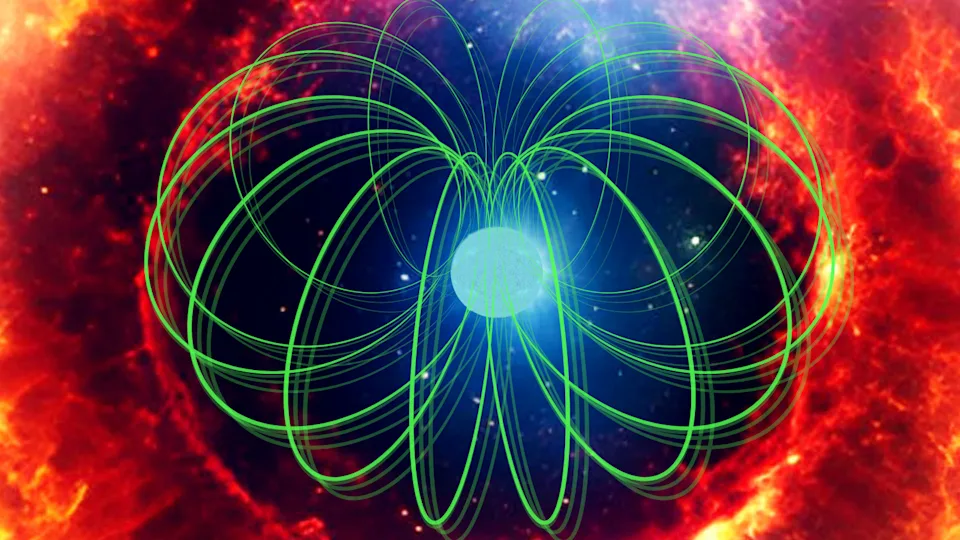
One possibility involves a magnetar: a neutron star with an exceptionally strong magnetic field.
If it also spins rapidly, it holds substantial rotational energy. As its rotation slows, that energy could contribute to emission from surrounding material.
This possibility connects naturally with models for some unusually luminous supernovas. It also offers an alternative to assuming that every relevant stellar collapse immediately produces a black hole.
Yet a plausible energy supply does not settle the case. A magnetar model must also explain the exceptionally late flaring. Astronomers have not confirmed such an object here.
A larger star supplying material longer
Another possibility concerns the original star’s size and structure.
An extended stellar envelope could supply infalling material over a longer period. That could prolong the energy available to the system.
This idea motivates discussion of blue supergiants as potential progenitors. Their extended structures differ from the compact stars commonly associated with long GRBs.
Still, researchers have not measured this progenitor’s radius directly. Proposed sizes represent model requirements, rather than observations of the original star.
Any successful scenario must also explain how the energetic outflow emerges through the surrounding stellar material.
Encounters with surrounding shells
The star’s surroundings offer another possible contribution.
Before its final collapse, an unstable star may shed layers of material. Later, expanding ejecta or an outflow could encounter those dense shells.
Such interactions can convert motion into radiation and alter the observed brightness. They may help explain aspects of an unusually luminous event.
However, emission from surrounding material differs from direct activity at the central engine. Researchers must determine which process best accounts for each observed feature.
Could Similar Events Escape Detection?
Recognizing prolonged activity requires patience as well as sensitive instruments. A short initial detection cannot reveal everything that happens weeks later.
Observing gaps can also interrupt the record. Meanwhile, instruments sensitive to gamma rays may miss behavior that stands out more clearly in X-rays.
Einstein Probe offers a relevant capability. The mission launched on January 9, 2024, and searches for transient and variable X-ray sources.
Its wide field of view helps survey large areas of the sky. Follow-up observations can then track promising discoveries. www.esa.int
Finding comparable systems would allow astronomers to test whether these events share consistent properties. A larger sample could clarify whether they form a distinct population.
That makes continued monitoring essential. Brightness changes across different wavelengths can help separate competing explanations. Optical observations probe different components from X-ray measurements. Together, those records offer a stronger test than any single snapshot of this unusual cosmic source.
GRB 220706A Leaves the Power Source Unresolved
GRB 220706A shows how sustained observation can transform the meaning of an initial detection. Its late X-ray flares demand an explanation that remains incomplete.
The cited research is available as a preprint, and its proposed interpretations remain open to scrutiny.
For now, the strongest conclusion concerns the remarkable activity itself. Understanding its origin could reveal how some stellar systems continue releasing energy far beyond familiar timescales.
Main sources:
- Original research: GRB 220706A: a gamma-ray burst with a month-long engine and a luminous supernova
- NASA Swift: GRB 220706A observation record
- European Space Agency: Einstein Probe factsheet
- Space.com: Original coverage supplied for this topic
You Might Also Like:
eROSITA X-Ray Catalog Maps Two Million Sources
Milky Way gamma-ray glow: A Dark Matter Clue
M87 Black Hole Jet Revealed in Sharpest X-Ray View