
BY:SpaceEyeNews.
The FAA ground stop on November 13, 2026, began with a problem far from crowded airport terminals. During routine telecommunications work at a remote facility, a router started flooding the air traffic control network with connection attempts. Communications and radar feeds became unstable, prompting the FAA to halt departures nationwide.
Officials have outlined the apparent sequence, but they have not established the precise root cause. The central question now extends beyond which device malfunctioned: how did work at a small location disrupt such a large network?
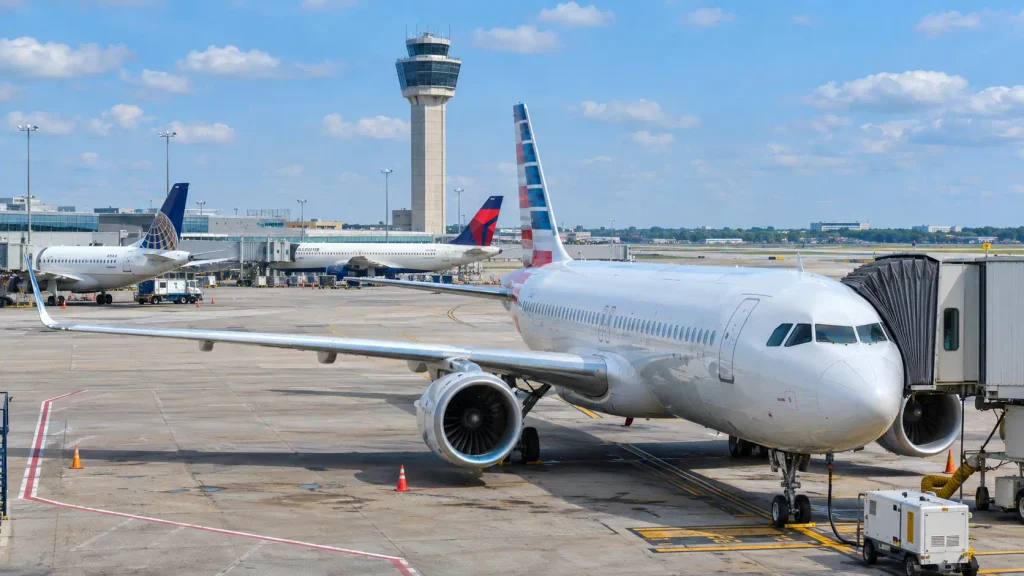
What Triggered the FAA Ground Stop?
Transportation Secretary Sean Duffy described the preliminary findings during a November 14 briefing. L3Harris, the FAA’s longstanding telecommunications contractor, was switching a remote location from copper lines to fiber.
The work addressed an immediate maintenance need. Duffy said the existing copper connection was approaching discontinuation, requiring a transition to newer infrastructure. During that change, a router began sending excessive connection requests to other routers.
Officials recorded more than 1,000 attempts every four to five seconds. That activity disrupted communications with aircraft and affected radar feeds. The FAA then suspended departures while teams worked to isolate the problem.
The Malfunction Is Clearer Than Its Cause
Investigators still need to determine whether installation error or defective equipment triggered the router’s behavior. Those possibilities require different corrective actions, so assigning responsibility before the investigation concludes would be premature.
For now, officials have identified an apparent trigger and its operational consequences. They have not published a complete technical explanation establishing why the equipment behaved that way.
How a Remote Problem Spread Across the Network
The FAA’s initial statement identified communications issues affecting multiple Air Route Traffic Control Centers. This wider impact explains why the response extended beyond the facility where maintenance took place.
However, a nationwide departure restriction does not establish that every control center lost every service. The official account describes instability in communications and radar information. It does not support claims that the entire radar network stopped functioning.
That distinction matters when assessing the scale of the failure. The operational response covered the country because reliable coordination mattered across the network. The underlying technical effects still require a more detailed explanation.
Why Containment Matters
The incident raises a specific engineering question: why did excessive connection attempts from the affected equipment disrupt other locations?
A full investigation should clarify which safeguards existed and how they performed. Until officials release those findings, claims about missing protections or a particular network design flaw remain speculative.
The priority is understanding the path from a local malfunction to a wider service disruption. Identifying the first faulty component alone cannot explain every stage of that sequence.
Why Flight Recovery Took Longer Than Network Recovery
The FAA ground stop created two separate recovery tasks. Technical teams needed to restore reliable services, while aviation operators needed to resume disrupted flight schedules.
Duffy said controllers and pilots safely landed approximately 3,500 aircraft during the response. The Department of Transportation also stated that more than 8,000 flight operations resumed after restrictions lifted that night.
Those figures show substantial activity returning. They do not mean every passenger’s journey immediately returned to schedule.
In its November 14 update, the department warned that delays and cancellations would continue despite the reopened airspace. For travelers, restored communications marked an essential step, rather than the end of the disruption.
This difference helps explain why recovery announcements and airport departure boards can tell different stories. A functioning network allows flights to operate again. It does not erase the interruption that airlines and passengers have already experienced.
What Investigators Still Need to Establish
The unresolved issue is whether the equipment itself failed or whether the installation process introduced the problem. Investigators must establish that distinction before drawing firm conclusions about responsibility.
The public explanation also needs to address how the abnormal activity spread. Understanding the initial fault and understanding its wider impact are related, but separate, tasks.
Duffy said systems returned after teams isolated the work at the remote location. He also said officials did not believe a cyberattack caused the disruption. That assessment supports focusing on the maintenance event while investigators complete their analysis.
L3Harris Responds
L3Harris said it was supporting the FAA investigation into the conditions behind the November 13 disruption. The company also acknowledged the impact on travelers, airlines, and air traffic operations.
Its statement emphasized ongoing cooperation with the FAA and telecommunications partners. However, it did not identify a definitive technical cause or resolve the question of installation error versus faulty equipment.
The company’s response therefore provides its position, rather than an independent conclusion about what went wrong.
What the Disruption Means for FAA Upgrades
FAA Administrator Bryan Bedford distinguished this maintenance work from the separate $12.5 billion modernization effort. He described the router replacement as routine work needed to sustain the existing telecommunications network.
That distinction prevents a misleading conclusion that the incident demonstrated a failure of the entire modernization program. Routine replacement and broader infrastructure renewal can happen simultaneously, but they represent different activities.
Bedford also described a legacy network dating to the 1980s. That does not establish that every affected router came from that decade.
The department outlined other work already underway, including radio upgrades and electronic flight strips at 25 towers. These improvements address different operational needs. Their existence does not answer the separate question of why the telecommunications maintenance event disrupted service.
Maintenance Timing Faces Review
Duffy said smaller remote facilities typically undergo this work during daytime hours. Larger locations receive nighttime switchovers because changes there can have a greater operational impact.
Following this disruption, he said officials would reevaluate when maintenance takes place. The investigation should help determine whether scheduling changes, installation practices, or equipment measures require attention.
Meanwhile, L3Harris said it had completed more than 70% of the planned copper-to-fiber communications conversion with its partners. That progress figure describes the conversion program; it does not establish the cause of this incident.
FAA Ground Stop Leaves a Crucial Question
The FAA ground stop exposed how consequential a remote telecommunications problem can become for national flight operations. Officials have connected the disruption to router activity during routine maintenance, while the precise fault remains unresolved.
The next meaningful development will be a technical explanation that connects the equipment problem, its spread, and the corrective measures. Restoring service addressed the immediate disruption. Preventing a repeat requires understanding why this particular maintenance task produced consequences far beyond its original location.
Main Sources:
Federal Aviation Administration — November 13, 2026: FAA Statement on Nationwide Ground Stop.
U.S. Department of Transportation — November 14, 2026: Official briefing on the cause and restoration of airspace.
L3Harris — November 14, 2026: Company statement on the November 13 ground stop.