
BY:SpaceEyeNews.
The Vulcan rocket failure has cost Amazon 40 satellites and raised questions about its next phase of internet network expansion. On November 15, 2026, ULA’s LV-01 mission lifted off from Florida but failed to deliver its payload into orbit. Amazon confirmed the loss shortly afterward.
The immediate setback is clear. However, the larger concern involves the launch schedule that Amazon expected Vulcan to support. This mission was supposed to begin a sustained deployment campaign. Its outcome now puts the timing of that campaign under scrutiny, while investigators work to establish what happened.
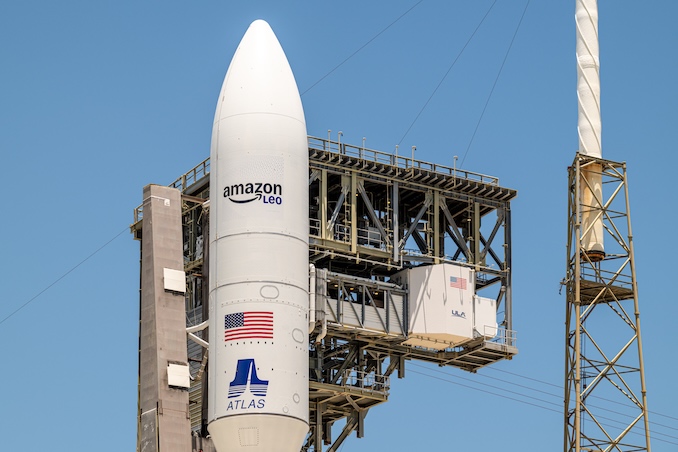
What happened during the Vulcan launch?
Vulcan launched from Space Launch Complex 41 at Cape Canaveral Space Force Station at 12:40 p.m. EST. The mission carried the largest single batch of Amazon Leo satellites attempted so far.
ULA said an anomaly occurred approximately 10 minutes into flight. The vehicle did not deliver the satellites to their intended orbit. Although that timing helps establish the sequence, it does not identify the component responsible.
A new configuration for Amazon
LV-01 used Vulcan’s VC6L configuration, combining six solid rocket boosters with two BE-4 first-stage engines. Above them sat a Centaur V upper stage optimized for low Earth orbit.
This was Vulcan’s first mission with six boosters. It also introduced a shorter version of Centaur V intended to improve payload capacity for these deployments.
Those details explain the flight’s importance. They do not, by themselves, explain its failure. Investigators must determine whether any particular system contributed to the unsuccessful mission.
Why this flight mattered to Amazon Leo
Amazon’s launch agreement gives Vulcan a major role in building its constellation. The company contracted 38 missions, with plans for the rocket to deploy more than 1,500 first-generation satellites.
Consequently, LV-01 carried significance beyond its 40 spacecraft. It marked the beginning of a launch program intended to deliver close to half the initial network.
ULA had already completed eight successful Amazon deployment missions using Atlas V before this launch. The transition to Vulcan was therefore a significant change in Amazon’s launch campaign. Success with the earlier vehicle provided experience, but LV-01 still needed to demonstrate the new configuration’s performance.
Larger payloads, faster expansion
Amazon planned initial Vulcan missions around 40 satellites each, with larger payloads expected as vehicle upgrades increased performance. That approach depends on both carrying capacity and launch frequency.
A larger rocket helps only when it can fly consistently. Repeated missions allow the operator to expand coverage and add network capacity over time.
The Vulcan rocket failure therefore creates two separate challenges: the loss of this payload and uncertainty over subsequent flights. The investigation will help determine whether the schedule faces a limited interruption or a broader revision.
For Amazon, that distinction matters more than any early speculation about the hardware involved.
What the Vulcan rocket failure investigation must establish
ULA’s initial statement did not identify a root cause. That leaves an important gap between observing unusual flight behavior and explaining why it occurred.
The supplied flight coverage described an extended first-stage burn, delayed separation, and unusual movements in the telemetry animation. Such observations can guide questions. However, they cannot establish a diagnosis without supporting engineering data.
Flight symptoms are not confirmed causes
A problem that becomes visible during one stage of flight may originate earlier. Likewise, a vehicle’s corrective movements can reflect its response to an existing problem.
Previous booster nozzle issues provide context for Vulcan’s development history. They do not prove that the same issue affected LV-01. Shared engine hardware with another rocket also does not establish a shared failure mechanism.
The useful milestones are concrete: an identified cause, a corrective plan, and evidence supporting a safe return to flight. Until ULA provides those findings, assigning responsibility to the engines, boosters, or upper stage would go beyond the available confirmation.
Amazon’s launch pace faces a new test
Before LV-01, Amazon expected the next Vulcan mission to follow within weeks of a successful flight. Preparations for LV-02 were already underway.
The company also invested in dedicated launch infrastructure at Cape Canaveral. Those facilities allow teams to prepare two Vulcan missions simultaneously, supporting shorter intervals between launches.
Now, the planned sequence depends on the investigation and the resulting recovery schedule. Infrastructure can speed preparation, but it cannot resolve uncertainty about a vehicle’s flight readiness.
Satellite production is only part of deployment
Amazon announced that it completed its 1,000th satellite in early September. Its prelaunch update also described hundreds of spacecraft ready for flight.
That progress highlights the difference between manufacturing satellites and placing them into service. Finished spacecraft still need launches, orbital deployment, health checks, and commissioning.
A launch interruption can therefore affect expansion even when production continues. However, the loss of LV-01 does not automatically establish a delay to initial commercial service. Amazon’s existing network and wider launch schedule also matter. Any revised service date should come from the company, rather than assumptions about this mission alone.
Can other rockets keep Amazon Leo moving?
Amazon’s broader launch strategy includes Arianespace, SpaceX, and Blue Origin alongside ULA. Using several providers gives the program more routes to orbit.
Its next announced mission offers an immediate example. Amazon’s November 15 update listed an Ariane 6 launch carrying 36 satellites, targeted no earlier than November 23.
Diversification helps, but capacity still matters
That mission could continue deployment while Vulcan’s next steps remain uncertain. Still, an existing launch booking does not mean another provider can immediately absorb additional payloads.
Rocket availability, mission preparation, and scheduling all influence how quickly a constellation can grow. Amazon has not announced that another vehicle will replace the lost Vulcan capacity.
The competitive implication is straightforward: slower deployment could constrain the pace of expansion against Starlink. Yet one failed mission cannot determine the eventual outcome. The more useful measure is how many satellites Amazon successfully deploys across its full launch program in the months ahead.
What comes next after the Vulcan rocket failure?
The Vulcan rocket failure leaves Amazon without 40 planned additions and ULA facing an unresolved technical investigation. Its longer-term effect will depend on the findings and the time needed to address them.
Three developments deserve attention: ULA’s explanation of the anomaly, an updated Vulcan flight schedule, and continued deployments through Amazon’s other providers.
For now, the confirmed loss is substantial, while the full schedule impact remains uncertain. Amazon’s next phase depends on converting its satellite inventory and launch agreements into reliable orbital deliveries. A credible recovery plan will show how soon Vulcan can contribute to that effort again.
Main sources:
- ULA: Vulcan Leo 1 mission overview
- Amazon: LV-01 mission preview and deployment plans
- Amazon: Official mission updates and payload-loss confirmation
- Spaceflight Now: Mission coverage and ULA’s anomaly statement
You Might Also Like:
Zhurong Rover Water on Mars: Radar Evidence Mars Stayed Wet Much Longer-Video
China Builds a Giant Internet in Space: 12,000 Satellites to Blanket Earth! – (Video)
Artificial Intelligence in Action: How AI is Reshaping Our World-(Video)