
BY:SpaceEyeNews.
At Apple’s flagship store on Chicago’s Michigan Avenue, employees could neither finish a sale nor book an appointment. Their internal system was down for at least an hour. Elsewhere, customers were reporting problems with Apple Pay and iCloud. The Apple outage on Tuesday, November 17, 2026, had reached both the people trying to buy something and the staff trying to help them.
Apple traced the disruption to an internal update. By 6 p.m. Eastern time, its public dashboard showed every service available again. In the intervening hours, the experience depended on what someone needed from Apple and when they tried to do it.
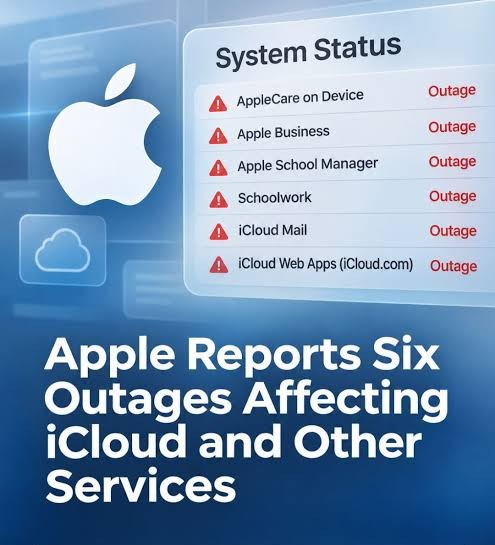
Where customers felt the Apple outage
In Philadelphia, a customer visited the Apple Store at 18th and Walnut streets around 12:30 p.m. An employee explained that the store couldn’t sell products at that moment, the customer told NBC10. Employees in New York also described trouble with their internal software. Together, those accounts document disruptions at stores in three cities. Apple gave no figure for how many retail locations experienced similar delays.
At other checkouts, Apple Pay users were posting complaints. The distinction matters for anyone trying to understand what happened to a purchase. An Apple Store employee described losing access to software needed to complete a sale. An Apple Pay user could report a payment problem at a different merchant altogether. Apple hasn’t publicly traced those two experiences to a particular payment system.
From iCloud sign-in to AppleCare purchases
For people trying to get online, even the label “iCloud outage” covered several experiences. Apple’s status page flagged trouble with sign-in. It also listed iCloud Mail and web apps during the afternoon. Someone who already had an account session open and someone trying to sign in faced different questions about what they could access.
The AppleCare notice gave customers a more specific answer. Apple temporarily suspended purchases of coverage on devices. That detail mattered to someone setting up a new purchase and deciding whether to add protection. Separately, Apple Support users reported difficulties getting help. Apple’s notice about buying coverage addressed just one of the tasks customers were trying to complete.
How the Apple outage unfolded on November 17
Apple’s public notices and the rise in customer complaints put different points on the timeline. TIME placed the AppleCare outage notice at 11:15 a.m. Eastern. Around 11:40 a.m., reports on Downdetector began climbing. For readers looking back at the morning, the earlier time marks Apple’s notice. The later one marks a change in the volume of public complaints.
By around 2 p.m., the list extended beyond familiar consumer apps. NBC News found Apple Business, Apple School Manager and Schoolwork on the dashboard alongside AppleCare and iCloud services. Apple Music also appeared in the day’s outage notices. For a school administrator following the incident, a search for Apple Pay complaints would have missed the relevant notice entirely. Apple listed the school services under their own names. The entries gave institutions a place to check, although Apple offered no breakdown of how many schools or businesses experienced difficulties.
Two services, two recovery times
At 2:27 p.m., Apple posted an App Store notice indicating that some users might experience trouble. By 3:30 p.m., it listed that issue as resolved. At that same moment, AppleCare still had an active notice. Apple described the coverage purchase issue as affecting all users, then marked it resolved at 3:39 p.m.
The scope of each notice mattered as much as its timing. Apple applied the all-users label to the AppleCare purchase issue. Its App Store wording allowed for customers who could still use the store during the same afternoon.
Those nine minutes illustrate how precisely the answer to “Is Apple back?” depended on the service. A customer checking the App Store at 3:30 had a recovery notice to go on. Someone trying to add AppleCare still had a reason to wait. By 6 p.m., NBC News and the Associated Press found no remaining outage notices on the dashboard.
How many people reported Apple Pay and iCloud problems?
Apple Pay generated around 2,300 U.S. reports on Downdetector at about 12:20 p.m., Reuters found. The tracker also recorded roughly 1,800 U.S. iCloud reports at that service’s peak. TIME cited a separate snapshot shortly before 1 p.m., when roughly 2,000 reports concerned Apple Support, Apple Pay and iCloud.
It is tempting to add those figures and put a single number on the day. But the counts cover different services and moments, and one person could encounter trouble with more than one service. They also leave out customers who never submitted a complaint. A shopper who spoke to a store employee, for instance, had no need to log a separate report online.
The figures establish that complaints reached the thousands in the United States. Apple gave no overall customer count in its statements that day. Nor did it publish a tally of incomplete purchases or missed appointments. The tracker captured when problems drew public attention, while the store accounts documented consequences that a complaint count alone could never measure.
What Apple said about the internal update
Apple’s explanation arrived while recovery work was still underway. A spokesperson told news outlets that an internal update had caused the morning disruptions. Many systems had already returned to service by the time the company spoke. Teams were still working on the rest. Apple also ruled out an external intrusion as the cause.
The word “internal” answers a practical question for iPhone owners. Apple attributed the disruption to a change on its side. Its explanation gave customers no reason to connect the outage to an iOS update they had installed themselves. The company did not identify the component it changed, describe the fault, or specify how engineers restored each service.
Other disruptions had recently affected Microsoft, banks and U.S. air travel. Their timing drew attention, but the public accounts offered no evidence of a common cause. Apple’s statement supplied a specific explanation for its own incident.
What the evening recovery settled
By Tuesday evening, the Apple outage had a clear endpoint on the company’s dashboard. Customers could check whether Apple still listed a problem before trying a purchase, signing in or seeking support again. For the Chicago store staff who had spent part of the day unable to book even an appointment, that simple status carried practical weight. Once the notices cleared, one question remained. Which internal change had reached so many different parts of Apple’s business?
Main sources:
- TIME — https://time.com/article/2026/11/17/apple-outage-down-update-issue/
- Reuters — https://www.reuters.com/business/retail-consumer/apple-works-restore-services-after-outage-caused-by-internal-update-2026-11-17/
- Apple System Status — https://www.apple.com/support/systemstatus/
- NBC Chicago — https://www.nbcchicago.com/news/local/nsa-apple-and-more-multiple-companies-and-agencies-experience-glitches-outages/4017957/
- NBC10 Philadelphia — https://www.nbcphiladelphia.com/news/tech/apple-reports-outages-for-multiple-services/4498868/
- The Associated Press and NBC News — https://www.nbcnewyork.com/news/national-international/apple-gmail-marriott-and-more-services-down-in-latest-wave-of-widespread-outages/6573469/