
BY:SpaceEyeNews.
Russia’s nuclear space weapon could put thousands of satellites at risk, the U.S. Defense Intelligence Agency warns. Its October 2026 assessment describes a Russian project to develop a satellite capable of carrying a nuclear weapon. The agency has yet to confirm publicly that Russia has placed such a device in orbit. What gives the finding international significance is the reach of its potential effects. A weather forecaster tracking a hurricane and a ship relying on satellite communications could both depend on spacecraft exposed to the same event.
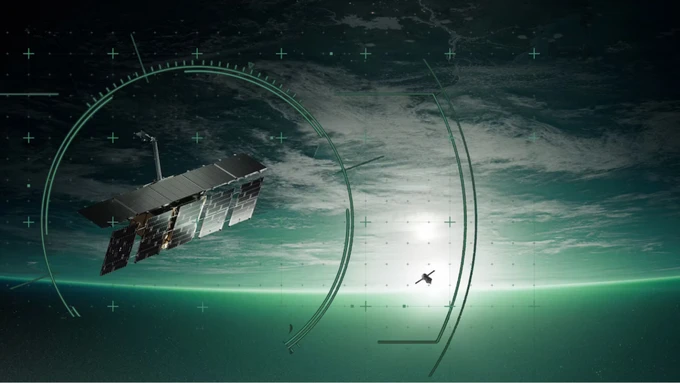
Stock photo: sueddeutsche.de
The evidence for Russia’s nuclear space weapon
The DIA sets out its finding in the 2026 edition of Challenges to Security in Space. Its information runs through July 2026, several months before Space.com covered the assessment on November 20. That date matters. The November headline drew attention to an intelligence judgment about an ongoing project. It provided no fresh evidence of a launch.
U.S. officials had already described the project in public. The intelligence community’s 2026 Annual Threat Assessment identified a Russian satellite under development for use against other satellites. Congressional testimony also recorded that concern. What the DIA adds is a fuller account of the potential consequences, including the risks to commercial operators around the world.
The public evidence leaves several questions open. How close is the spacecraft to completion? Has Russia set a deployment date? The documents give no timetable. They describe what U.S. analysts believe the satellite would carry and why they take that possibility seriously. Establishing that a spacecraft carries such a payload would require evidence beyond a description of its intended role.
Satellite damage after Starfish Prime
In July 1962, the United States conducted a high-altitude nuclear test called Starfish Prime. Earth’s magnetic field trapped charged particles from the event, creating an artificial radiation belt. Spacecraft encountered those particles as they continued along their orbits. Exposure could therefore accumulate long after the test itself.
NASA’s records describe serious radiation effects on three satellites within a month. One was Ariel 1, a scientific satellite. Measurements showed that radiation accelerated the deterioration of exposed solar cells. For a spacecraft that draws power from sunlight, that matters on every orbit. A satellite can stay on course while gradually losing the power its instruments need.
Scientists had expected Earth’s magnetic field to trap some particles. The intensity of the resulting radiation surprised them. Later that year, NASA launched Explorer 15 to measure the artificial belt. The historical record helps explain why the DIA includes a decline in satellite performance alongside outright loss. It also leaves an important limit on the comparison. The 1962 observations cannot tell us how many modern spacecraft would experience either outcome.
What satellite disruption could mean on Earth
The DIA’s estimate of thousands encompasses satellites that could lose some capability as well as those that could go out of service. Those outcomes can look quite different to someone on the ground. The practical question for a user is which service the satellite provides and whether another system can cover the gap.
Gaps in weather observations
Consider a hurricane gathering strength over open water. NOAA’s geostationary satellites can image a storm as often as every 30 seconds. Forecasters use that sequence to track the movement of clouds and estimate how a storm’s intensity is changing. A gap in the images would cost them part of that sequence. An image taken later can show where the storm went, but it cannot recover every change forecasters missed.
Polar-orbiting spacecraft offer another view. Their microwave instruments can peer through clouds to measure temperature and moisture inside a hurricane. Forecasters can use those readings to assess changes that cloud-top images alone might obscure. Losing access to one set of observations would leave forecasters with a less complete picture, even if the other satellites kept working.
Communications and the clocks behind navigation
For a ship at sea, a disruption might first appear as an unreliable communications link. The crew could experience delays even while people ashore continued using terrestrial networks. The same satellite outage could matter a great deal to one community and pass unnoticed in another.
Navigation satellites also deliver something a map never shows. Their atomic clocks supply precise time signals that communications networks, electricity providers and financial systems use to synchronize operations. A timing disruption would pose a different problem from an inaccurate position. Its consequences would depend partly on how long users could maintain accurate time through other means.
That distinction also matters when reading the DIA’s estimate. A spacecraft count tells us little about the number of customers who might experience an interruption. Several satellites can contribute to a single service. Conversely, one satellite can supply data to many organizations, each with its own alternatives.
Where the Outer Space Treaty draws the line
Article IV of the 1967 Outer Space Treaty sets a specific obligation. Countries that join the treaty agree to keep objects carrying nuclear weapons or other weapons of mass destruction out of Earth orbit. For the Russian project described by the DIA, the legally significant step would be placing a spacecraft carrying such a device in orbit. The rule applies even if the device never operates.
Russia has told the United Nations that it complies with the treaty. U.S. officials have described a development effort and warned of the consequences of deployment. These statements address different questions. Moscow’s stated position does not resolve how far the project has progressed. Equally, the U.S. assessment alone cannot establish that Russia has crossed the treaty’s threshold.
The Russian satellite’s uncertain future
The most important unanswered question about Russia’s nuclear space weapon is how far development has advanced. Scientists have evidence that radiation from one event can impair several spacecraft over time. What remains uncertain is whether the reported Russian system will ever reach orbit. In the meantime, the DIA’s warning highlights a shared interest among satellite operators. The weather data, communications links and timing signals their spacecraft deliver routinely serve people far beyond the country that launched them.
Main sources
Space.com, November 20, 2026
https://www.space.com/space-exploration/satellites/russia-is-developing-a-nuclear-space-weapon-us-intelligence-report-finds
Defense Intelligence Agency, Challenges to Security in Space 2026
https://www.dia.mil/Portals/110/Images/News/Military_Powers_Publications/Challenges_Security_Space_2026.pdf
Office of the Director of National Intelligence, 2026 Annual Threat Assessment
https://archive.dni.gov/files/ODNI/documents/assessments/ATA-2026-Unclassified-Report.pdf
U.S. congressional hearing, Space Threats
https://www.govinfo.gov/content/pkg/CHRG-119hhrg62934/pdf/CHRG-119hhrg62934.pdf
NASA, historical records on Starfish Prime and Explorer 15
https://ntrs.nasa.gov/api/citations/19650009992/downloads/19650009992.pdf
https://cdaweb.gsfc.nasa.gov/pub/documents/archived_websites/pwg.gsfc.nasa.gov/Education/bh2_3.html
NOAA, hurricane imagery and intensity estimates
https://www.nesdis.noaa.gov/imagery/hurricane-imagery
https://www.nesdis.noaa.gov/news/leo-observations-improve-hurricane-intensity-estimates
GPS.gov, timing applications
https://archive.gps.gov/applications/timing/
United Nations, Outer Space Treaty and Russia’s First Committee statement
https://www.un.org/en/global-issues/outer-space
https://transcripts.un.org/en/ga/c1/80/16
You Might Also Like:
Exposed: China Builds World’s Biggest Nuclear Laser Facility!-Video
China Arms Tiangong Space Station with Self-Defense Bots!
China’s Plan to Defend Earth from Asteroids: The Nuclear Option!