BY:SpaceEyeNews.
Introduction: Artemis II Meteorite Impacts Reveal a Hidden Lunar Event
For nearly an hour, the Moon disappeared into darkness. Then it began to flash.
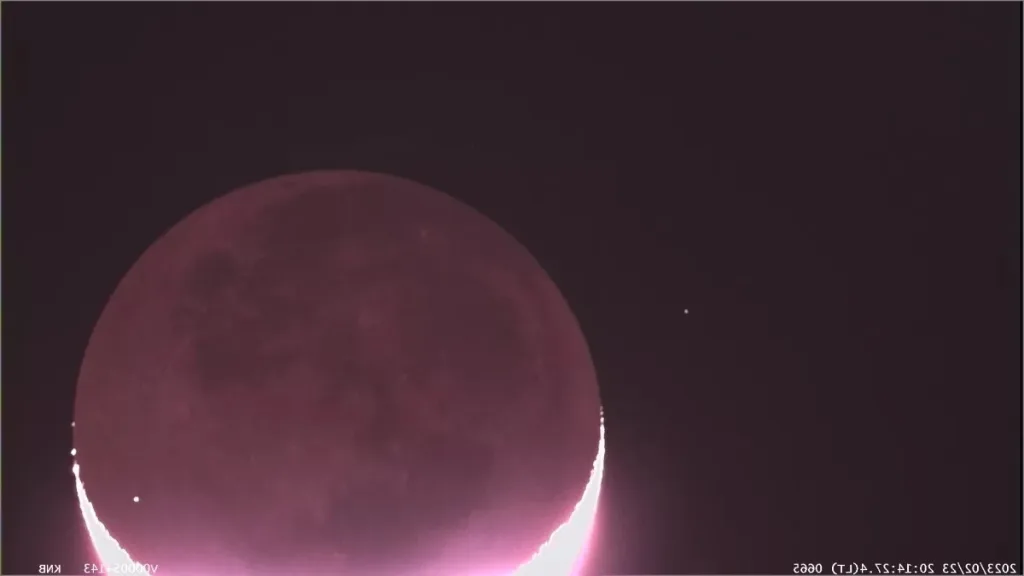
During the Artemis II mission, astronauts observed something unexpected. Bright, brief flashes appeared across the lunar surface. These were not reflections or camera artifacts. They were real-time events unfolding in front of the crew.
The Artemis II meteorite impacts quickly became one of the mission’s most surprising moments. While orbiting aboard the Orion spacecraft, astronauts reported at least five visible flashes on the Moon’s far side. Scientists immediately understood the significance.
This discovery was not part of the mission plan. Yet it delivered rare data. More importantly, it showed how human observation can capture events that automated systems might miss.
Artemis II Meteorite Impacts Revealed During a Rare Eclipse Window
A precise alignment created the perfect conditions for this observation. As the spacecraft moved into position, the Moon passed directly between it and the Sun. From the crew’s perspective, a total solar eclipse unfolded.
Why Darkness Changed Everything
Under normal sunlight, faint events on the Moon remain invisible. The bright surface overwhelms subtle changes. During the eclipse, however, the lunar surface fell into deep shadow.
This sudden darkness enhanced contrast. It turned the Moon into a natural observation screen. Brief flashes that would normally go unnoticed became visible to the human eye.
Observing Near the Terminator Line
The crew focused on regions near the lunar terminator. This boundary separates day from night and naturally highlights surface features.
During the eclipse, that contrast intensified. The environment became ideal for detecting short-lived activity.
Why These Events Are Rarely Seen
Several conditions had to align at once. A crewed spacecraft needed to be in the right orbit. Lighting had to drop to near-total darkness. The viewing angle had to be precise. Most importantly, observers had to react instantly.
Because of this, Artemis II meteorite impacts represent a rare convergence of timing, position, and human awareness.
Artemis II Meteorite Impacts Captured as Visible Lunar Flashes
During this unique window, astronauts reported at least five distinct flashes. Each appeared suddenly and vanished within seconds.
What Caused These Flashes
The flashes resulted from micrometeorites striking the lunar surface. These tiny particles travel through space at extreme speeds.
The Moon has no atmosphere to slow them down. As a result, even small objects impact the surface with significant force.
Why Impacts Produce Light
When a micrometeorite hits the surface, its energy converts instantly into heat and light. This creates a brief but visible flash.
On Earth, most of these particles burn up before reaching the ground. On the Moon, they strike directly and release their energy at the surface.
Speed and Energy in Action
These objects travel at thousands of kilometers per hour. At those speeds, even a small mass can produce a noticeable flash.
Each event represents the formation of a new microcrater. Over time, countless impacts reshape the lunar surface.
What Scientists Learned Immediately
The Artemis II meteorite impacts provided direct visual confirmation of a process long understood but rarely observed in real time.
Scientists gained immediate insight into impact frequency and visibility. They also confirmed that many such events likely occur unnoticed under normal lighting conditions.
Why Artemis II Meteorite Impacts Highlight Human Advantage in Space
Inside mission control at NASA, the response was immediate. As astronauts described the flashes, scientists followed closely. The reaction reflected both excitement and recognition of the moment’s value.
Astronauts as Real-Time Observers
Astronauts do more than operate systems. They interpret what they see. They notice patterns and react instantly to unexpected events.
In this case, the crew identified flashes outside the planned observation targets. They captured a phenomenon that required both awareness and timing.
Limits of Automated Systems
Modern instruments are powerful. Cameras capture high-resolution images. Sensors collect detailed data.
However, these systems operate within predefined parameters. They may miss events that fall outside expected patterns.
Human observers add flexibility. They adjust focus in real time. They connect observations to context.
Why This Matters for Future Missions
The Artemis II meteorite impacts highlight the continued importance of human presence in space exploration. Astronauts act as adaptive scientific instruments.
They expand the range of what missions can discover. They enable real-time interpretation that complements automated systems.
Scientific Impact of Artemis II Meteorite Impacts on Lunar Research
These observations offer new insight into how the Moon evolves over time.
Understanding Surface Changes
The Moon remains exposed to constant micrometeorite activity. Each impact contributes to gradual surface change.
Over long periods, these events shape the lunar landscape.
Improving Impact Models
Before this mission, scientists relied largely on indirect measurements. Now, they have direct observational evidence.
This helps refine models that estimate how frequently impacts occur.
Implications for Future Exploration
Accurate environmental data is essential for upcoming missions. This includes understanding surface conditions and long-term exposure risks.
The Artemis II meteorite impacts provide data that supports mission planning and system design.
Hidden Risks Revealed
Small impacts may seem insignificant. However, repeated exposure can affect equipment over time.
Understanding these effects is critical for sustained lunar operations.
Artemis II Meteorite Impacts Show the Moon Is Still Active
The Moon often appears unchanged. These observations challenge that perception.
A Continuously Changing Surface
Without an atmosphere, the Moon interacts directly with space. Micrometeorite impacts occur constantly.
Each impact leaves a mark, contributing to ongoing surface evolution.
A New Perspective on Lunar Activity
The Artemis II meteorite impacts reveal a dynamic environment. The Moon is not static. It continues to change, one small event at a time.
A New Era of Observation
Real-time observation opens new opportunities. Future missions may focus more on detecting transient events.
This approach could lead to deeper understanding of lunar processes.
Conclusion: Artemis II Meteorite Impacts Reveal What We Usually Miss
The moment began in darkness. Then came flashes that few humans have ever witnessed. The Artemis II meteorite impacts turned an unexpected situation into a meaningful scientific discovery.
These observations show that valuable insights often come from unplanned moments. They also reinforce the importance of human presence in exploration.
As missions continue, more hidden events may come into view. The real question remains:
How much is happening on the Moon right now… without anyone there to see it?
Sources:
NASA Artemis II mission updates:
https://www.nasa.gov/artemis-ii
Universe Magazine article:
https://universemagazine.com/en/nasa-applauded-the-meteorite-impacts-on-the-moon/
NASA Johnson Space Center briefings:
https://www.nasa.gov/johnson