BY:SpaceEyeNews.
Introduction
For the first time in decades, humans have traveled behind the Moon and captured what was once hidden. The Artemis II Moon Photos are more than striking visuals. They mark a shift in how we explore space.
During this mission, astronauts observed the far side directly, recorded a rare solar eclipse from lunar orbit, and captured a powerful “Earthset” view. Each moment offers a new perspective on our place in space. Together, they signal the start of a new chapter in human exploration beyond Earth.
Artemis II Moon Photos Capture the Far Side in Unprecedented Detail
The most defining achievement of the mission lies in the Artemis II Moon Photos of the far side. This region never faces Earth. For decades, it remained out of reach for direct human observation.
Direct Human Observation Changes Everything
Astronauts did more than capture images. They described what they saw in real time. This added context that automated systems often miss.
They noted subtle variations in terrain, light, and depth. These details help scientists interpret lunar geology with greater clarity. Human observation brings flexibility, awareness, and immediate insight.
Orientale Basin and New Crater Discoveries
Among the most important features captured is the Orientale Basin. Its layered structure offers clues about the Moon’s past. The basin remains one of the most valuable regions for geological study.
Nearby, the crew identified two smaller craters. They suggested the names “Integrity” and “Carroll.” The latter carries personal meaning, honoring a loved one connected to the crew.
Why Human Presence Still Matters
Technology continues to advance. Yet this mission proves that human presence remains essential. Astronauts can adapt, question, and respond in ways machines cannot.
The Artemis II Moon Photos reflect that advantage. They combine precision imaging with human awareness, creating a richer understanding of the lunar surface.
Solar Eclipse and Earthset: Rare Views from Lunar Orbit
Beyond surface detail, the mission delivered moments few humans have ever witnessed. The Artemis II Moon Photos include a rare solar eclipse seen from lunar orbit.
A Solar Eclipse from the Moon
From this vantage point, the Moon crossed in front of the Sun. The result was a striking eclipse unlike anything seen from Earth.
The contrast between light and shadow created a dramatic visual effect. For the crew, the experience felt both scientific and deeply personal.
Earthset: A New Perspective on Home
Another defining image is “Earthset.” Earth appears to sink behind the Moon’s horizon. This moment mirrors the historic Earthrise image, but in reverse.
Instead of emergence, it shows departure. The shift changes how we feel about the image. It highlights distance and reminds us how small and fragile Earth appears from afar.
More Than Just Visuals
These moments extend beyond photography. They reshape how people connect with space. The Artemis II Moon Photos bring distant environments closer to human experience.
They also reinforce a simple idea: perspective matters. Where you stand in space changes how you understand it.
Artemis II Pushes Human Exploration Beyond Apollo Limits
The mission also achieved key milestones that extend beyond imagery. The Artemis II Moon Photos are tied to a journey that pushed human exploration farther than ever before.
Breaking Distance Records
The crew reached approximately 252,756 miles from Earth. This surpasses the previous record set during Apollo 13.
It confirms that modern spacecraft systems can support deep space travel with confidence.
A Precision Lunar Flyby
During a six-hour flyby, astronauts captured high-resolution images and shared live observations. Mission control guided several of these observations in real time.
This coordination improved both accuracy and efficiency. As a result, the Artemis II Moon Photos include both planned targets and unexpected discoveries.
Technology Meets Human Story
Despite the technical achievements, the mission remains deeply human. The naming of the “Carroll” crater stands as a quiet tribute.
Moments like this remind us that exploration is not only about distance and data. It is also about memory, connection, and meaning.
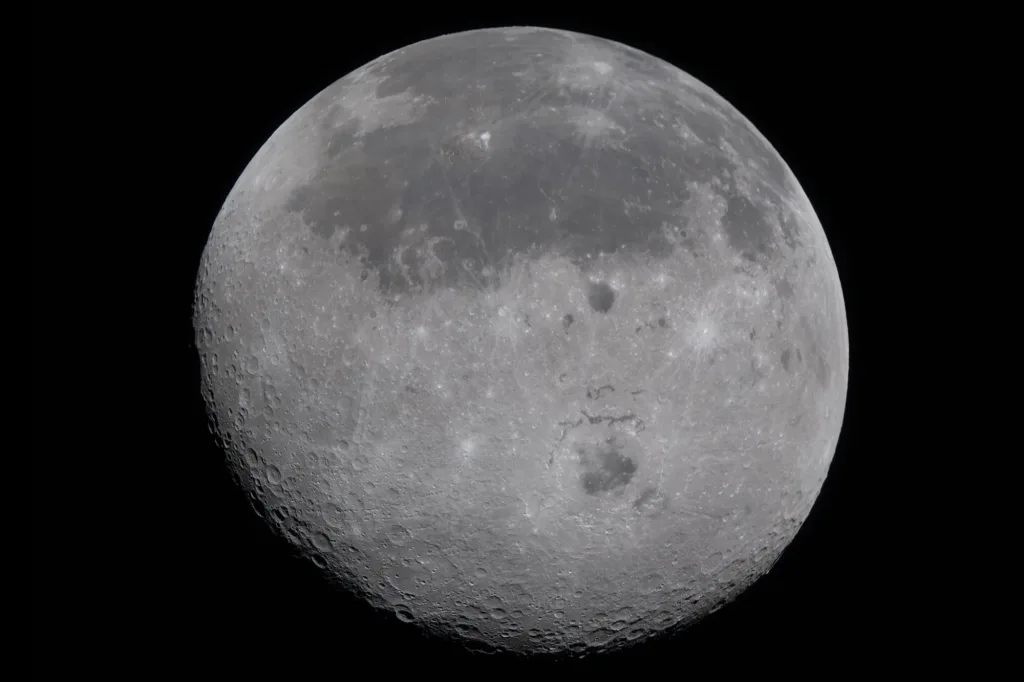
The moon captured on April 6, 2026.
Artemis II Moon Photos Signal a New Era of Exploration
The significance of the mission extends far beyond a single flight. The Artemis II Moon Photos represent a turning point in how we approach space exploration.
Preparing for What Comes Next
Artemis II serves as a foundation for future missions. It validates systems required for lunar landings and long-term presence.
Each success reduces risk and builds confidence for upcoming crews.
A Bridge Between Past and Future
The Apollo missions opened the door. Artemis expands that legacy with modern tools and new ambitions.
The Artemis II Moon Photos highlight both progress and potential. They show how far we have come—and how much remains to explore.
Scientific and Global Impact
The mission also supports broader scientific goals. It provides new data on lunar terrain, lighting conditions, and orbital dynamics.
At the same time, it reflects a growing spirit of international collaboration. Exploration is no longer a single-nation effort. It is a shared journey.
Conclusion
The Artemis II Moon Photos capture more than the Moon’s far side. They capture a moment of transition.
Humanity is no longer observing space from a distance. We are returning to experience it directly. These images combine science, emotion, and perspective in a way few missions ever have.
As we move closer to stepping onto the Moon again, one question remains:
If these views from orbit are this powerful, what will we discover on the surface?
Sources:
NASA Artemis Mission Updates
https://www.nasa.gov/artemis
People.com Article (Artemis II Photos)
https://people.com/nasa-artemis-ii-reveal-the-first-ever-photos-far-side-of-the-moon-for-the-first-time-ever-11944611
CNBC Interview with NASA Administrator
https://www.cnbc.com
CNN Space Coverage
https://www.cnn.com
Space.com Mission Insights
https://www.space.com