BY:spaceEyeNews.
Introduction
The Artemis II Orientale Basin milestone marks a turning point in modern space exploration. For the first time, astronauts aboard the Artemis II mission directly observed one of the Moon’s most iconic formations. This vast structure, known as the Orientale Basin, had only been captured by robotic systems before. Now, human eyes have confirmed its full scale and detail.
This moment matters because it shifts lunar exploration from remote observation to real-time human interpretation. It also strengthens the foundation for upcoming missions led by NASA, where precision, planning, and human perspective will define the next era of lunar activity.
Artemis II Orientale Basin: A Historic Human Observation
A Lunar Landmark Decades in the Making
The Artemis II Orientale Basin observation delivers what scientists have pursued for decades. The basin sits on the Moon’s far side and stands out with its distinct bullseye structure. Researchers have studied it for years through satellite imagery. Yet direct human observation adds a new level of clarity.
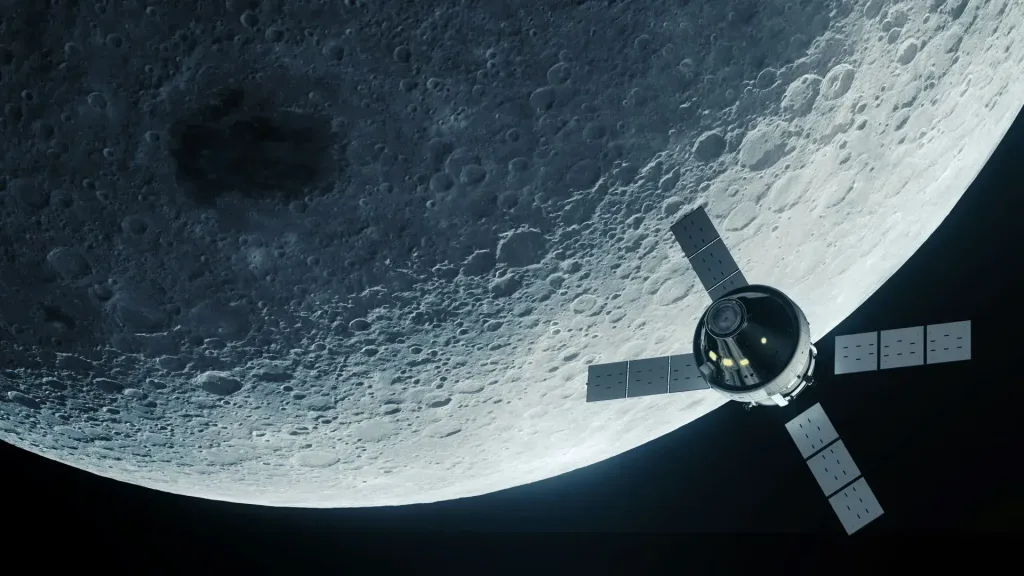
As the Orion spacecraft traveled more than 82,000 miles from the Moon, the crew gained a rare viewing angle. This position revealed the basin’s full structure with greater depth and context. Its layered rings and massive scale became clearer in real time.
Why Human Vision Changes the Equation
Human observation introduces flexibility that robotic systems cannot match. Astronauts can react instantly, adjust focus, and interpret subtle visual details.
Christina Koch described the basin as “very distinctive,” reflecting how clearly it stood out against the surrounding terrain. That reaction highlights a key advantage: human perception can confirm and expand scientific understanding on the spot.
A New Layer of Geological Insight
The Artemis II Orientale Basin view adds depth to lunar geology. The basin likely formed from a massive impact event billions of years ago. Observing its structure directly helps refine models of the Moon’s evolution.
More importantly, this insight supports future mission planning. Identifying scientifically rich regions remains a top priority for continued exploration.
Artemis II Orientale Basin and the Moon’s Sphere of Influence
Where Gravity Takes Control
As the mission advanced, the crew entered the Moon’s sphere of influence. At this stage, lunar gravity became stronger than Earth’s pull on the spacecraft.
For the Artemis II Orientale Basin mission, this transition marked a critical operational shift. Navigation required higher precision. The spacecraft prepared to approach within roughly 4,000 miles of the lunar surface.
Why This Phase Matters
This phase plays a key role in future mission design. Accurate navigation within this zone determines how spacecraft enter orbit and position themselves for further operations.
The crew reviewed detailed flyby plans while preparing to capture high-value imagery. These observations included ancient lava flows, crater formations, and polar regions that remain largely unexplored.
Supporting Long-Term Lunar Goals
The Artemis II Orientale Basin mission directly supports long-term objectives. Data collected during this phase will inform landing site selection and infrastructure planning.
NASA’s broader goal is to establish a sustainable presence on the Moon. Achieving that requires precise knowledge of terrain and environmental conditions. This mission delivers that critical insight.
Technology Advancing the Artemis II Orientale Basin Mission
Smartphones in Space: A New Tool
A notable feature of the Artemis II Orientale Basin mission is the use of smartphones in space. For the first time, astronauts were allowed to document their journey using handheld devices.
This approach adds flexibility. Astronauts can capture images instantly and respond to changing visual conditions.
From Pre-Programmed to Real-Time Imaging
Traditional robotic missions rely on pre-programmed imaging sequences. Human-operated tools allow real-time decisions. This difference improves both the quality and relevance of collected data.
NASA officials noted that some images revealed lunar features never seen by human eyes before. This demonstrates the value of combining advanced systems with human presence.
A New Standard for Space Documentation
The Artemis II Orientale Basin mission sets a new benchmark for documenting space exploration. The images returned offer both scientific value and public impact.
Clear visuals support deeper analysis while also making space exploration more accessible. This balance strengthens both research and global engagement.
Artemis II Orientale Basin and the Human Experience
Beyond Data: The Human Side
The Artemis II Orientale Basin achievement extends beyond science. It highlights the emotional dimension of space exploration. Commander Reid Wiseman shared a powerful moment during a live call with his family from orbit.
Such moments remind us that space missions are driven by people, not just technology.
Strengthening Public Connection
Human stories create stronger engagement with global audiences. When astronauts share personal experiences, they bring space exploration closer to everyday life.
This connection supports continued interest and long-term investment in space programs.
Team Dynamics in Deep Space
Life aboard a spacecraft demands coordination and trust. The Artemis II crew demonstrated strong teamwork throughout the mission. Their ability to manage both technical and personal challenges played a key role in mission success.
Strategic Impact of the Artemis II Orientale Basin Discovery
From Exploration to Preparation
The Artemis II Orientale Basin milestone signals a transition. Exploration is now moving toward preparation for sustained presence. Future missions will build directly on this foundation.
Guiding Future Landing Sites
Detailed observations help identify safe and valuable landing zones. Regions near the lunar poles remain of particular interest due to potential resources.
The Orientale Basin itself may also hold scientific value due to its unique structure.
Building Toward a Lunar Future
NASA’s long-term vision includes establishing a lasting human presence on the Moon. Achieving that goal requires reliable data and refined mission strategies.
The Artemis II Orientale Basin discovery contributes directly to this effort. It provides insights that will shape future exploration, infrastructure, and scientific research.
Conclusion
The Artemis II Orientale Basin discovery marks a defining moment in space exploration. For the first time, humans have directly observed one of the Moon’s most remarkable features. This achievement goes beyond imagery. It introduces a new level of understanding shaped by human presence.
As the Artemis program advances, this mission stands as a critical step forward. It bridges the gap between robotic observation and sustained human exploration.
This is not just a milestone. It is the beginning of a new chapter in how humanity explores and understands the Moon.
Sources:
- https://dailygalaxy.com/2026/04/historic-first-glimpse-of-the-moons-grand-canyon-captured-by-artemis-ii-crew/
- https://www.nasa.gov
- https://phys.org