
BY:SpaceEyeNews.
NASA’s Artemis program represents humanity’s most ambitious effort to return astronauts to the Moon since the Apollo era. Yet one of the biggest surprises of 2026 is not a new rocket or a new spacecraft. Instead, it is a major change in strategy.
The Artemis III Mission, originally expected to deliver the first crewed lunar landing of the Artemis era, is now taking on a different role. NASA is placing greater emphasis on testing critical technologies and procedures before committing astronauts to a landing attempt.
At first glance, this may appear to be a delay. In reality, the Artemis III Mission could become the most important mission in the entire Artemis program. Its success will help determine whether NASA can establish a sustainable presence on the Moon and eventually support human exploration of Mars.
Why NASA Changed the Artemis III Mission
NASA has spent years developing the key systems needed for deep-space exploration. The Space Launch System rocket and Orion spacecraft have already demonstrated important capabilities. Artemis I successfully completed an uncrewed lunar mission, while Artemis II is expected to send astronauts around the Moon.
However, landing astronauts on the lunar surface requires much more than launching a spacecraft.
The agency now wants to verify every step involved in future lunar operations. That includes docking procedures, crew transfers, communications, navigation systems, and interactions with commercial lunar landers.
A More Cautious Approach
NASA believes that rushing directly into a lunar landing creates unnecessary risks. Modern lunar missions involve several spacecraft working together in ways that were not required during Apollo.
The Artemis III Mission allows NASA to evaluate these complex operations before astronauts attempt to land on the Moon.
This strategy reflects a simple principle: test first, then expand capabilities.
Learning From Previous Missions
Space exploration has always depended on gradual progress. Every major achievement has required extensive testing.
NASA used multiple Gemini missions before Apollo astronauts reached the Moon. The Space Shuttle program also relied on progressive flight testing.
The Artemis III Mission follows the same philosophy. Rather than focusing only on a historic landing, NASA wants to ensure future missions can operate safely and consistently.
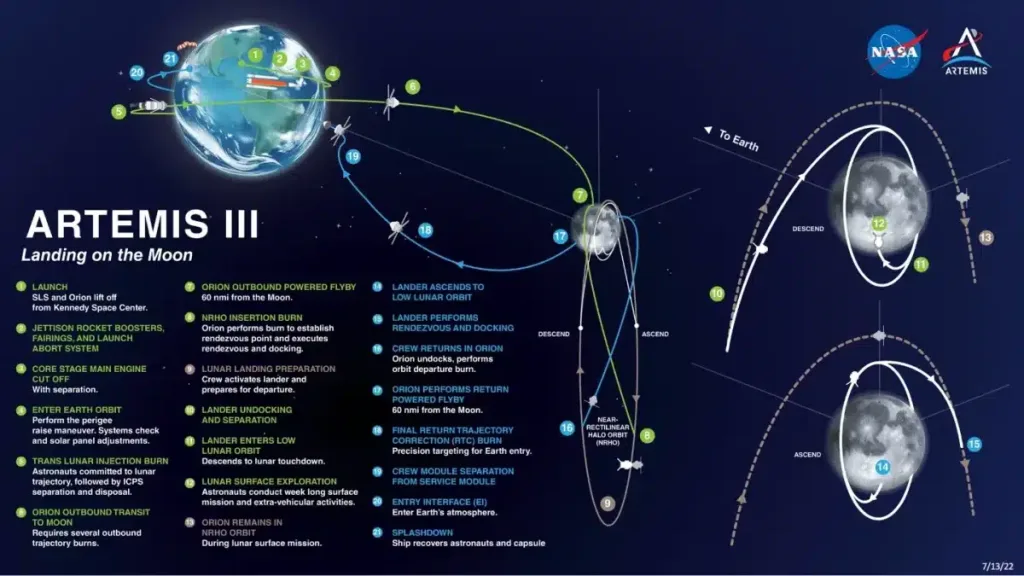
Artemis III Mission Will Test Critical Lunar Operations
One of the most important objectives of the Artemis III Mission involves spacecraft rendezvous and docking.
These maneuvers may sound routine, but they are essential for future lunar exploration.
Why Docking Matters
Future Moon missions will involve multiple vehicles operating together.
Astronauts will launch aboard Orion. They will then meet a lunar lander in orbit. After transferring to the lander, they will descend toward the Moon.
Following surface operations, astronauts must return to orbit and reconnect with Orion before heading back to Earth.
Every stage requires precise timing and flawless coordination.
A successful Artemis III Mission will demonstrate that these procedures can work reliably.
Testing Orion’s Capabilities
The Orion spacecraft serves as NASA’s primary crew vehicle for deep-space missions.
While Artemis I proved Orion could travel around the Moon and return safely, future missions require more advanced operations.
The Artemis III Mission will help NASA evaluate Orion’s ability to perform rendezvous and docking tasks with commercial lunar landers.
This testing will provide valuable data for future lunar expeditions.
Preparing for Long-Term Exploration
NASA’s goal extends far beyond a single landing.
The agency wants to support repeated missions to the lunar surface. To achieve that goal, transportation systems must operate consistently.
The Artemis III Mission provides an opportunity to validate these procedures before they become routine parts of future exploration campaigns.
The Role of Commercial Lunar Landers
One of the biggest differences between Artemis and Apollo is NASA’s reliance on private industry.
Instead of building every component internally, NASA is working with commercial partners to develop lunar landing systems.
SpaceX and Blue Origin
Two companies currently play major roles in NASA’s lunar plans.
SpaceX is developing a Human Landing System based on its Starship architecture. Blue Origin is developing its Blue Moon lunar lander for future Artemis missions.
Both companies bring unique approaches to lunar transportation.
NASA intends to benefit from competition while reducing dependence on a single provider.
Testing Future Lunar Transportation
The Artemis III Mission could become a key milestone for evaluating how these landers perform during operational testing.
NASA must ensure that landers can safely support astronauts, cargo, and future infrastructure projects.
Reliable transportation will be essential for any sustained lunar presence.
Without dependable landing systems, long-term exploration becomes much more difficult.
Building a Lunar Supply Chain
Future lunar missions will require regular cargo deliveries.
Astronauts will need scientific equipment, habitat components, spare parts, and other supplies.
The Artemis III Mission will help NASA refine the procedures needed to support these future logistics networks.
This effort represents an important step toward creating a functioning lunar economy.
Artemis III Mission and the Future of the Lunar South Pole
The Moon’s South Pole remains one of NASA’s most important exploration targets.
Scientists believe the region contains significant deposits of water ice within permanently shadowed craters.
Why Water Ice Matters
Water is one of the most valuable resources in space.
Astronauts can use it for drinking and hygiene. Engineers can also separate water into hydrogen and oxygen for rocket fuel.
A reliable supply of lunar water could reduce the amount of material that must be launched from Earth.
That capability would dramatically improve the sustainability of future missions.
Supporting Future Lunar Habitats
NASA ultimately wants astronauts to spend longer periods on the Moon.
Future habitats may support scientific research, technology demonstrations, and resource utilization projects.
The Artemis III Mission contributes to this vision by validating the transportation systems required to reach and support these future facilities.
Creating a Sustainable Presence
Apollo demonstrated that humans could reach the Moon.
Artemis seeks to prove that humans can remain there and continue exploring.
That distinction makes the Artemis III Mission especially important.
Success would move NASA closer to establishing a continuous lunar presence rather than conducting short-term visits.
Artemis III Mission Is Also About Mars
Although the Moon receives most of the attention, NASA’s long-term objective extends much farther.
The agency views the Moon as a testing ground for future Mars exploration.
Learning to Live Beyond Earth
Mars missions will require advanced life-support systems, reliable transportation networks, and long-duration operations.
The Moon offers a nearby environment where NASA can develop and refine these capabilities.
Lessons learned during Artemis missions will directly influence future plans for Mars.
Reducing Future Risks
Every procedure tested during the Artemis III Mission helps reduce uncertainty.
Docking operations, crew transfers, navigation techniques, and logistics planning all contribute to future deep-space missions.
The knowledge gained from lunar exploration will help NASA prepare for much longer journeys.
The Road to the Red Planet
Many technologies needed for Mars already exist in early forms within the Artemis program.
By improving these systems around the Moon, NASA can build experience before attempting the much greater challenge of reaching Mars.
The Artemis III Mission therefore serves as a bridge between current exploration goals and future ambitions.
Conclusion
The Artemis III Mission may no longer be viewed simply as the mission that returns astronauts to the lunar surface. Instead, it is becoming the mission that validates the systems required for sustainable exploration beyond Earth.
NASA’s revised approach focuses on testing, precision, and operational readiness. By verifying critical procedures before attempting future landings, the agency hopes to improve mission reliability and long-term success.
The Artemis III Mission will help evaluate Orion, commercial lunar landers, docking operations, and transportation strategies that future explorers will depend upon.
If these tests succeed, Artemis III could become the foundation for a permanent human presence on the Moon and a crucial stepping stone toward Mars. Rather than delaying progress, the Artemis III Mission may ultimately accelerate humanity’s journey deeper into the solar system.
Main Sources:
NASA Artemis III Overview
https://www.nasa.gov/mission/artemis-iii/
NASA Artemis Program
https://www.nasa.gov/artemis/
Daily Galaxy Article
https://dailygalaxy.com/2026/06/nasas-artemis-iii-mission-bold-plan/
Space Policy Online
https://spacepolicyonline.com
Reuters Space Coverage
https://www.reuters.com/world/us/