
BY:SpaceEyeNews.
For nearly fifteen years, astronomers have debated the origin of a strange glow coming from the center of our galaxy. Known as the Galactic Center Excess, this unusual emission appears as a vast cloud of gamma rays extending thousands of light-years around the Milky Way’s core. Scientists have proposed several explanations, but two ideas have dominated the discussion: hidden populations of pulsars and the possibility of dark matter annihilation.
Now, a new study has shifted the debate once again. Researchers used advanced machine-learning techniques to analyze more than one million simulated observations. Their results suggest that the pulsar explanation may face a larger challenge than previously believed. As a result, the Dark Matter Milky Way Signal hypothesis remains one of the strongest explanations for the mysterious radiation.
The findings do not prove dark matter exists. However, they suggest that the case for dark matter remains far from closed.
The Dark Matter Milky Way Signal Mystery Continues
The center of the Milky Way is one of the most energetic regions in the galaxy. It contains dense star clusters, gas clouds, magnetic fields, and the supermassive black hole known as Sagittarius A*.
Amid this crowded environment, scientists discovered something unexpected.
A Gamma-Ray Glow Unlike Others
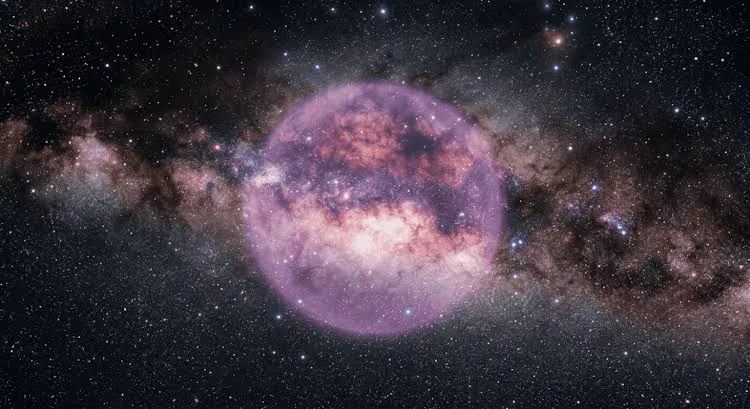
Data collected by NASA’s Fermi Gamma-ray Space Telescope revealed a broad and nearly spherical glow of gamma rays surrounding the galactic center.
Researchers named this phenomenon the Galactic Center Excess.
Unlike many gamma-ray sources, this signal does not appear to originate from a few easily identifiable objects. Instead, it spreads across a large region and follows a pattern that has proven difficult to explain.
Why Scientists Looked at Dark Matter
One reason the signal attracted attention is its shape.
Many dark matter models predict that dark matter particles should accumulate near the center of galaxies. If these particles interact with one another under certain conditions, they could release energy in the form of gamma rays.
As a result, the Galactic Center Excess quickly became one of the most intriguing potential dark matter signatures ever observed.
The Dark Matter Milky Way Signal gained significant attention throughout the astrophysics community.
How Pulsars Challenged the Dark Matter Milky Way Signal Theory
Although dark matter provided an exciting explanation, another possibility emerged.
Scientists proposed that thousands of millisecond pulsars could be hiding within the galactic center.
What Are Millisecond Pulsars?
Millisecond pulsars are rapidly rotating neutron stars. They emit beams of radiation while spinning hundreds of times each second.
Because these objects can produce gamma rays, researchers wondered whether a large collection of unresolved pulsars could create the observed glow.
Over time, several studies suggested that pulsars might explain much of the Galactic Center Excess.
This shifted scientific opinion.
Many researchers began to view pulsars as the leading explanation.
Why Pulsars Appeared Promising
The pulsar theory offered a straightforward astrophysical explanation.
Instead of requiring an unknown form of matter, the signal could originate from objects already known to exist.
Previous analyses examined the spatial distribution of gamma rays and found evidence that appeared consistent with point-like sources.
That result strengthened the pulsar interpretation and reduced enthusiasm for dark matter.
However, the story did not end there.
Machine Learning Reexamines the Dark Matter Milky Way Signal
A team from the University of Vienna and Lawrence Berkeley National Laboratory decided to revisit the problem using a different approach.
Instead of relying solely on traditional statistical methods, the researchers used machine learning.
Training an AI on More Than One Million Simulations
The team trained its algorithm using more than one million simulated gamma-ray observations.
The goal was simple.
Determine whether the excess was more likely produced by individual sources such as pulsars or by a smooth emission consistent with dark matter.
The large training dataset allowed the model to recognize subtle patterns that can be difficult to detect through conventional techniques.
A Major Improvement Over Earlier Studies
Previous analyses primarily focused on the locations of detected photons.
The new method included another critical piece of information.
It incorporated the energy of individual gamma-ray photons.
This improvement gave researchers a much richer dataset to analyze.
As a result, the machine-learning system could evaluate the signal in greater detail.
The Unexpected Result
The outcome surprised many researchers.
Instead of supporting relatively bright pulsars, the model suggested that any pulsars contributing to the signal would need to be extremely faint.
In fact, they would be so faint that distinguishing them from a smooth dark matter signal would become exceptionally difficult.
This finding dramatically changed the discussion surrounding the Dark Matter Milky Way Signal.
The 35,000-Pulsar Challenge
The new study introduced a major problem for the pulsar explanation.
A Much Larger Population Is Required
If pulsars are responsible for the observed gamma rays, researchers estimate that more than 35,000 millisecond pulsars would need to exist near the galactic center.
That number is far larger than previous estimates.
Earlier studies generally suggested populations ranging from several hundred to a few thousand pulsars.
The difference is substantial.
Why the Number Matters
Finding a few thousand hidden pulsars is already challenging.
Finding more than 35,000 is significantly harder.
Such a population would represent one of the largest concentrations of millisecond pulsars ever proposed.
Scientists are now examining whether such a scenario is realistic.
The larger the required population becomes, the more difficult it is to support the pulsar explanation.
Dark Matter Remains Competitive
Importantly, the study does not eliminate pulsars completely.
Researchers acknowledge that pulsars may still contribute to the signal.
However, the findings weaken one of the strongest arguments against dark matter.
That shift keeps the Dark Matter Milky Way Signal interpretation firmly in contention.
Why This Matters for Dark Matter Research
Dark matter remains one of the biggest unsolved mysteries in science.
Researchers estimate that it accounts for roughly 85% of all matter in the universe.
Yet no direct detection has been confirmed.
One of the Best Clues Available
The Galactic Center Excess remains one of the most promising potential dark matter signals ever discovered.
Scientists continue searching for evidence through underground detectors, particle accelerators, and astronomical observations.
Each new study helps narrow the possibilities.
This latest work adds an important piece to that puzzle.
A Debate That Is Far From Over
The new findings do not prove dark matter exists.
They also do not definitively rule out pulsars.
Instead, the study changes the balance of evidence.
The results suggest that previous confidence in the pulsar explanation may have been premature.
At the same time, the Dark Matter Milky Way Signal remains fully compatible with the observations.
Future telescopes, improved gamma-ray surveys, and more advanced machine-learning techniques could provide additional answers.
For now, the mystery remains open.
Conclusion
The Galactic Center Excess has puzzled astronomers for more than a decade. Many researchers believed hidden pulsars were gradually emerging as the most likely explanation. A new machine-learning study has challenged that assumption.
By analyzing more than one million simulated observations and incorporating the energy of individual gamma-ray photons, researchers found that the pulsar explanation may require more than 35,000 millisecond pulsars near the center of the Milky Way. Such a population would be far larger than previous estimates.
The study does not confirm dark matter. However, it keeps the Dark Matter Milky Way Signal hypothesis very much alive. For one of astronomy’s most intriguing mysteries, the debate is far from settled. In fact, the search for answers may be entering an entirely new phase.
Main Sources:
- Universe Magazine
https://universemagazine.com/en/dark-matter-may-be-the-source-of-mysterious-radiation-from-the-center-of-the-galaxy/ - Physical Review Letters (Published Study)
https://journals.aps.org/prl/ - University of Vienna Press Release
https://www.univie.ac.at/en/news/press-room/press-releases/detail/dark-matter-in-the-center-of-the-milky-way-not-ruled-out - Lawrence Berkeley National Laboratory
https://www.physics.lbl.gov/ - NASA Fermi Gamma-ray Space Telescope
https://fermi.gsfc.nasa.gov/