BY:SpaceEyeNews.
Astronomers have achieved something that once seemed impossible. For the first time, they have measured the mass of a Dormant Black Hole Early Universe object located more than 10 billion light-years from Earth. Unlike active black holes, this cosmic giant emits no bright radiation. It remains hidden in darkness, making direct observation impossible.
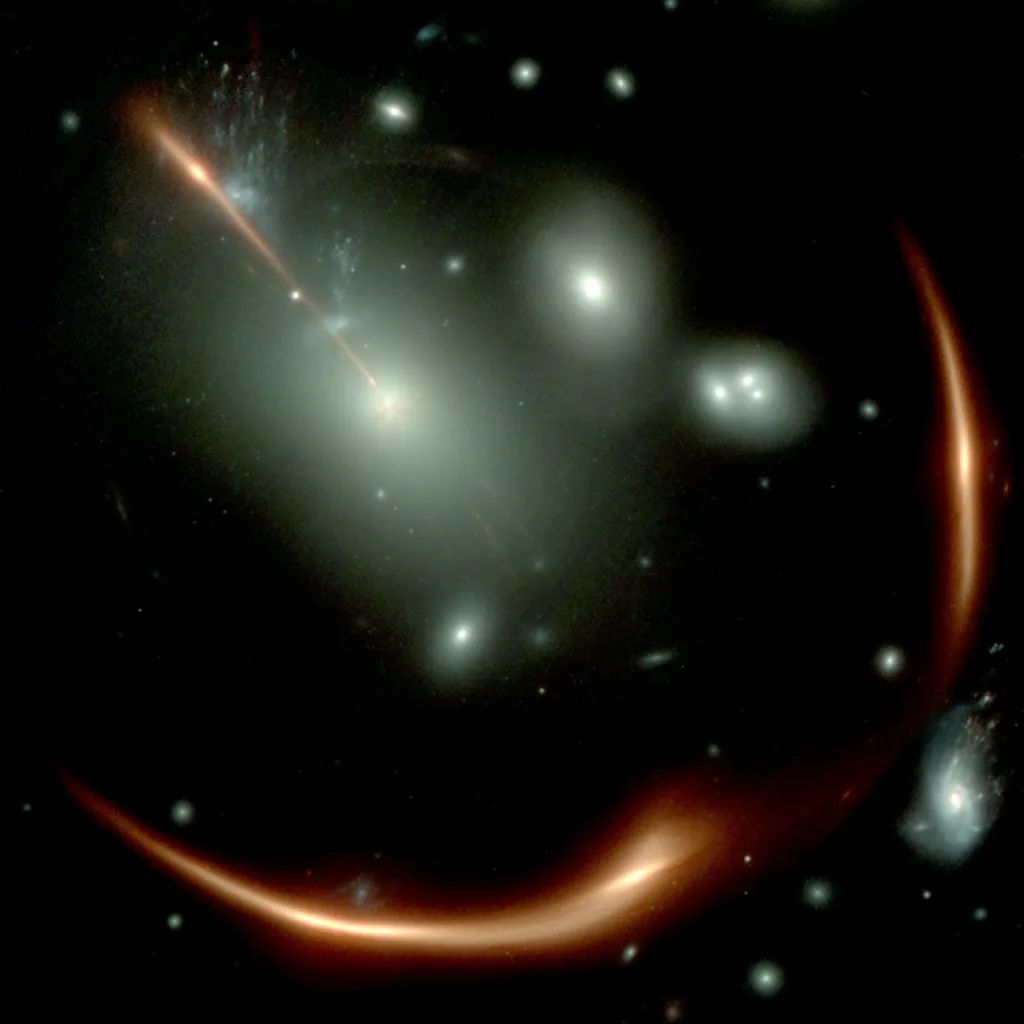
Using the James Webb Space Telescope (JWST), researchers tracked the motion of stars inside a distant galaxy known as MRG-M0138. Those stellar motions revealed the presence of a colossal black hole at the galaxy’s center.
The breakthrough does more than set a new distance record. It opens a new way to study dormant supermassive black holes during one of the most important periods in cosmic history. Scientists now have a powerful tool to investigate how black holes and galaxies evolved together in the early universe.
Why the Dormant Black Hole Early Universe Discovery Matters
Most distant black holes discovered so far belong to a special category. They are active black holes that consume large amounts of gas and dust. As matter falls inward, it heats up and produces enormous amounts of radiation.
That radiation makes active black holes relatively easy to detect.
Dormant black holes are different. They consume little or no matter. As a result, they produce almost no detectable light. They effectively disappear into the darkness of space.
Active Black Holes Announce Their Presence
Astronomers often find active black holes by observing bright quasars and active galactic nuclei. These objects can outshine entire galaxies.
Because they shine so brightly, scientists can estimate their masses using their emissions.
Dormant Black Holes Stay Hidden
Dormant black holes provide a much bigger challenge.
Without bright emissions, researchers must rely on indirect methods. This limitation has restricted studies of inactive black holes to relatively nearby galaxies for decades.
The new Dormant Black Hole Early Universe measurement changes that situation dramatically.
A New Distance Record
Before this study, astronomers could only apply detailed stellar-dynamics techniques to galaxies located within roughly 700 million light-years.
MRG-M0138 lies more than 10 billion light-years away. The new measurement extends the reach of this method by more than an order of magnitude.
That achievement represents a major technological milestone for modern astronomy.
How JWST Weighed an Invisible Black Hole
The success of this research depended on two powerful tools. The first was the extraordinary sensitivity of JWST. The second was a natural phenomenon called gravitational lensing.
Together, they allowed scientists to study details that would otherwise remain far beyond human reach.
Tracking Stellar Motion
Every massive object exerts gravity on nearby stars.
A supermassive black hole creates an especially strong gravitational influence. Stars near the center of a galaxy move faster because of that influence.
Researchers measured those stellar velocities using JWST observations. By analyzing the motion of the stars, they calculated the mass of the hidden object responsible for the gravitational pull.
This technique is known as stellar dynamics.
Looking Inside the Sphere of Influence
Astronomers often refer to the region dominated by a black hole’s gravity as its sphere of influence.
Inside this region, stellar motion reflects the black hole’s mass directly.
For distant galaxies, observing this area usually remains impossible because the target appears too small.
MRG-M0138 presented a rare opportunity.
Nature Provided a Giant Telescope
A massive galaxy cluster sits between Earth and MRG-M0138.
The cluster’s gravity bends light from the distant galaxy. This process, known as gravitational lensing, acts like a giant natural telescope.
The lens magnified the galaxy by roughly 30 times.
That magnification allowed researchers to reconstruct the galaxy’s internal structure and measure stellar motion near its center.
Without gravitational lensing, this discovery would likely not have been possible.
MRG-M0138 and Its Enormous Hidden Black Hole
The galaxy at the center of this study offers a fascinating glimpse into the distant past.
Astronomers observe MRG-M0138 as it appeared when the universe was only a fraction of its current age.
The galaxy already contained a mature stellar population and a massive central black hole.
Measuring a Cosmic Giant
The observations revealed a black hole with an estimated mass of approximately six billion times the mass of the Sun.
That makes it one of the most massive dormant black holes ever studied at such a great distance.
Its size surprised researchers because the host galaxy appears relatively compact compared with some modern galaxies that contain similarly massive black holes.
A Galaxy That Stopped Growing
Another striking feature of MRG-M0138 is its lack of star formation.
Astronomers found little evidence that new stars are currently forming inside the galaxy.
Many galaxies in the early universe actively produced stars. MRG-M0138 appears to have shut down that process long ago.
That raises an important question.
Why did star formation stop so early?
The Black Hole May Hold the Answer
Scientists believe the black hole likely experienced an active growth phase in the past.
During that period, it may have consumed large quantities of surrounding material.
Powerful energy released during that process could have heated or expelled much of the galaxy’s gas.
Without cold gas, galaxies cannot create new stars.
If this explanation proves correct, the black hole may have played a direct role in ending star formation throughout the galaxy.
What This Discovery Reveals About Galaxy Evolution
The connection between galaxies and supermassive black holes remains one of astronomy’s biggest mysteries.
Researchers know that nearly every large galaxy contains a central black hole.
They also know that black hole growth and galaxy growth appear closely linked.
The new Dormant Black Hole Early Universe discovery provides valuable evidence for understanding that relationship.
Black Holes as Galactic Regulators
For years, astronomers have proposed that supermassive black holes regulate star formation.
According to this idea, black holes can influence entire galaxies despite occupying a tiny fraction of their total size.
When a black hole becomes active, it can release enormous amounts of energy.
That energy can affect gas throughout the galaxy.
The findings from MRG-M0138 support this possibility.
Evidence from the Early Universe
Most previous evidence came from relatively nearby galaxies.
Now researchers can investigate similar processes much earlier in cosmic history.
That allows scientists to examine how galaxy evolution unfolded when the universe was still young.
The ability to study dormant black holes at such distances could reveal whether these mechanisms were common or rare.
Testing Theoretical Models
Current galaxy-evolution models attempt to explain why some galaxies stop forming stars while others continue growing.
Observations like those from MRG-M0138 provide real-world tests for those theories.
Future measurements may help identify which models best match reality.
A New Era for Dormant Black Hole Research
The most important outcome of this study may be what comes next.
Astronomers have now demonstrated that stellar-dynamics measurements work at cosmological distances.
That success creates exciting opportunities for future research.
Finding More Dormant Giants
JWST continues to discover distant galaxies with remarkable properties.
Researchers expect to identify additional dormant supermassive black holes in the coming years.
Each new measurement will improve our understanding of black hole evolution.
Future Observatories Will Expand the Search
Upcoming missions could accelerate this research.
Future observations from JWST, the Roman Space Telescope, and other advanced facilities may uncover a large population of hidden black holes.
These discoveries could reveal how common dormant black holes were during the universe’s early history.
Questions That Remain Unanswered
Many mysteries still remain.
Can dormant black holes become active again?
How often do black holes shut down star formation?
Do all massive galaxies experience a similar evolutionary path?
The answers could reshape our understanding of cosmic evolution.
Conclusion
The Dormant Black Hole Early Universe discovery represents a major milestone for astronomy. Using JWST and gravitational lensing, researchers successfully measured the mass of an invisible supermassive black hole more than 10 billion light-years away. The finding proves that stellar-dynamics techniques can work at cosmological distances and provides new evidence that black holes may play a critical role in shutting down star formation. Most importantly, this breakthrough opens an entirely new window into the early universe. As astronomers discover more dormant black holes, they may finally uncover how galaxies and supermassive black holes evolved together across cosmic history.
Main Sources:
- Universe Magazine
https://universemagazine.com/en/dormant-black-hole-from-the-early-universe-is-weighed-for-the-first-time/ - Carnegie Science Observatory
https://obs.carnegiescience.edu - NASA James Webb Space Telescope
https://webb.nasa.gov - arXiv Research Paper
https://arxiv.org - Phys.org Coverage
https://phys.org/news/2026-06-jwst-dormant-black-hole-billion.html