
BY:SpaceEyeNews.
🌍 Earth Getting Brighter at Night: A New Global Reality
From orbit, Earth no longer fades into darkness the way it once did. Instead, it glows—steadily, measurably, and more intensely each year. The latest research confirms a striking reality: Earth getting brighter at night is no longer a hypothesis. It is a measurable global trend.
Satellite observations show that artificial lighting across the planet has been rising by about 2% annually between 2014 and 2022. While that figure may seem small, it compounds quickly. Over less than a decade, it has reshaped how the planet looks after sunset.
Yet this trend is not uniform. Some regions are lighting up rapidly, driven by expansion and development. Others are dimming due to policy changes and improved efficiency. What emerges is a far more dynamic picture of human activity at night than scientists once expected.
🛰️ Earth Getting Brighter at Night: What the Data Reveals
A Planet That No Longer Sleeps
New satellite analysis offers the clearest view yet of how nighttime brightness is changing. The data confirms that Earth getting brighter at night is happening at a steady pace.
Between 2014 and 2022, global nighttime brightness increased by roughly 16%. However, that headline figure hides deeper variation. Regions experiencing growth saw brightness rise by as much as 34%, while others recorded declines of around 18%.
This contrast highlights a key insight. The global increase is not driven by uniform change, but by a shifting balance between regions.
Regional Patterns Tell the Real Story
In fast-growing economies such as China and India, nighttime lighting expanded rapidly. Urban growth, infrastructure development, and rising demand for services all contributed to this increase.
Across parts of Europe, the trend moved in the opposite direction. Countries such as France reduced lighting significantly by switching off streetlights during late-night hours. In some areas, reductions reached more than 30%. Overall, Europe recorded a modest decline in nighttime brightness.
Germany showed a mixed pattern. Some regions brightened, others dimmed, and the national average remained relatively stable.
A More Dynamic Planet Than Expected
Earlier research relied on monthly or yearly averages. That approach often masked short-term changes. This new study used daily, high-resolution data, revealing a far more responsive system.
As a result, scientists now view Earth getting brighter at night as a dynamic signal shaped by policy, technology, and real-world conditions.
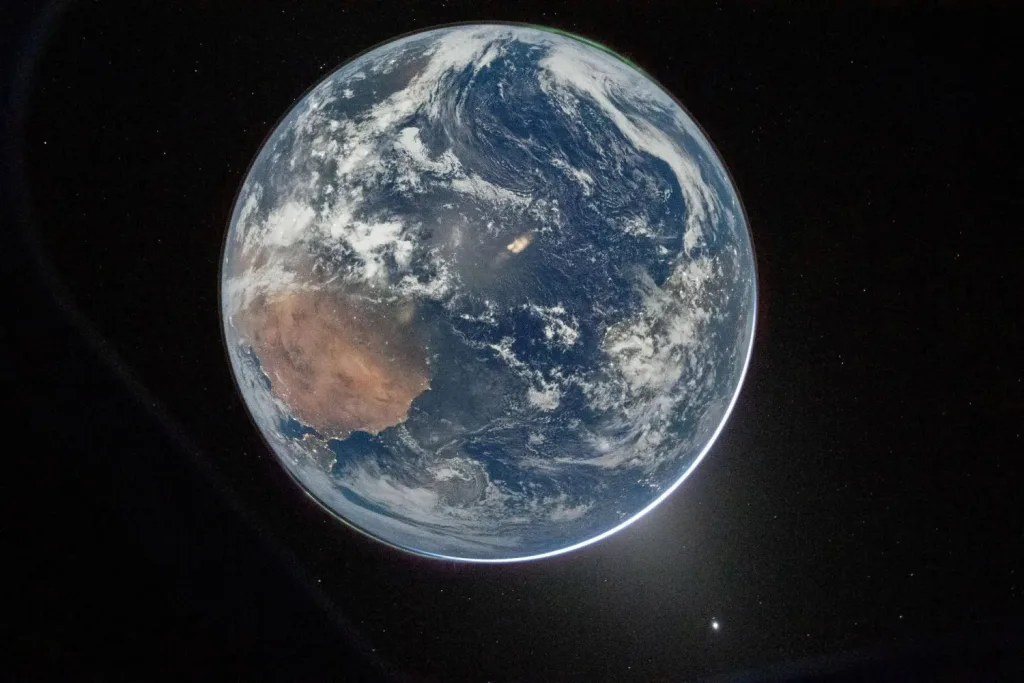
Satellite Data Shows Earth is Getting Ever Brighter at Night.
🌆 Why Earth Is Getting Brighter at Night
Urban Expansion and Economic Growth
Cities continue to expand at a rapid pace. New infrastructure brings new lighting. Roads, buildings, and industrial zones all contribute to the growing glow.
In many regions, increased brightness reflects economic activity. Brighter areas often align with growth and development.
LED Technology and the Efficiency Paradox
The global shift to LED lighting has improved energy efficiency. These lights consume less power and last longer. However, they also introduce a paradox.
Lower costs often lead to wider adoption. As more lights are installed, total brightness can increase. In some cases, efficiency gains are offset by higher usage.
Policy Decisions and Light Reduction Efforts
Some governments have taken steps to reduce light pollution. Turning off lights after midnight has become more common in certain cities.
These policies have produced measurable declines in satellite data. They show that Earth getting brighter at night is not inevitable. Targeted action can slow or reverse the trend.
Disruptions and Sudden Changes
Unexpected events can also affect nighttime lighting. In some regions, sharp declines have followed periods of disruption. These changes reveal how closely nighttime brightness reflects real-world conditions.
🧠 The Impact of Earth Getting Brighter at Night
Rising Energy Demand
Artificial lighting remains a major consumer of electricity. As nighttime brightness increases, energy demand rises with it.
Even with more efficient technologies, overall consumption can grow. This creates new challenges for sustainability and energy management.
A Fading Night Sky
The natural night sky is becoming harder to see. In many places, light pollution obscures stars and alters the visual experience of space.
This shift affects both scientific observation and public engagement with astronomy.
Disruption to Ecosystems
Many species depend on darkness. Artificial light interferes with natural behaviors such as migration, feeding, and reproduction.
As Earth getting brighter at night continues, these disruptions may intensify across ecosystems.
Perception vs Measurement
Satellite data does not always match human perception. Some lighting technologies appear dimmer to sensors but brighter to the human eye.
This gap highlights the complexity of measuring nighttime brightness and interpreting its effects.
🛰️ How Scientists Track Earth Getting Brighter at Night
Advanced Satellite Monitoring
Modern satellites scan nearly the entire planet every night. They collect data during consistent time windows, ensuring reliable comparisons.
Each data point represents a small area on the ground, allowing scientists to detect subtle changes over time.
Improved Accuracy Through New Methods
Recent advances have improved how brightness is measured. New algorithms correct for differences in viewing angles, which can distort readings.
Residential areas and dense urban centers behave differently when observed from space. By accounting for these variations, scientists can produce more accurate results.
A Breakthrough in Global Analysis
This study marks the first global analysis using full-resolution nighttime data. It provides a clearer and more detailed picture than ever before.
With this level of precision, tracking Earth getting brighter at night becomes far more reliable.
🚀 The Future of Monitoring Earth at Night
Next-Generation Satellite Plans
Researchers are working on new systems designed specifically to monitor nighttime light. These satellites would detect fainter signals and provide higher resolution data.
Such improvements could reduce uncertainty and reveal even finer patterns.
Why Better Monitoring Matters
Accurate data can help cities design smarter lighting systems. It can also support policies that reduce energy use while maintaining safety.
As monitoring improves, Earth getting brighter at night may become a key indicator of sustainable development.
A New Lens on Human Activity
Nighttime light offers a unique way to measure human presence and activity. It reflects how societies grow, adapt, and change over time.
This perspective opens new opportunities for research and planning.
🔚 Conclusion: A Planet That Glows After Sunset
The evidence is clear. Earth getting brighter at night is a measurable and evolving global trend. It reflects the expanding footprint of human activity across the planet.
At the same time, the pattern remains uneven. Some regions grow brighter, while others adapt and reduce their impact. This contrast shows that change is possible.
As new technologies emerge, our ability to monitor the night will only improve. The challenge now is not just to observe the trend, but to understand it—and to decide what kind of night we want for the future.
🔎 Main Sources:
- https://scitechdaily.com/new-study-reveals-earth-is-getting-brighter-at-night-about-2-each-year/
- https://www.nature.com/articles (Satellite imagery reveals increasing volatility in human night-time activity)