
BY:SpaceEyeNews.
Did the FBI miss another security update? The suspected FBI crime database breach raises that question two months after a contractor missed a patch for the bureau’s recruitment platform. This time, investigators are looking at the National Crime Information Center, or NCIC. Police use it to check warrants, identify stolen cars and help find missing people. As of November 21, 2026, the FBI has yet to say how anyone gained access or which records they might have reached.
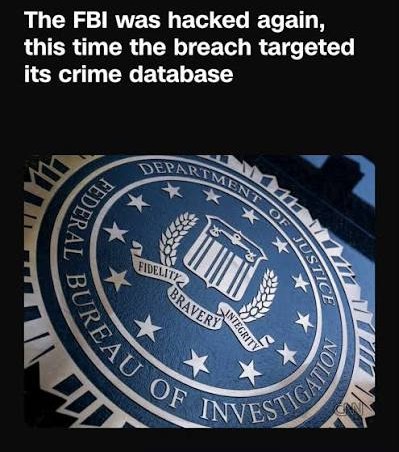
The FBI crime database breach inquiry
CNN broke the news on November 20, citing two people familiar with the investigation. They described an apparent intrusion involving NCIC. That date marks the first public account of the inquiry. The timing of any unauthorized access remains unclear.
Reuters followed the story on November 21 and credited CNN for the information. The FBI did not respond to Reuters’ request for comment. Readers who saw the news from several outlets were largely seeing the same account travel. The original sources described an investigation, and the bureau has yet to give its own account of what happened.
One question concerns the breadth of any access. Did someone look up a single person? Did anyone copy a collection of records? The early coverage gives no estimate of how many people or agencies the incident might affect. A national database can hold information from across the country even when an incident touches only a small part of it.
Missing-person records across state lines
Consider a family that reports a relative missing. A local agency can enter a record that an officer in another state can find. The family may have no idea where to direct a search beyond its hometown. NCIC gives an officer hundreds of miles away a way to recognize a possible match.
The bureau’s history of NCIC offers a concrete example of how quickly information can cross that distance. In May 1967, a New York City officer radioed in a license plate. Within 90 seconds, he learned that someone had reported the car stolen in Boston the previous month. That was the system’s first recorded match. The FBI added a missing-person file in 1975.
Who could see a record?
For someone named in a record, the details matter. If an outsider read a missing-person entry, the family would have a privacy concern. If someone changed an identifying detail, an officer checking a possible match could receive inaccurate information. A service interruption would raise a third question about whether officers could retrieve an entry when they needed it. None of those outcomes appears as a confirmed finding in the November accounts.
September’s missed security update
September offers a clearer answer to the question of cause. FBI cyber chief Brett Leatherman told Reuters that a contractor had failed to install a security update on a third-party platform. The bureau removed the contractor. Two people familiar with the matter identified Oracle PeopleSoft as the software and Accenture as the platform manager. Leatherman’s public statement named neither company.
The consequences went beyond information applicants typically put on a résumé. Reuters described home addresses, medical information and details about employees’ assignments among the exposed material. A job title alone might reveal little. Pairing a name with a home address and a sensitive assignment tells a much more personal story. It also explains why the bureau’s response addressed the safety of its workforce.
One detail in the October coverage remains unresolved. Oracle had issued a security alert in June, and both Oracle and Google had urged customers to apply available updates. Reuters could not establish when the people responsible for the FBI jobs site acted on that guidance. The bureau identified a missed fix. Its statement gave the public no dates from which to calculate how long the platform had remained vulnerable.
ShinyHunters’ stated motive
ShinyHunters claimed responsibility for the recruitment incident. The group said it wanted the FBI to withdraw a public advisory about its activities. That was the group’s account of its motive. The bureau’s October statement answered a different question by identifying the missed update that allowed the September breach. Neither account identifies anyone behind the suspected November intrusion.
Could the incidents share a cause?
The short interval makes a connection worth examining. Yet the systems serve different people. The recruitment platform handles information about applicants and employees. NCIC lets agencies share records that officers consult during their work. Knowing who maintained the jobs platform tells readers little about who managed the part of NCIC now under scrutiny.
Even a future finding that named the same group would leave the technical question open. A group can use different methods on different occasions. Equally, two incidents can stem from a similar oversight and involve different people. Establishing either link would require evidence specific to the November case.
The wider news cycle also shaped the reaction. Technology outages and a disruption to US air travel had already drawn public attention that week. CNN and Reuters mentioned those events as context. Neither outlet identified a connection to NCIC. Using the outages to explain the FBI inquiry would give their timing more weight than the evidence supports.
What families need to know
For a family with a missing relative, the most urgent question may be whether officers could still retrieve an accurate record. For someone whose details an outsider might have viewed, the priority would be learning what information that person saw. An official account identifying the affected files and the extent of access could answer both questions, even if investigators still had no name to release.
For now, the suspected FBI crime database breach leaves a specific question open. September’s inquiry traced a personnel data exposure to a missed update. November’s inquiry concerns the records that agencies share and people rely on across state lines. The finding with the greatest practical value would establish what happened to those records and who, if anyone, needs to know.
Main sources
CNN — November 20 coverage of the NCIC investigation
https://edition.cnn.com/2026/11/20/politics/fbi-hacked-again-target-crime-database
Reuters — November 21 coverage of the suspected breach
https://www.reuters.com/world/us/fbis-criminal-information-database-hacked-cnn-reports-2026-11-21/
FBI — NCIC records and their uses
https://www.fbi.gov/how-we-can-help-you/more-fbi-services-and-information/nics/bipartisan-safer-communities-ncic-act-gun-file-faqs
FBI — The first NCIC match and the missing-person file
https://www.fbi.gov/news/stories/ncic-turns-50
Reuters — The FBI’s findings on September’s recruitment breach
https://www.reuters.com/technology/accenture-contractor-removed-fbi-following-damaging-data-breach-sources-say-2026-10-06/
Help Net Security — ShinyHunters’ account of its motive
https://www.helpnetsecurity.com/2026/09/28/fbi-job-portals-offline-shinyhunters-breach/