BY:SpaceEyeNews.
A giant satellite mirror designed to redirect sunlight toward Earth has received approval from the US Federal Communications Commission. The authorization allows California-based Reflect Orbital to deploy and operate one experimental satellite called Eärendil-1.
The mission could demonstrate a new way to provide temporary light after sunset. Reflect Orbital sees solar farms as a leading use case. Emergency teams and remote industries could also benefit.
However, the approval has triggered strong opposition. Astronomers fear brighter skies and disrupted observations. Environmental researchers also question how artificial sunlight could affect wildlife and natural biological cycles.
For now, the FCC has approved only one demonstration satellite. It has not approved Reflect Orbital’s planned commercial constellation.
What the FCC Approved for the Giant Satellite Mirror
The FCC Space Bureau issued its authorization on July 9, 2026. It covers one non-geostationary satellite and the radio frequencies needed to control it.
Eärendil-1 will use telemetry, tracking and command links during its mission. It will also transmit mission data to ground stations. According to the FCC, the spacecraft will test a deployable solar reflector in low Earth orbit.
The approval does not mean that a full sunlight-delivery service can begin immediately. Instead, Reflect Orbital must first build, launch and successfully operate the prototype.
The company has until July 9, 2032, to place Eärendil-1 into its assigned orbit. Once operations begin, the license will remain active for two years. Reflect Orbital must also meet communication, collision-avoidance and orbital-disposal requirements.
One Satellite, Not a Global Network
This distinction matters. Some reports describe plans for hundreds or thousands of mirrors. Yet the current authorization covers only Eärendil-1.
The FCC described it as a single demonstration satellite testing an emerging technology. Future spacecraft would require separate applications and reviews.
The agency also focused mainly on radio communications and orbital operations. It concluded that licensing the actual reflection of sunlight falls outside its direct authority. That regulatory gap has become a major part of the debate.
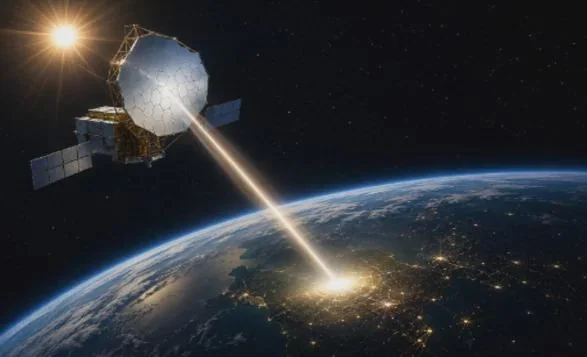
US approves testing of a giant space mirror that could reflect sunlight to Earth at night despite astronomers’ concerns .
How Eärendil-1 Will Reflect Sunlight
Eärendil-1 will operate at an expected altitude of about 625 kilometres, with a permitted variation of 25 kilometres. Its planned inclination is approximately 88 degrees. That near-polar orbit could take the satellite over a wide range of latitudes.
After reaching orbit, the spacecraft will deploy a thin reflective surface measuring around 18 by 18 metres. That makes the mirror almost 60 feet wide.
The material will not generate light. Instead, it will capture sunlight still reaching the satellite after the Sun has set below the local horizon. The spacecraft will then adjust the mirror’s angle and direct that sunlight toward a selected ground area.
Reflect Orbital says the motorized mirror will remain steerable. This should keep the reflected light within its intended target zone.
The American Astronomical Society estimates that the resulting beam could cover an area about five kilometres wide. However, Eärendil-1 has not yet tested this system in orbit. Its real brightness, accuracy and duration therefore remain unconfirmed.
Temporary Light Rather Than Daytime
The project is often described as turning night into day. That description exaggerates what one satellite could achieve.
A spacecraft in low Earth orbit moves quickly across the sky. It would only have a limited period to reflect sunlight toward each location. Useful illumination would most likely occur during short passes after sunset or before sunrise.
Weather would also affect results. Thick clouds could reduce the amount of light reaching the surface. The target would need to fall within the mirror’s available path and operating window.
Why Solar Farms Could Use a Giant Satellite Mirror
Reflect Orbital presents the technology as “sunlight on demand.” Its main commercial idea is to extend solar-power generation after sunset.
Electricity demand often remains high during the early evening. Meanwhile, output from solar facilities drops rapidly as natural sunlight disappears. A controlled beam from orbit could, in theory, keep part of a solar farm producing power for longer.
That extra generation would not replace normal daylight. However, it might support facilities during short periods when electricity demand and market prices remain elevated.
Other possible applications include temporary lighting during emergencies. Remote construction sites could also use the service. Industries working far from normal power infrastructure may find it useful as well.
Still, many practical questions remain. Operators must measure how much electricity the reflected light can generate. They must also compare its value with batteries, grid upgrades and other energy-storage systems.
The FCC did not judge whether the business model could succeed. Its decision focused on licensing requirements rather than commercial performance.
Astronomers Challenge the Satellite Mirror Plan
The American Astronomical Society filed a formal petition asking the FCC to reject Reflect Orbital’s application. It argued that the mission could harm professional astronomy and the wider night-sky community.
Sensitive telescopes collect very faint light over long exposure periods. A bright moving reflection could cross an image and reduce its scientific value. Scattered light in the atmosphere might also raise the background brightness around the target.
Wide-field surveys face particular concerns. These projects monitor large parts of the sky and cannot always avoid unexpected satellite passes.
The AAS also warned about direct light entering telescope equipment. In its response to the approval, the organization questioned whether one regulator has enough authority to assess the complete effect of orbital mirrors.
Future Constellations Raise Greater Concerns
One experimental spacecraft would create fewer events than a large network. However, Reflect Orbital has discussed a future constellation containing tens of thousands of mirrors.
A system at that scale could produce repeated reflections over many locations. Astronomers fear that avoiding every event would become difficult, even with published orbital data.
Reflect Orbital has proposed coordination with observatories and exclusion zones around sensitive facilities. Eärendil-1 may reveal whether those measures can work in practice.
Environmental Questions Remain Open
Artificial light at night already affects many ecosystems. Studies connect it with changes in animal movement, feeding and sleep. It can also influence plant growth and marine environments.
NASA has highlighted cases in which nighttime lighting disrupted nocturnal wildlife. Other NASA material notes effects involving birds, corals, sea turtles and phytoplankton.
The environmental effect of one short-duration reflection remains uncertain. Much would depend on brightness, location, timing and frequency.
However, a large constellation would create a different question. Repeated artificial sunlight could alter areas that currently experience natural darkness. Researchers therefore want real operating data before deployment expands.
Giant Satellite Mirror Test Could Shape Future Rules
Eärendil-1 represents a small mission with potentially global implications. The giant satellite mirror could show whether precise sunlight delivery from orbit is technically possible and commercially useful.
At the same time, the mission will test more than hardware. It will reveal whether operators can protect observatories, avoid unwanted illumination and limit environmental effects.
The FCC has approved one prototype, not a worldwide lighting system. Its results may guide future decisions about larger constellations.
Ultimately, the central issue is not simply whether orbital mirrors can work. Regulators, scientists and communities must also decide how much artificial sunlight should enter the natural night.
Main Sources:
Federal Communications Commission authorization:
https://docs.fcc.gov/public/attachments/DA-26-706A1.pdf
FCC public notice and orbital parameters:
https://docs.fcc.gov/public/attachments/DOC-418526A1.pdf
American Astronomical Society response:
https://aas.org/press/aas-public-policy-experts-available-comment-fcc-approval-reflect-orbitals-earendil-1-mission
American Astronomical Society petition:
https://aas.org/sites/default/files/2026-03/American%20Astronomical%20Society%20-%20Reflect%20Orbital%20Petition%20to%20Deny.pdf
Reflect Orbital official website:
https://www.reflectorbital.com/