
BY:SpaceEyeNews.
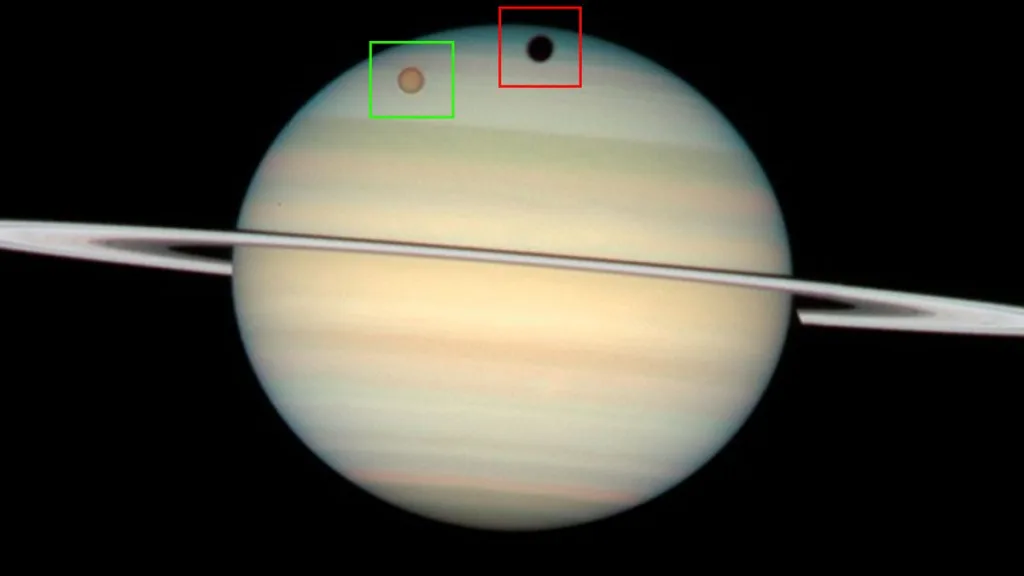
Humanity is preparing to return to the moon and eventually reach Mars again. Yet scientists are already discussing the next destination beyond both worlds. That destination is Titan, the largest moon of Saturn.
For decades, Titan existed mostly in science fiction and academic research. Today, that conversation is changing. NASA’s Dragonfly mission and the upcoming Humans to Titan Summit are helping move Titan into serious long-term exploration planning.
Titan stands apart from every other moon in the solar system. It has a thick atmosphere, liquid lakes, seasonal weather, rivers, dunes, and active chemistry. Those conditions make it one of the most Earth-like environments beyond our planet, despite its freezing temperatures.
Many researchers now believe Titan could eventually become one of humanity’s most important deep-space destinations.
Why Titan Fascinates Space Scientists
Titan is not a frozen rock drifting around Saturn. Scientists describe it as a dynamic world with an active climate and constantly changing surface conditions.
Much of what researchers know today came from the historic Cassini–Huygens mission. In 2005, the Huygens probe descended through Titan’s atmosphere and landed on the surface.
The mission revealed a surprisingly familiar landscape.
Lakes, Rivers, and Alien Rainfall
Titan is the only moon known to have stable liquid on its surface. However, those rivers and lakes contain methane and ethane instead of water.
Scientists also confirmed rainfall, clouds, erosion patterns, and seasonal weather cycles. Those discoveries transformed Titan from a distant mystery into one of the most scientifically valuable worlds in the solar system.
Its surface contains icy rocks, dune fields, dry channels, and enormous hydrocarbon seas. A dense orange haze surrounds the moon and shapes its unusual climate.
A Window Into Early Earth
Researchers believe Titan may resemble Earth billions of years ago. The moon contains complex organic molecules and active atmospheric chemistry.
That combination gives scientists a rare opportunity to study how the ingredients for life might develop on planetary worlds.
Unlike Mars, Titan also offers a thick atmosphere that helps shield the surface from radiation. That feature could become important for future human exploration.
Dragonfly Could Open the Door to Titan Exploration
NASA is already preparing its next major mission to Titan. The agency plans to launch the Dragonfly mission no earlier than 2028.
Dragonfly is unlike any robotic explorer sent into deep space before. Instead of using wheels, NASA designed the spacecraft as a nuclear-powered flying drone with eight rotors.
Why NASA Chose a Flying Drone
Titan’s atmosphere is denser than Earth’s atmosphere, while gravity remains relatively weak. Those conditions make flying easier there than on Mars.
NASA believes a flying explorer can travel farther and investigate more locations than a traditional rover.
Dragonfly will study impact craters, dunes, organic-rich terrain, and areas that may contain clues about prebiotic chemistry.
Dragonfly’s Scientific Goals
The mission will focus on several key objectives:
- Studying Titan’s organic chemistry
- Analyzing surface materials
- Monitoring atmospheric conditions
- Investigating possible habitable environments
- Understanding geological activity
Dragonfly may also help scientists identify future landing zones for advanced robotic missions or eventual crewed exploration.
Many researchers now see the mission as humanity’s first true scouting operation for Titan.
The Push Toward a Future Human Presence
The growing discussion around Titan is no longer limited to research papers. Scientists and engineers are actively beginning to discuss what future human exploration could look like.
That effort becomes more visible with the Humans to Titan Summit 2026 in Boulder.
The summit will bring together experts in planetary science, aerospace engineering, robotics, and human spaceflight to examine how humanity might eventually reach Titan after Mars.
Why Long-Term Planning Matters
Supporters of Titan exploration argue that future goals help maintain momentum in space exploration.
After the Apollo era ended, human missions beyond Earth orbit paused for decades. Now, lunar exploration has restarted through Artemis, while Mars remains NASA’s next major target.
Some researchers believe Titan should become the next long-term objective after Mars.
The discussion may sound ambitious today, but many major space programs began as distant concepts years before the technology existed.
Titan Is Becoming More Than Science Fiction
For years, Titan represented a fascinating scientific idea. Dragonfly is changing that perception.
The mission will provide direct, long-term exploration of Titan’s environment. It may also reveal whether the moon can support more advanced future operations.
That shift is why scientists increasingly describe Titan as a realistic exploration target rather than a purely theoretical dream.
Could Humans Actually Live on Titan?
Titan offers several surprising advantages for future astronauts. However, it also presents enormous technical challenges.
Titan’s Atmosphere Could Help Explorers
One major advantage is the moon’s thick atmosphere. Future crews would not require the same type of heavy pressure suits needed on the moon.
The atmosphere may also reduce exposure to harmful radiation. That protection could improve long-duration surface operations.
Titan’s low gravity creates another unusual possibility. Scientists believe humans could potentially use wing-assisted movement systems or jet-powered mobility devices to travel across the surface.
Extreme Cold Remains the Biggest Challenge
Despite those advantages, Titan remains an extremely hostile environment.
Surface temperatures average around minus 290 degrees Fahrenheit. Future habitats would require advanced heating systems and reliable power sources.
Titan’s atmosphere also lacks breathable oxygen. Any long-term presence would depend on oxygen production systems and highly protected living environments.
Methane rain and hydrocarbon particles may also create challenges for equipment durability.
Distance From Earth Adds Complexity
Titan orbits Saturn nearly 900 million miles from Earth on average.
A journey there would likely require years of travel time. Communication delays would become unavoidable, and future spacecraft may depend on advanced propulsion systems now under development.
Even so, many experts believe the challenges are manageable over the long term.
Why Titan May Become Humanity’s Next Great Frontier
Modern space exploration increasingly focuses on building a permanent future beyond Earth.
NASA’s Artemis program aims to establish a sustainable lunar presence. Mars missions may follow during the coming decades. After Mars, Titan could emerge as one of the most important destinations for deep-space exploration.
The moon combines several rare advantages:
- A dense atmosphere
- Active chemistry
- Surface liquids
- Lower radiation exposure
- Diverse geological environments
No other moon in the solar system offers the same combination.
Titan also provides a powerful scientific opportunity. Researchers could study alien weather systems, atmospheric evolution, and the chemistry linked to the origins of life.
At the same time, Titan represents something larger than science alone. It reflects humanity’s growing desire to expand deeper into the solar system.
The moon once seemed unreachable. Mars later became humanity’s next dream. Now Titan is slowly entering that same conversation.
Conclusion
A human mission to Titan remains a distant goal, but the idea is becoming increasingly serious inside the scientific community.
NASA’s Dragonfly mission will soon begin humanity’s most advanced robotic exploration of Titan. At the same time, researchers are already discussing how future crews might eventually explore the moon directly.
Titan offers one of the most fascinating environments in the solar system. Its atmosphere, weather systems, and organic chemistry make it unlike any world humanity has studied before.
The journey may still be decades away. Yet the first real steps toward Titan have already begun.
Main Sources:
NASA Dragonfly Mission
https://dragonfly.jhuapl.edu/
NASA Solar System Exploration — Titan
https://solarsystem.nasa.gov/moons/saturn-moons/titan/overview/
European Space Agency — Huygens Mission
https://www.esa.int/Science_Exploration/Space_Science/Cassini-Huygens