BY:SpaceEyeNews.
Jupiter Trojan Asteroids Discovery Reshapes Solar System Theories
The Jupiter Trojan asteroids discovery is forcing a rethink of how the solar system formed. New observations from the Subaru Telescope show that smaller Trojan asteroids behave very differently from larger ones. That single shift challenges decades of assumptions.
For years, astronomers saw a clean pattern. Jupiter Trojans appeared to split into two color groups. That division helped explain where they formed and how giant planets migrated. It offered a simple, elegant model.
Now that model is under pressure. Smaller Trojans do not follow the same rules. Instead of two clear groups, they show a continuous spread of colors. The change is subtle on paper. In reality, it reshapes how scientists read the earliest history of the solar system.
This Jupiter Trojan asteroids discovery does not just refine existing ideas. It forces a deeper revision of how planetary systems evolve over time.
Jupiter Trojan Asteroids Discovery Challenges the Fossil Record Model
Why Jupiter Trojans Still Matter
Jupiter Trojans orbit the Sun in stable regions near Jupiter. These zones, known as Lagrange points, have preserved these objects for billions of years. That stability made them ideal targets for studying the early solar system.
Researchers long treated them as a fossil record. Their colors and sizes seemed to preserve clues about where they formed. By decoding those clues, scientists built models of planetary migration and early solar system dynamics.
The Old Picture: A Clean Two-Group System
Before this Jupiter Trojan asteroids discovery, the dominant view was straightforward. Larger Trojans showed a clear color split:
- Redder D-type asteroids
- Less red P-type and C-type asteroids
This bimodal pattern suggested two distinct origins. Some objects likely formed farther from the Sun. Others formed closer in. Later, planetary migration scattered and captured them.
The model worked well. It was simple and widely accepted. But it relied heavily on observations of larger asteroids.
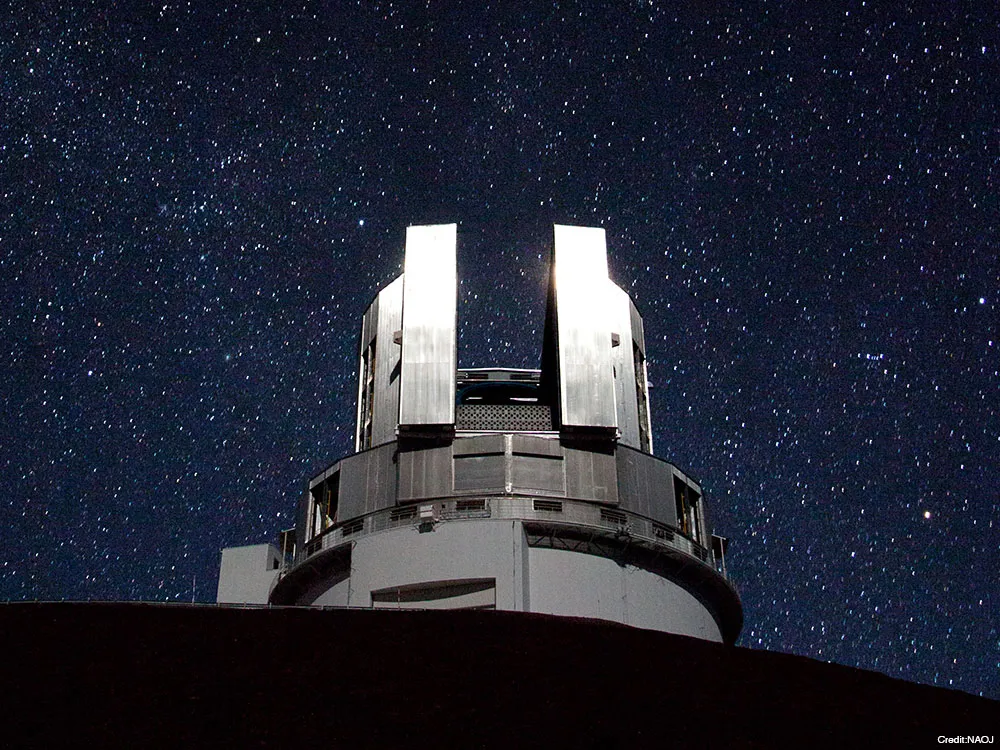
Subaru Telescope Jupiter Trojan Asteroids Discovery Breaks the Pattern
Small Asteroids Change the Narrative
The new Jupiter Trojan asteroids discovery shifts focus to smaller objects, between 3 and 16 kilometers wide. These faint bodies are harder to detect, yet they hold critical clues.
Small Trojans are often fragments of larger asteroids. They form after collisions break parent bodies apart. Because of this, they may reveal internal composition rather than just surface features.
A Continuous Spectrum Replaces a Clear Divide
The key result is striking. Smaller Trojans do not separate into two groups. Instead, they show a continuous range of colors with no sharp boundary.
This finding contradicts decades of observations. The neat classification seen in larger asteroids disappears at smaller scales.
The implication is clear. The traditional two-group system does not fully describe the Trojan population.
A Turning Point in Interpretation
This Jupiter Trojan asteroids discovery marks a turning point. It suggests that the asteroid population is more complex than assumed.
Rather than two distinct families, Trojans may form a continuous distribution shaped by both origin and evolution. That complexity forces a reassessment of earlier conclusions.
Jupiter Trojan Asteroids Discovery Reveals a Dynamic System
Collisions Rewrite the Record
Over billions of years, collisions have reshaped asteroid populations. Large bodies break apart into smaller fragments. These fragments mix material from different layers.
The new findings support this process. They show that fragmentation likely blurred the original differences between asteroid groups.
Surface Evolution Changes What We See
Asteroid surfaces evolve over time. Solar radiation, micrometeorite impacts, and thermal changes gradually alter their appearance.
These effects can shift color and composition. Over long periods, they may erase clear distinctions that once existed.
This helps explain why smaller Trojans show a continuous spectrum. Their surfaces reflect both original material and long-term change.
From Static Relics to Evolving Systems
The Jupiter Trojan asteroids discovery shifts the narrative. Trojans are no longer seen as static relics frozen in time.
They are part of an evolving system. Their properties change through collisions and environmental effects. This dynamic view offers a more realistic picture of solar system history.
Jupiter Trojan Asteroids Discovery Reshapes Solar System Models
Implications for Planetary Migration
The discovery has direct consequences for planetary migration theories. If Trojans do not separate into clear groups, their origins may be more mixed.
This suggests that early solar system dynamics were more complex. Material may have blended more than previously thought during planetary movement.
Why Small Asteroids Now Matter More
Small asteroids are emerging as key targets for research. They expose internal material from larger bodies. This gives scientists a deeper look at original composition.
Large asteroids often have weathered surfaces. Their outer layers have changed over time. Small fragments may preserve more accurate records.
The Jupiter Trojan asteroids discovery highlights this shift in focus.
A More Complex Early Solar System
The broader message is clear. The early solar system was not clean or orderly. It was dynamic, with constant mixing and change.
This discovery reinforces that view. Even the most stable populations carry complex histories shaped over billions of years.
Subaru Telescope Enabled This Jupiter Trojan Asteroids Discovery
Precision Observations Made the Difference
The Jupiter Trojan asteroids discovery relied on precise, wide-field observations. The Subaru Telescope provided the sensitivity needed to detect faint objects.
This allowed researchers to analyze a population that was previously difficult to study.
Why Suprime-Cam Was Essential
The study used Suprime-Cam, a wide-field camera with a key advantage. It could switch filters quickly.
Asteroids rotate, which changes their brightness. Rapid measurements ensured accurate color data before rotation introduced errors.
This capability proved critical for the study.
A Final Observation With Lasting Impact
The observations were made during Suprime-Cam’s final night of operation in 2017. That timing adds a unique dimension to the discovery.
An instrument nearing retirement helped reshape modern understanding. The result is both scientifically important and historically meaningful.
What Comes Next After This Jupiter Trojan Asteroids Discovery
Expanding the Dataset
Future studies will examine larger samples of small Trojans. Researchers aim to confirm whether the continuous color pattern holds across the population.
More data will refine models and improve accuracy.
Future Missions and Direct Exploration
Space missions could provide direct insights. Visiting Trojan asteroids would allow detailed study of their composition.
Such missions would test and expand on this Jupiter Trojan asteroids discovery.
Updating Classification Models
The traditional two-group classification may no longer be sufficient. New models must account for continuous variation and long-term evolution.
This shift will influence future research in planetary science.
Conclusion: A Hidden Pattern With Big Implications
The Jupiter Trojan asteroids discovery reveals a system far more complex than expected. What once appeared as a simple, organized structure now shows signs of continuous change.
Small asteroids expose a hidden pattern shaped by collisions and surface evolution. This forces a deeper rethink of solar system history.
If even these ancient objects carry blurred and evolving records, one question stands out:
What other hidden patterns remain undiscovered across our solar system?
Sources:
- https://dailygalaxy.com/2026/04/subaru-pattern-jupiter-trojan-asteroids/
- https://iopscience.iop.org/article/10.3847/1538-3881 (The Astronomical Journal study)