BY:SpaceEyeNews.
Introduction: A New Era for Laser Powered Rover Moon Exploration
A laser powered rover Moon concept could reshape how scientists explore the Moon’s most extreme regions. Engineers are developing a system that sends energy to a rover using a focused infrared laser. This approach enables exploration in areas where sunlight never reaches. These regions, especially near the lunar south pole, may contain frozen water that could support future missions.
Interest in lunar resources continues to grow. Space agencies now focus on sustainability, not just exploration. The ability to reach shadowed regions safely could unlock a new phase of activity. This article explains how the laser powered rover Moon system works, why it matters, and what comes next.
Why the Laser Powered Rover Moon Focuses on Dark Craters
Permanently Shadowed Regions Hold Valuable Resources
The laser powered rover Moon concept targets permanently shadowed regions near the south pole. These areas remain in darkness due to the Moon’s low axial tilt. Shackleton crater stands out as a key site in many mission plans.
Temperatures inside these craters stay extremely low. This environment allows water ice to remain stable for billions of years. Scientists see this as one of the Moon’s most valuable resources.
Evidence from Multiple Missions
Several missions have detected strong signs of hydrogen, which suggests the presence of water ice. Observations from orbit and earlier lunar missions all point toward the same conclusion: these shadowed regions likely contain frozen reserves.
This growing body of evidence has increased global interest in the lunar south pole. Agencies now view these regions as essential targets for future exploration.
Why Ice Matters for Future Missions
Water ice offers clear advantages. It can support drinking systems for crews. It can also be split into hydrogen and oxygen. Oxygen helps sustain life, while hydrogen can be used as fuel.
This means the Moon could become a supply station for deeper missions into space. The laser powered rover Moon concept supports this vision by enabling direct access to these hidden resources.
The Core Challenge of Darkness
Exploring these regions is difficult. There is no sunlight for solar panels. Temperatures remain extremely low. Navigation becomes more complex in total darkness.
Traditional rover systems struggle under these conditions. This limitation explains why these areas remain largely unexplored. A new solution is required, and that is where the laser powered rover Moon concept comes in.
How the Laser Powered Rover Moon System Works
Introducing the PHILIP Project
The laser powered rover Moon system comes from a research effort known as the PHILIP project. This initiative explores how to power robotic systems using laser beams instead of onboard energy sources.
The idea replaces traditional methods with remote energy transmission. This shift creates a new way to design exploration systems.
Step-by-Step System Operation
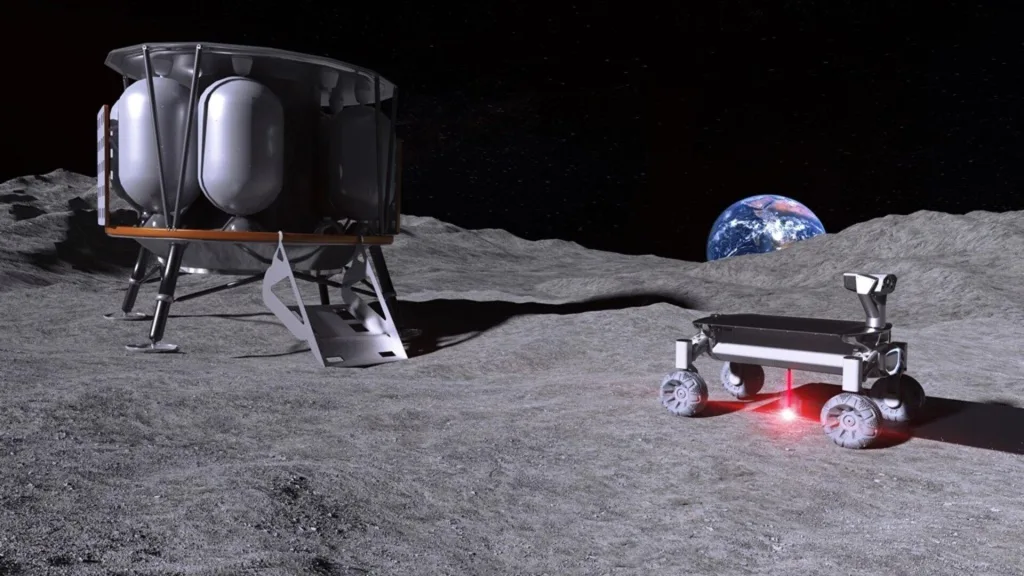
The system includes two main components. A lander sits in a location that receives near-constant sunlight. It generates energy using solar panels and converts that energy into a 500-watt infrared laser.
The laser beam travels toward the rover, which operates inside a dark crater. The rover uses modified solar panels to convert the laser light into electricity. This allows it to function without direct sunlight.
The system can operate across distances of up to 15 kilometers. That range provides flexibility in mission planning.
Precision and Navigation Control
Accurate alignment is essential. Sensors track the rover’s position and keep the laser beam focused. Even small shifts could interrupt the power supply.
Engineers design rover paths carefully. They consider terrain slope and visibility to maintain a clear line of sight between the lander and the rover.
Laser-Based Communication System
The laser powered rover Moon concept also supports communication. A retro-reflector on the rover sends signals back to the lander. This enables two-way data exchange using light.
This approach reduces reliance on traditional communication systems. It also improves efficiency in low-visibility conditions.
Testing and Validation on Earth
Engineers have tested similar systems on Earth. Laser-based power transmission has already supported long-duration drone flights. Field trials under low-light conditions have helped validate navigation and alignment performance.
These results show that the concept is practical. They also highlight the progress made toward real-world deployment.
Why the Laser Powered Rover Moon Changes Future Exploration
Comparing with Traditional Power Systems
Traditional lunar missions often rely on radioisotope power systems. These provide steady energy over long periods. However, they come with challenges. They are complex, expensive, and generate heat.
Heat becomes a concern when studying frozen environments. It may affect the conditions that researchers aim to observe.
The laser powered rover Moon approach avoids this issue. The energy source remains at a distance, reducing thermal impact on the surrounding environment.
Key Advantages of the Laser Approach
The laser system offers several advantages. It allows continuous operation without heavy onboard power units. It reduces rover weight and simplifies design. It supports longer missions in extreme conditions.
This flexibility makes it a strong candidate for future exploration programs.
Enabling New Mission Architectures
The laser powered rover Moon concept introduces a new model. Exploration systems no longer need to carry all their resources. Instead, they can rely on external infrastructure.
This approach could lead to networks of landers and rovers working together. Energy could be distributed across multiple locations. This model supports scalability and efficiency.
Future Applications Beyond the Moon
This technology could extend beyond lunar missions. Similar systems may support exploration on Mars or other environments with limited sunlight.
The ability to transmit energy remotely opens new possibilities for space exploration.
Current Status and Next Steps
The project remains in the study phase. Engineers have completed early testing and analysis. The next step involves building prototypes and expanding development programs.
If progress continues, the laser powered rover Moon system could become part of future missions within the next decade.
Conclusion: The Future of Laser Powered Rover Moon Exploration
The laser powered rover Moon concept marks a shift in how exploration systems are designed. It replaces traditional power methods with a flexible, remote solution. This allows access to the Moon’s darkest and most valuable regions.
By enabling exploration of permanently shadowed craters, this technology could unlock critical resources such as water ice. These resources may support future crews and long-term lunar presence.
As testing advances, this concept moves closer to reality. If successful, it could define the next stage of lunar exploration and open the door to new possibilities across the solar system.
Main Sources:
- https://dailygalaxy.com/2026/04/laser-rover-explore-moon-dark-craters/
- https://www.esa.int
- https://www.nasa.gov
- https://www.isro.gov.in