
BY:SpaceEyeNews.
The many-worlds interpretation raises an unsettling possibility: the quantum outcomes we never observe may still belong to reality. Hugh Everett reached this idea by questioning why measurement should interrupt the ordinary evolution of a quantum system. His proposal removed collapse from the picture. It also forced physicists to reconsider what an observer actually experiences.
Nearly seven decades after his landmark paper, the debate continues. Its appeal reaches beyond parallel versions of ourselves. At stake is whether one set of quantum rules can explain everything, including the people who use them.

Hugh Everett. Source: Wikipedia.
Hugh Everett’s Challenge to Quantum Collapse
In 1957, Everett published his “relative state” formulation while completing his doctorate at Princeton. He wanted a description that included both a measured system and its observer.
Conventional textbook accounts introduce collapse when a measurement produces one definite result. Everett questioned why this event should require a separate rule. If quantum equations describe physical systems, why exclude measuring instruments or human observers?
His answer kept the universal quantum state evolving continuously. Measurements created correlations between systems, devices, and recorded outcomes. They did not erase the other components of the state.
From Relative States to Many Worlds
Everett’s proposal initially attracted limited support. Later, physicist Bryce DeWitt helped promote it through the language of many worlds.
That distinction matters. Everett began with a mathematical problem about measurement. The familiar picture of branching universes developed through later interpretation and debate. Treating him simply as someone who invented alternate realities misses the scientific motivation.
What the Many-Worlds Interpretation Actually Describes
Within this framework, different outcomes correspond to different branches of a larger quantum state. Each branch contains records consistent with its particular outcome.
An observer therefore remembers one result. Another branch contains a different record. The overall description retains both, without requiring either observer to experience contradictory outcomes simultaneously.
However, “world” does not mean a separate planet hidden somewhere beyond our telescopes. It refers to an effectively autonomous history within the quantum description.
Why Decoherence Matters
Modern Everettian accounts rely heavily on decoherence. Interactions with the surrounding environment spread information about a system into countless additional degrees of freedom.
Consequently, interference between macroscopic alternatives becomes extraordinarily difficult to observe. Branches then behave approximately like separate classical histories.
Decoherence helps explain this effective separation. However, it does not independently prove that every branch represents a physically real world.
Nor does the framework provide a precise counter showing how many universes appear each second. Branches emerge from the dynamics; researchers do not generally treat them as neatly numbered objects.
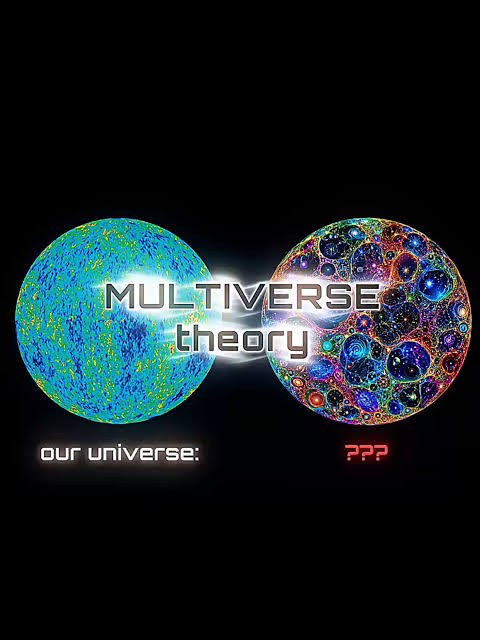
This picture also differs from cosmological multiverse proposals involving distant regions with different physical conditions. Those ideas raise their own questions and do not follow automatically from Everett’s work. Using one umbrella term for all of them can obscure the actual argument. Here, the issue concerns how quantum theory describes alternative outcomes within a universal state, rather than what might lie beyond our observable cosmic horizon.
Human awareness has no special branching role. Environmental interactions occur throughout nature, whether anyone watches or not.
Why Parallel Realities Still Attract Physicists
The appeal begins with consistency. Everett’s approach applies the same quantum dynamics to particles, laboratory equipment, observers, and the wider universe.
It avoids introducing a special moment when ordinary quantum evolution gives way to collapse. Supporters see that continuity as a powerful advantage.
Yet this economy comes with an extraordinary interpretation of reality. A compact mathematical description can contain many effectively separate histories.
For some researchers, those histories follow naturally from taking the quantum state seriously. Others question whether the mathematics requires that conclusion.
The disagreement therefore concerns more than whether parallel worlds sound plausible. It involves what a physical theory must explain and which mathematical structures deserve physical meaning.
This also makes Everett’s approach relevant to cosmology. A description of the whole universe cannot easily rely on an observer standing outside it. Including observers within the theory addresses that conceptual difficulty.
The Probability Problem Inside Many Worlds
The hardest question is not simply whether other branches exist. It is why observers should expect the particular probabilities that experiments reveal.
Ordinary quantum calculations use the Born rule. This rule connects the squared magnitudes of quantum amplitudes with outcome probabilities.
But if all allowed outcomes occur, what exactly does probability describe? Why should one future experience carry more weight than another?
Why Counting Branches Falls Short
Simply counting branches does not solve the problem. Branches lack a unique, straightforward counting scheme, and equal counting does not generally recover the required statistics.
Researchers have proposed more sophisticated approaches. Some examine rational decisions under branching. Others explore uncertainty about which future experience an observer should anticipate.
Supporters argue that these approaches recover the familiar probabilities. Critics question their assumptions and whether they fully explain the connection to observed frequencies.
The dispute matters because quantum mechanics succeeds through precise numerical predictions. A convincing account must explain those predictions, not merely offer an intriguing picture of reality.
What Evidence Can Tell Us About Branching Reality
Experiments strongly support quantum mechanics. However, that success does not automatically select the many-worlds interpretation over every competing account.
Several interpretations reproduce the same standard experimental predictions. Agreement with those predictions alone cannot establish which underlying picture is correct.
Likewise, observing decoherence does not amount to detecting another universe. The process matters across several approaches to quantum theory.
Testability Without the Hype
Researchers continue debating how evidence should bear on interpretations. Proposals that modify quantum dynamics can offer different experimental targets. Establishing such departures would matter for approaches that retain uninterrupted quantum evolution.
For now, a serious discussion should separate mathematical success, explanatory arguments, and distinctive experimental confirmation.
The framework also supplies no mechanism for thoughts to select a preferred universe. Wishing for an outcome does not control quantum amplitudes or provide access to another branch.
Calling many-worlds established fact goes too far. Dismissing it as a conspiracy theory also misrepresents an active academic debate.
Many-Worlds Interpretation: Everett’s Unfinished Question
Everett’s lasting contribution was to insist that observers belong inside the physical description. His proposal challenged physicists to explain definite experiences without introducing a separate collapse rule.
The many-worlds interpretation remains one influential response. It offers a unified account of quantum evolution, while raising difficult questions about probability and physical reality.
Parallel histories remain an interpretation, not a confirmed discovery. Still, the question Everett sharpened has lost none of its force: does the quantum state describe only our experience, or a reality far larger than the history we observe?
Main Sources:
American Physical Society, Physics Magazine — Quantum Milestones, 1957: Sprouting Parallel Universes:
https://physics.aps.org/articles/v18/83
Hugh Everett, Reviews of Modern Physics — “Relative State” Formulation of Quantum Mechanics:
https://doi.org/10.1103/RevModPhys.29.454
University of Oxford Research Archive — Decoherence and Ontology:
https://ora.ox.ac.uk/objects/uuid:81cf4e0f-1368-45b0-9851-928332ff8393
University of Oxford Research Archive — Many Worlds? An Introduction:
https://ora.ox.ac.uk/objects/uuid:bb07de70-4674-4980-8683-f6915d3dbdad
You Might Also Like:
Google Willow quantum chip: new phase of matter observed on a quantum processor-Video
Dark Energy Acceleration Confirmed After Nobel Laureates Refute Cosmic Slowdown Claim
AI Supernova Framework Could Revolutionize How We Measure the Universe