
BY:SpaceEyeNews.
NASA Swift Rescue Mission Begins a Race Against Time
The NASA Swift rescue mission is not a normal launch story. NASA is not sending a new telescope into space. It is sending a robot to save an old one before Earth’s atmosphere slowly pulls it down.
The target is the Neil Gehrels Swift Observatory. It launched in 2004 and has spent more than two decades watching some of the fastest and most energetic events in the universe. Swift still has scientific value. Yet its orbit has entered a dangerous phase.
NASA says Swift’s altitude has dropped over time because of drag from Earth’s upper atmosphere. Recent solar activity made that problem worse. Now, the telescope needs help.
That help comes from Katalyst Space Technologies. The company built a robotic spacecraft called LINK. Its job sounds simple at first. Catch Swift, hold it carefully, and raise it to a safer orbit. In reality, this is one of the most delicate servicing attempts NASA has ever supported.
If the mission works, Swift may return to active science. More importantly, the mission could prove a new idea. Spacecraft may not always need to be abandoned when their orbits fade.
Why Swift Still Matters to NASA
Swift is old by spacecraft standards. But age is not the main issue. Value is.
NASA’s Swift observatory studies gamma-ray bursts and other fast-changing cosmic events. These events appear suddenly. Some fade within minutes. Others evolve over hours or days. That makes speed essential.
Swift’s strength is fast response. It can detect a high-energy event, turn toward it, and help alert other observatories. That role makes it different from larger telescopes such as Hubble or James Webb.
Webb can look deep into the infrared universe. Hubble can capture sharp images across visible and ultraviolet light. Swift plays a different game. It acts like a rapid-response observatory. When the universe changes quickly, Swift can move quickly with it.
This is why the NASA Swift rescue mission matters. NASA is trying to preserve a tool that still fills a unique gap in modern astronomy.
Swift also works across several wavelengths. Its instruments collect data in gamma-ray, X-ray, ultraviolet, and visible light. That broad view helps scientists connect the first flash of an event with what follows later.
Without Swift, NASA would lose more than one aging spacecraft. It would lose a fast observer at a time when time-domain astronomy is becoming more important.
The Real Problem Is Orbital Decay
Swift is not falling because it stopped working. It is falling because low Earth orbit is not empty.
At Swift’s altitude, faint traces of Earth’s upper atmosphere still exist. Those particles create drag. Over time, drag slows a spacecraft and lowers its orbit. This process can take years. But solar activity can speed it up.
When the Sun becomes more active, it heats and expands the upper atmosphere. That expansion reaches higher into space. Satellites then experience more drag than expected.
That is what happened to Swift. Its orbit had already been decreasing since launch. Recent increases in solar activity pushed the problem into a faster phase.
NASA has taken steps to buy time. Swift’s science observations stopped earlier this year. That helped reduce some operational demands. But it did not solve the core issue.
The telescope needs a higher orbit. If it drops too low, a rescue becomes much harder. At some point, the physics of orbital decay will leave too little time and too little margin.
That urgency gives the NASA Swift rescue mission its dramatic edge. This is not a symbolic test. It is a real rescue attempt with a closing window.
LINK: The Robot Sent to Catch Swift
Katalyst’s LINK spacecraft is the center of the operation. NASA describes LINK as a small servicing spacecraft weighing about 400 kilograms. It uses three robotic arms to dock with Swift.
That detail matters. Swift was never designed for this.
Many future satellites may include docking ports, refueling interfaces, or servicing markers. Swift does not belong to that generation. It was built as a science observatory, not as a spacecraft waiting for a robotic mechanic.
LINK must approach Swift with precision. It must understand the telescope’s position. It must identify safe contact areas. Then it must use its robotic arms to attach without damaging the spacecraft.
After that, the boost must happen slowly. LINK cannot treat Swift like cargo on a road. In orbit, small forces matter. Alignment matters. Rotation matters. The wrong push could create new problems.
This is why the mission is so challenging. LINK is not just flying near Swift. It is trying to become part of Swift long enough to raise its orbit.
The plan also shows how much spaceflight is changing. For decades, many spacecraft had one life. They launched, operated, aged, and eventually reentered or moved away. Servicing could change that pattern.
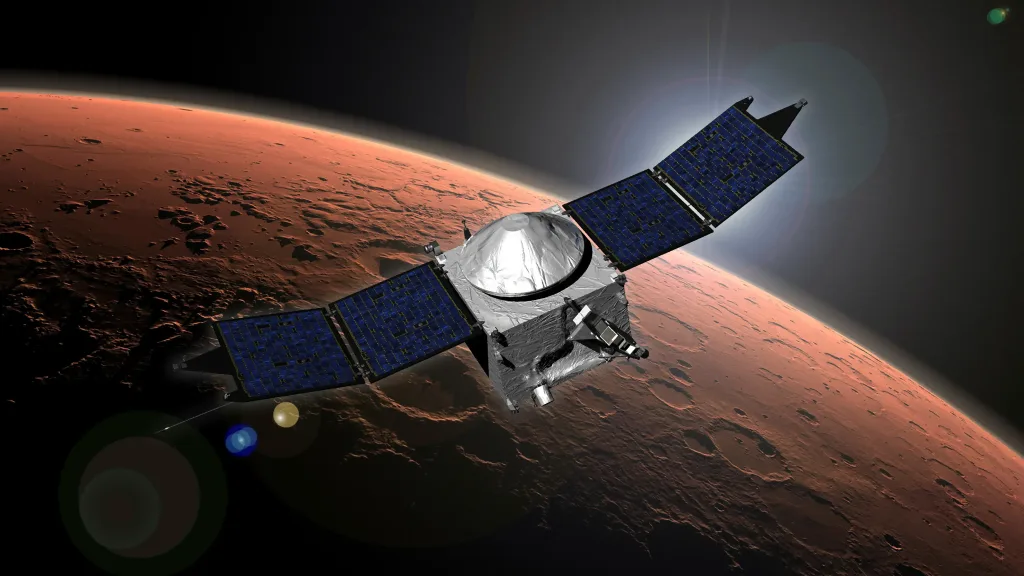
NASA races to save Swift telescope from falling back to Earth .
Why the NASA Swift Rescue Mission Is Risky
The biggest risk comes from Swift’s design. It was not built to be grabbed by robotic arms.
That means engineers had to study the spacecraft carefully. They had to decide where LINK could attach. They also had to test how the robotic system might behave during contact.
Even a gentle approach can be complex in orbit. Swift is large compared with LINK. Its solar arrays, instruments, and body must remain safe. A mistake could damage the observatory or make it harder to control.
NASA has also made the mission harder by speed. The agency needed a rapid solution. Katalyst had months, not many years, to prepare this attempt.
That speed adds pressure. It also makes the mission more important. If a commercial team can develop and fly this kind of service quickly, NASA gains a new option for future emergencies.
Still, success is not guaranteed. NASA and Katalyst know that. A rescue mission like this carries real uncertainty.
The point is not that the mission is easy. The point is that the reward may justify the attempt.
Why NASA Is Choosing Rescue Over Replacement
A replacement telescope would cost far more than this rescue attempt. It would also take years to design, build, launch, and commission.
Swift is already in space. It already works. Its science community knows how to use it. Its data systems and operations teams already exist.
That makes rescue attractive.
The NASA Swift rescue mission costs far less than building a new observatory with similar capabilities. It also gives NASA a chance to test commercial servicing in a real mission.
That combination is powerful. NASA may preserve a useful observatory while learning how to extend the lives of other spacecraft.
This is not about saving everything in orbit. Some satellites should reenter safely when their missions end. Space needs responsible cleanup. But Swift is different because it still offers unique science.
NASA is making a careful bet. Saving Swift could return years of science. It could also prove a service that may help future missions.
The Bigger Picture: Spacecraft Servicing Enters a New Phase
Servicing spacecraft is not a new dream. Hubble proved the value of repair and upgrades during the shuttle era. Astronauts visited Hubble several times and turned it into one of history’s most productive telescopes.
But the shuttle era ended years ago. Crewed servicing is no longer a simple option for many observatories. Robotic servicing could fill part of that gap.
The Swift mission is smaller than a Hubble servicing mission. It is also different. LINK is not replacing instruments. It is raising an orbit. Still, the idea is connected.
If a robot can safely approach and boost an aging telescope, future robots may do more. They may refuel satellites. They may replace parts. They may move spacecraft to safer orbits. They may even help build structures in space.
That does not mean every future rescue will happen. It also does not mean Hubble or any other observatory has a guaranteed robotic service plan. But a successful Swift boost would strengthen the case.
It would show that commercial servicing can move from concept to real action.
What Success Could Mean for Astronomy
If LINK succeeds, Swift could return to its role as a rapid-response observatory. That would help NASA and its partners continue tracking sudden cosmic events.
The timing is important. Astronomy is becoming more connected. One telescope can detect an event. Another can study it in a different wavelength. Ground observatories can join in. Space telescopes can add deeper views.
Swift fits into that network because it reacts fast.
Future discoveries from powerful observatories may create even more demand for quick follow-up. Swift can help connect early signals with later observations.
That is why the NASA Swift rescue mission is not just a technical story. It is also a science story. It protects a telescope that helps the wider astronomy community respond when the universe changes.
Success would also send a message. Spacecraft do not always have to be single-use machines. Some can get help after launch.
What Failure Would Mean
Failure would be disappointing. Swift could still continue toward reentry if LINK cannot complete the boost. NASA would lose a valuable observatory and a long-running science asset.
But failure would not make the mission meaningless.
Engineers would still learn from the attempt. They would collect data on rendezvous, navigation, robotic contact, and spacecraft behavior. Those lessons could shape future servicing missions.
Spaceflight often advances through hard tests. Some work. Some do not. The key is whether each mission teaches something useful.
NASA is taking a measured risk. It is not risking astronauts. It is not trying to recover a telescope by force. It is testing a robotic method that may become more useful as space infrastructure grows.
That makes the mission worth watching, even if the final result remains uncertain.
Why This Story Matters Beyond Swift
The Swift rescue comes at a time when space is becoming more crowded and more valuable. Satellites support science, communication, weather tracking, navigation, Earth observation, and national infrastructure.
As more spacecraft launch, servicing will become more important. Operators will want satellites to last longer. Agencies will want to reduce waste. Companies will look for ways to repair, refuel, and reposition assets.
The Swift mission gives the public a clear example of that future.
A robot is going after a telescope that still matters. It must catch it carefully, lift it higher, and prove that orbital rescue can work.
That is a powerful story because it changes how people think about space missions. Launch may no longer be the only important moment. What happens after launch could become just as important.
Conclusion: A Small Robot Could Change Space Rescue
The NASA Swift rescue mission is a race against orbital decay. But it is also a preview of a new era.
Swift has already outlived its original expectations. It has helped scientists study gamma-ray bursts and other fast-changing events for more than 20 years. Now, a robotic spacecraft may decide whether that work continues.
If LINK succeeds, NASA saves a valuable telescope. Katalyst proves a major servicing capability. Astronomers regain a fast-response tool. Future missions gain a new model for survival.
The most important part may come later. This rescue could show that spacecraft do not always have to fade away when their orbits drop. Sometimes, a robot may arrive just in time.
Main Sources:
NASA Swift Boost Mission:
https://science.nasa.gov/mission/swift/swift-boost-mission/
NASA Swift Boost Event Page:
https://www.nasa.gov/event/swift-boost/
NASA Swift Boost Media Resources:
https://science.nasa.gov/mission/swift/swift-boost-mission/swift-boost-media-resources/
NASA Swift Mission Overview:
https://science.nasa.gov/mission/swift/
NASA Swift Science:
https://science.nasa.gov/mission/swift/science/
NASA Goddard Swift Mission Page:
https://swift.gsfc.nasa.gov/about_swift/
Associated Press / LA Times article shared by user:
https://www.latimes.com/world-nation/story/2026-06-28/nasa-races-to-save-swift-telescope-with-daring-rescue-mission