
BY:SpaceEyeNews.
Introduction
The New Glenn rocket failure has quickly become one of the most significant setbacks in today’s launch industry. What began as a smooth and controlled liftoff ended with a decisive mission loss. In a single sequence of events, Blue Origin’s New Glenn rocket was grounded after launching a satellite into the wrong orbit—and that outcome reshaped the entire narrative.
At first, everything appeared to be on track. The rocket lifted off cleanly, and the booster executed a precise landing. Yet, despite that strong performance, the mission did not succeed. The reason lies in the final and most critical phase: orbital insertion.
Because the satellite failed to reach its intended altitude, it could not begin operations. Within hours, it was lost. This New Glenn rocket failure now raises deeper concerns about reliability, timing, and the pressure to deliver consistent performance in a highly competitive launch market.
New Glenn Rocket Failure: A Strong Start That Turned Into a Critical Error
Launch Success at Cape Canaveral
The mission began with confidence. Liftoff proceeded smoothly, and early flight data indicated stable performance. The first-stage booster separated as expected and later landed successfully on a recovery barge.
That sequence reflects a key achievement. Reusability, once a major challenge, continues to improve with each mission. In isolation, this part of the flight would be considered a success.
However, the New Glenn rocket failure did not occur during ascent or recovery. It emerged later, when precision became essential.
Upper Stage Performance Becomes the Deciding Factor
As the upper stage took control, the mission entered its most sensitive phase. At this point, even small variations can affect the final outcome. According to early findings, one of the engines failed to produce sufficient thrust.
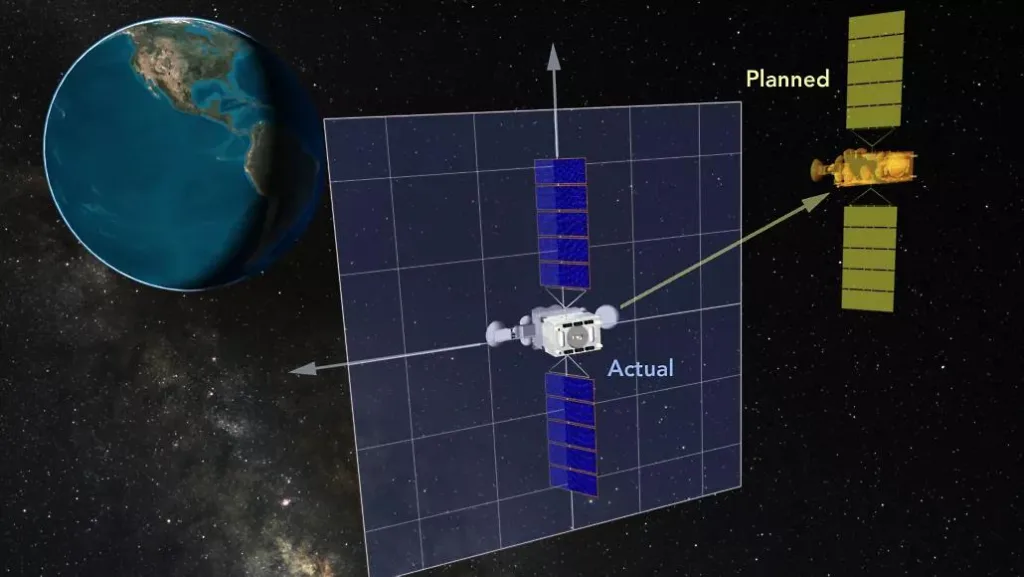
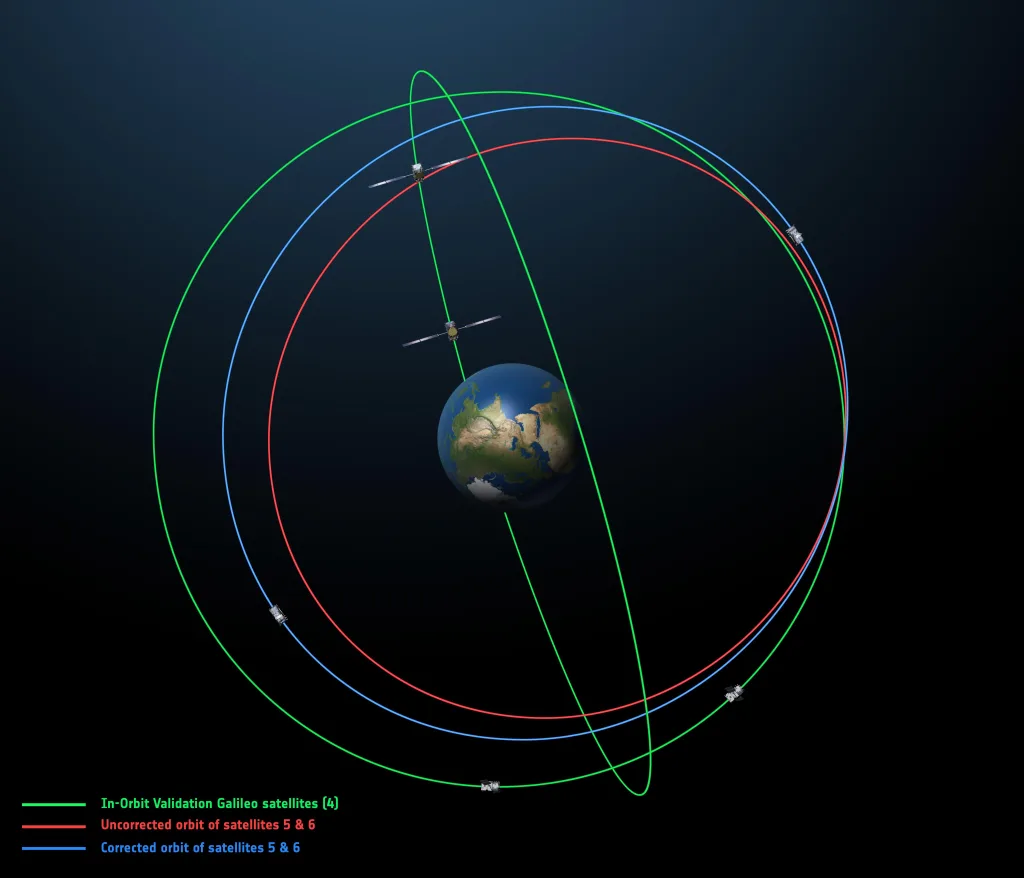
That single issue changed everything. The rocket could not reach the required velocity to place the satellite into its intended orbit. Instead, the payload was inserted into a lower trajectory that could not support operations.
In orbital missions, there is little margin for error. Once the trajectory falls short, recovery options become extremely limited. The New Glenn rocket failure was effectively determined in that moment.
Satellite Lost: What the Wrong Orbit Really Means
Why Orbit Accuracy Matters
Orbital precision defines mission success. A satellite must reach a specific altitude and speed to function properly. If either parameter is off, the system may fail before it even begins.
In this case, the satellite entered a non-operational orbit. It could not stabilize or activate its systems as planned. Without the correct conditions, the mission could not continue.
Soon after, the outcome became final. The satellite reentered the atmosphere and burned up. That sequence confirms a total loss.
The New Glenn rocket failure highlights an important reality. A mission does not require a dramatic event to fail. A small deviation in performance is enough.
A Mission That Looked Successful—But Wasn’t
From a distance, the mission seemed promising. The launch was smooth. The booster performed well. Early systems behaved as expected.
Yet, orbital insertion is the defining milestone. Without it, all prior success becomes irrelevant. This contrast explains why the New Glenn rocket failure stands as a complete mission loss despite visible achievements.
The Payload Impact: AST SpaceMobile’s Setback
A Key Step in Space-Based Connectivity
The lost satellite was part of a broader effort to expand global connectivity. The mission aimed to support a network designed to link smartphones directly to satellites, removing the need for traditional ground infrastructure.
This approach represents a major shift in communication technology. It has the potential to reach remote regions and extend coverage where existing networks fall short.
Because of that vision, each satellite plays a critical role. Every launch contributes to building a larger, more capable system.
Delays and Competitive Pressure
With the satellite lost, timelines may shift. Deployment schedules could face delays, and replacement efforts may increase costs.
At the same time, competition continues to grow. Companies across the industry are working toward similar goals, each aiming to deliver reliable global coverage.
The New Glenn rocket failure therefore carries broader implications. It affects not only a single mission, but also momentum within a rapidly evolving sector.
Grounded Rocket: What Happens Next
Investigation and Launch Pause
Following the New Glenn rocket failure, a formal review process began. As a result, all upcoming launches have been paused until the issue is fully understood.
This approach reflects standard practice. Investigations focus on identifying the root cause and confirming that corrective measures are effective.
Until that process is complete, the rocket remains grounded.
Pressure on Blue Origin
At this stage, reliability becomes the central concern. With only a few flights completed, the program must now demonstrate consistent performance.
The company has already shown progress in booster recovery. The next step is proving that upper-stage systems can deliver the precision required for orbital missions.
The New Glenn rocket failure places that expectation into sharper focus.
Impact on Future Missions and Industry Position
Program Dependencies and Timing
New Glenn is expected to support future missions that require heavy-lift capability. Any delay in readiness can affect planning and timelines across multiple projects.
Even short pauses may have wider effects, especially when missions depend on precise scheduling and coordination.
Competition and Market Pressure
The launch industry remains highly competitive. Companies continue to refine their systems and expand their capabilities.
In this environment, reliability stands out as the defining factor. A single failure does not determine long-term success, but consistent performance does.
The New Glenn rocket failure reinforces how narrow the margin is between progress and delay.
The Core Lesson: When Precision Defines Success
A Split Outcome That Shapes the Narrative
This mission delivered two contrasting results. The first stage succeeded, while the upper stage did not. That difference ultimately defined the mission.
In orbital launches, every stage must perform without deviation. A single weakness can override all other achievements.
The New Glenn rocket failure makes that principle clear.
Why Upper Stages Remain Critical
Upper stages handle final acceleration and orbital placement. These steps demand exact performance.
Even a small reduction in thrust can shift the trajectory enough to cause failure. Once that happens, recovery is unlikely.
This mission highlights why upper-stage reliability remains a top priority in launch system design.
Looking Ahead: Recovery and Return to Flight
The investigation will determine the precise cause of the issue. From there, engineers can implement targeted fixes.
Return-to-flight timelines will depend on testing and validation. Confidence must be restored before operations resume.
The New Glenn rocket failure may slow progress in the short term, but it also provides valuable data for future improvement.
Conclusion
The New Glenn rocket failure serves as a clear reminder of how demanding spaceflight remains. A mission can appear successful and still end in total loss.
In this case, Blue Origin’s New Glenn rocket was grounded after launching a satellite into the wrong orbit, transforming a promising launch into a setback. The issue emerged during the most critical phase, where precision defines success.
Now, attention turns to investigation, correction, and eventual return to flight. The path forward will depend on how effectively the underlying issue is resolved.
In modern space missions, success is not defined by liftoff or landing. It is defined by orbit—and in this mission, that final step made all the difference.
Main Sources:
- https://6abc.com/post/blue-origins-new-glenn-rocket-grounded-launching-satellite-wrong-orbit-faa-investigating/18932997/
- https://apnews.com/
- https://www.faa.gov/
- https://www.spaceforce.mil/