BY:SpaceEyeNews.
🚀 Introduction: Orion Spacecraft Problem Emerges After Artemis II
The Orion spacecraft problem has quickly become a defining issue for NASA as it moves toward its next lunar milestone. Artemis II delivered a historic achievement. It sent astronauts deeper into space than any crew in decades and proved that Orion can operate in real conditions.
Yet beneath that success lies a more complex reality. The mission exposed technical concerns that now demand attention. A propulsion system anomaly and ongoing heat shield questions are no longer theoretical. They are engineering priorities.
This is not a setback. It is a critical phase. The Orion spacecraft problem now shapes how NASA prepares for Artemis III and the future of human exploration beyond Earth.
🔧 Helium Leak: A Known Orion Spacecraft Problem Before Launch
A calculated decision under mission constraints
At the center of the Orion spacecraft problem is its propulsion system. Orion relies on helium to pressurize fuel and feed its engines. During Artemis II, engineers confirmed a leak within the oxygen pressurization system.
The timing stands out. NASA identified this issue before launch but chose to proceed. The mission profile required limited engine use, which reduced exposure to the problem. That allowed the spacecraft to complete its objectives without disruption.
This decision reflects how space missions operate. Engineers balance risk against mission value. In this case, the Orion spacecraft problem was considered manageable within the mission’s limits.
A challenge without physical evidence
Fixing the issue is not straightforward. Orion’s propulsion module does not survive reentry. It burns up in Earth’s atmosphere. That means engineers cannot recover and inspect the affected hardware.
Instead, teams rely on telemetry and simulation. While useful, these tools cannot fully replace physical analysis. As a result, the Orion spacecraft problem may require broader system redesign rather than a simple fix.
Why propulsion reliability matters more now
Future missions will not have the same margins. Artemis III will demand greater precision and longer operational capability. That increases reliance on a fully reliable propulsion system.
Addressing the helium leak is no longer optional. It is essential for mission readiness. The Orion spacecraft problem in propulsion must be resolved before NASA moves deeper into its lunar program.
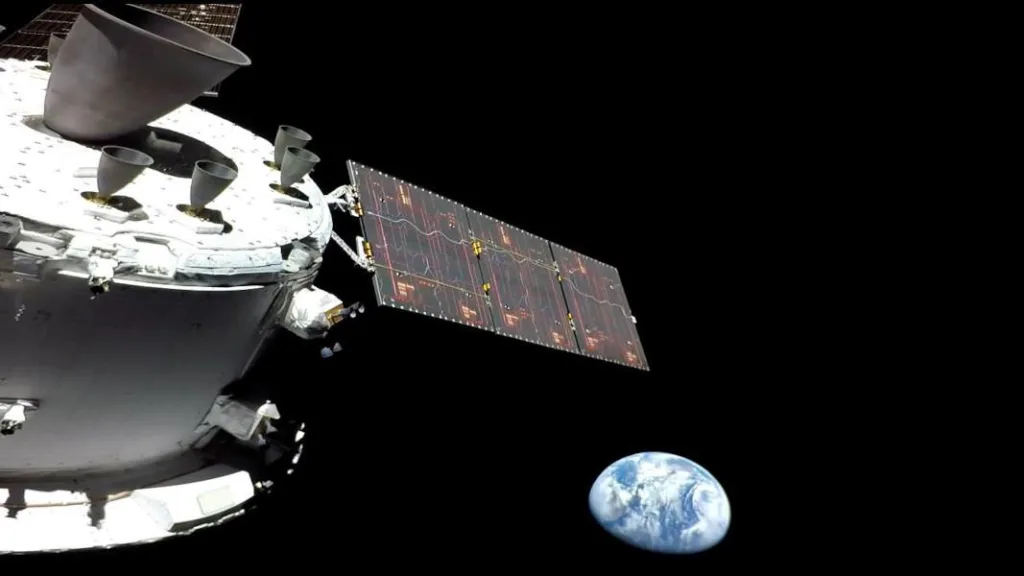
🔥 Heat Shield Concerns: The Most Critical Orion Spacecraft Problem
Lessons from Artemis I
A more serious Orion spacecraft problem lies in the heat shield. After Artemis I, engineers observed material loss on the shield’s surface. Small sections had eroded during reentry, raising immediate concern.
The heat shield protects the spacecraft during its return to Earth. It absorbs extreme temperatures and ensures the capsule remains intact. Any weakness in this system directly affects crew safety.
Confidence versus caution
Despite these findings, NASA moved forward with the same heat shield design for Artemis II. Engineers remained confident in its ability to perform safely under expected conditions. At the same time, they continued to analyze the data and refine their understanding.
This approach highlights a familiar tension in spaceflight. Progress requires forward movement. Safety demands continuous improvement. The Orion spacecraft problem sits at the intersection of both.
A debate within the space community
Some experts have voiced concern about this decision. Charlie Camarda questioned whether the risk was fully understood. His remarks reflect a broader debate about how much uncertainty is acceptable in complex missions.
NASA’s position remains clear. Artemis II provided valuable data. That data will inform updates to the heat shield before Artemis III.
Why the heat shield remains the top priority
Among all technical challenges, this one carries the greatest weight. Propulsion issues affect mission performance. Heat shield performance affects survival during reentry.
For Artemis III, improvements are expected. Engineers aim to ensure the shield performs consistently under extreme conditions. Solving this Orion spacecraft problem is essential for the next phase of lunar exploration.
⚙️ System Challenges: A Pattern Behind the Orion Spacecraft Problem
Recurring issues during launch preparation
The Orion spacecraft problem is not limited to a single system. Both Artemis I and Artemis II experienced delays due to hydrogen leaks during launch preparation. These issues have become a recurring theme.
NASA has improved its response to these events. However, the exact root causes remain uncertain. That suggests deeper system complexity that still needs refinement.
Operational friction in deep space
Artemis II also revealed smaller, practical challenges. The onboard waste management system required adjustments during the mission. At one point, stored liquid froze, prompting crews to reposition the spacecraft to resolve the issue.
These moments did not threaten mission success. However, they offer insight into the realities of operating in deep space. Every system, no matter how minor, plays a role in mission stability.
Why small problems cannot be ignored
Individually, these issues may seem minor. Together, they reveal a pattern. Complex missions depend on seamless system integration. Even small inefficiencies can compound over time.
The Orion spacecraft problem is not just about isolated faults. It reflects the challenge of building a system where every component performs reliably under extreme conditions.
🌕 Artemis III: Why Solving the Orion Spacecraft Problem Matters Now
A mission with higher demands
Artemis III represents a major step forward. It aims to return astronauts to the lunar surface and expand human presence beyond Earth orbit.
This mission will place greater demands on Orion. Longer durations, precise maneuvers, and increased system reliance all raise the stakes. The Orion spacecraft problem must be resolved before launch.
Engineering priorities moving forward
NASA is now focused on clear objectives. The propulsion system must operate without anomalies. The heat shield must demonstrate consistent performance. Supporting systems must function without recurring issues.
Each improvement builds confidence. Together, they define Orion’s readiness for future missions.
Beyond the Moon: A long-term vision
The Orion spacecraft problem extends beyond Artemis III. Orion serves as a foundation for long-term exploration. It supports future lunar missions and potential journeys to Mars.
Solving these challenges now strengthens that foundation. It ensures that each mission builds on proven performance rather than unresolved uncertainty.
🧩 Conclusion: Orion Spacecraft Problem Defines the Next Phase of Exploration
The Orion spacecraft problem does not diminish the success of Artemis II. Instead, it gives that success deeper meaning. The mission acted as a full-scale test, revealing both strengths and limitations.
NASA now moves forward with clarity. Engineers have identified key areas for improvement. That knowledge allows the agency to refine Orion before Artemis III.
In space exploration, progress depends on learning from real missions. Artemis II delivered that opportunity. The Orion spacecraft problem is not an obstacle. It is the path toward a stronger, more reliable system.
As the next mission approaches, the focus is clear. Resolve the issues. Strengthen the design. Move forward with confidence.