
BY:SpaceEyeNews.
How much agreement lies behind our familiar picture of the universe? A major physics survey reveals a complicated answer. Across questions about dark matter, dark energy, and cosmic origins, respondents often favored different explanations. Several leading ideas attracted less than majority support.
The findings expose a gap between familiar scientific narratives and the uncertainty surrounding fundamental questions. However, they do not show that cosmology has failed. They reveal where confidence varies, where alternatives remain attractive, and where stronger evidence could change the conversation.
What the Physics Survey Actually Measured
Researchers Niayesh Afshordi, Phil Halper, Matteo Rini, and Michael Schirber organized the Big Mysteries Survey through APS Physics Magazine. Their questionnaire collected 1,675 responses between July 28 and September 9, 2025.
Participants answered ten questions spanning cosmology, quantum mechanics, black holes, and quantum gravity. The results appeared in May 2026, before renewed coverage in September.
A Broad Sample With Clear Limits
Respondents included researchers from several fields and science enthusiasts. Participation was voluntary, so the sample cannot precisely represent every physicist’s views.
The questionnaire asked participants to choose between proposed answers, including alternatives and expressions of uncertainty. Such choices matter: several related options can divide support that a broader category would combine.
That distinction matters when interpreting percentages. An answer selected by a minority of participants does not automatically represent a minority of relevant specialists.
APS also clarified the survey’s size claim. It concerns open questions in fundamental physics, rather than every type of physics survey ever conducted.
Dark Energy Divides Opinion on Cosmic Expansion
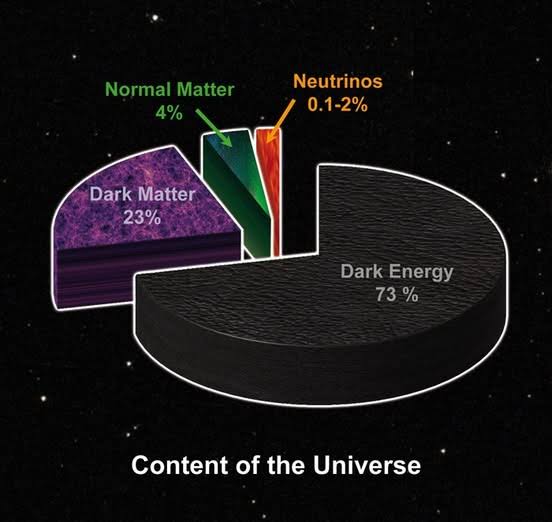
The most consequential disagreement concerns dark energy. Within ΛCDM, the standard cosmological model, a cosmological constant describes the component associated with accelerated expansion.
Yet only 24% of respondents selected a cosmological constant as the most likely explanation. A time-varying field received slightly more support, at 25.9%.
Those figures show divided preferences about a central ingredient of cosmology. They do not amount to a direct vote rejecting the entire ΛCDM framework.
Where DESI Enters the Picture
The Dark Energy Spectroscopic Instrument, or DESI, provides relevant observational context. Its 2025 results strengthened hints that dark energy might evolve.
However, the distinction between DESI alone and combined datasets is essential. DESI measurements alone remained consistent with ΛCDM. The analysis used three years of observations, covering nearly 15 million galaxies and quasars. Researchers tracked patterns in their distribution to investigate how expansion changed across cosmic history. The preference for evolving dark energy emerged when researchers combined them with other observations.
Depending on the combination, the reported significance ranged from 2.8 to 4.2 sigma. That remained below the conventional five-sigma discovery threshold.
These findings could help explain interest in alternatives. Still, the survey cannot establish exactly why each participant chose an answer.
For readers, the question is specific: does cosmic acceleration require a changing ingredient, or does the simpler constant still suffice? Better measurements can test that difference.
Dark Matter Has No Single Favorite
Dark matter produced another fragmented result. Around 21% preferred a combination of proposed explanations. Roughly 17% selected light particles, such as axions, while about 10% favored weakly interacting massive particles, or WIMPs.
Other respondents chose modifications to gravity or explanations involving quantum gravity. These answers reflect different approaches to the gravitational phenomena usually attributed to dark matter.
Different Candidates, Different Implications
Disagreement over the explanation does not erase the observations that require one. It also does not establish that every proposal explains those observations equally well.
A useful detail complicates any claim of widespread rejection. The paper grouped hybrid models, axions, WIMPs, and primordial black holes together. Those options collectively accounted for 53.4% of responses.
The result therefore suggests uncertainty about the underlying explanation, with no single candidate dominating. Describing it simply as scientists abandoning dark matter would miss that distinction.
The Big Bang Does Not Settle Time’s Beginning
The strongest agreement concerned what the Big Bang actually implies. About 68% selected an interpretation describing evolution from an extremely hot, dense state.
That answer leaves the beginning of time unresolved. It does not establish an eternal universe, nor does it reject the hot Big Bang.
This distinction changes how the result should reach the public. Respondents largely agreed about the limits of a claim, rather than identifying a new cosmic origin.
Inflation Wins a Narrow Majority
Inflation attracted approximately 51% support as the preferred explanation for early-universe puzzles. That gave it a majority, but hardly overwhelming agreement.
The result captures its position within this sample: a leading explanation with continuing competition. A narrow majority cannot confirm the mechanism, just as divided opinion cannot disprove it.
Quantum Gravity Remains Wide Open
The effort to connect gravity with quantum physics revealed another broad spread of views. String theory attracted around 19% support, while loop quantum gravity received roughly 12%.
Approximately 18% selected the view that gravity is not quantum. Meanwhile, “no opinion” attracted more responses than any individual proposal.
A Leading Theory Is Not a Consensus
These figures distinguish recognition from widespread confidence. String theory led the named quantum-gravity proposals, but most respondents chose something else or withheld judgment.
The survey offers no experimental verdict between those positions. Instead, it captures how uncertain participants remain about the path toward a deeper description of gravity.
What This Physics Survey Means for Science
The physics survey shows why scientific communication needs room for uncertainty. Familiar explanations can organize research while leaving major questions unanswered.
Readers should also distinguish a snapshot from a trend. Comparing different groups at different times cannot, by itself, show that individual scientists changed their minds.
Its value lies in revealing competing expectations, rather than choosing the correct universe by majority vote. Future observations must test those expectations against reality.
For readers, the most useful question is what evidence could separate competing ideas. That focus turns disagreement into a guide to the research ahead.
Main Sources:
- Original research paper — Big Mysteries Survey
- American Physical Society — Survey results and size correction
- University of Waterloo — Survey coverage
- Berkeley Lab — DESI dark energy findings