BY:SpaceEyeNews.
🚀 Introduction
A new Primordial Black Hole Detection may have just shifted the direction of modern cosmology. Scientists using Laser Interferometer Gravitational-Wave Observatory identified a signal that does not match known black hole formation pathways. The object appears smaller than the Sun, which immediately challenges established models. More importantly, this signal may point to a black hole formed moments after the Big Bang. If confirmed, it could redefine how we understand the early universe and offer new insight into Dark Matter.
🌌 Primordial Black Hole Detection Begins with a Strange Signal
A Signal That Challenges Expectations
The story begins with a signal known as S251112cm. Researchers analyzed data from gravitational waves—ripples in spacetime triggered by massive cosmic events. In this case, the signal came from a merger between two compact objects.
What stood out was unexpected. One of those objects had a mass below that of the Sun.
Why Sub-Solar Mass Changes Everything
That single detail carries major implications. Conventional black holes form when massive stars collapse. This process produces objects that are several times heavier than the Sun.
A black hole smaller than the Sun does not fit within that framework. It cannot be explained by standard stellar evolution.
This mismatch turns the detection into something far more significant than a routine observation.
A Rare and Unusual Event
Events like this do not appear often. Since gravitational wave detections began in 2015, most signals have followed predictable patterns. This one does not.
That is precisely why this Primordial Black Hole Detection stands out. It represents a deviation strong enough to demand a new explanation.
🧬 What Makes Primordial Black Hole Detection Revolutionary
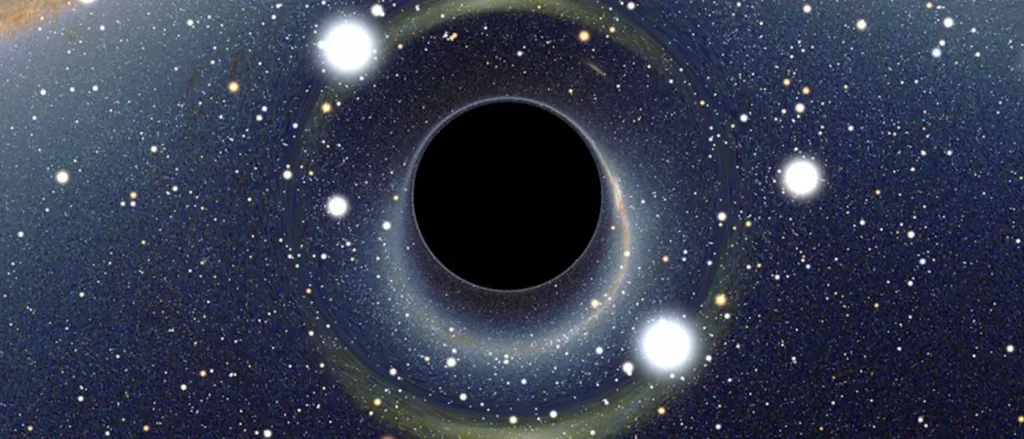
Origins Beyond Stars
Primordial black holes differ fundamentally from their stellar counterparts. They did not form from collapsing stars. Instead, they may have emerged within seconds after the Big Bang, during a phase when the universe was extremely dense and unstable.
In that environment, small fluctuations could collapse directly into compact objects.
Why Their Mass Is So Different
Because they formed so early, primordial black holes could exist at much smaller scales. Some models even suggest sizes comparable to asteroids.
This aligns closely with the sub-solar mass detected in the signal. The observation fits theoretical expectations in a way that standard black holes cannot.
From Theory to Possible Evidence
For decades, primordial black holes remained a theoretical concept. Scientists proposed them to explain gaps in early-universe physics, but direct evidence never appeared.
Now, this Primordial Black Hole Detection offers a potential bridge between theory and observation. It provides a measurable signal that aligns with long-standing predictions.
A Missing Piece Falls Into Place
The importance of this moment lies in what it could resolve. If primordial black holes exist, they would confirm that structure formation began earlier than previously thought.
That shift would reshape models of cosmic evolution and refine our understanding of the universe’s earliest moments.
🌠 Could Primordial Black Hole Detection Explain Dark Matter?
The Unseen Mass of the Universe
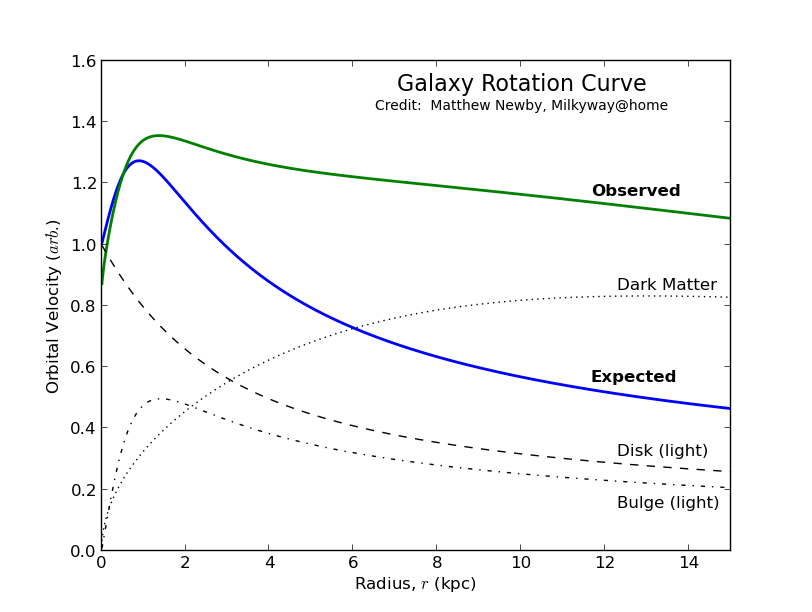
Dark matter remains one of the most persistent mysteries in science. It cannot be observed directly, yet its gravitational influence shapes galaxies and cosmic structures. Current estimates suggest it makes up nearly 85 percent of the universe’s total mass.
Why Primordial Black Holes Fit the Profile
Primordial black holes match several key properties of dark matter. They are invisible, compact, and interact primarily through gravity.
If large numbers formed in the early universe, they could account for a significant portion of the missing mass.
A Shift in Scientific Direction
Most dark matter research has focused on undiscovered particles. This Primordial Black Hole Detection introduces a different possibility.
Instead of new particles, the answer could lie in ancient astrophysical objects. That idea challenges decades of assumptions.
Limits and Open Questions
Despite its promise, the theory faces challenges. Scientists must determine how many primordial black holes exist.
If they are too rare, they cannot explain dark matter alone. If they are abundant, they become a powerful solution.
A New Path to Explore
This detection opens a measurable path forward. Researchers can now test the hypothesis with future observations.
Each new signal will bring more clarity.
🚀 Why Primordial Black Hole Detection Still Needs Confirmation
Evidence, Not Proof
The current findings are compelling, but not definitive. A single signal cannot confirm the existence of a new class of objects.
Multiple detections are required to establish consistency.
The Difficulty of Detection
Primordial black holes are extremely difficult to observe. They emit no light and remain small in scale.
Gravitational waves provide the best method for detection, but such events occur infrequently.
The Role of Scientific Verification
Careful validation remains essential. Each signal must be analyzed and compared against models.
Only repeated evidence can transform this Primordial Black Hole Detection into confirmed reality.
🛰️ Next-Generation Missions and Future Discoveries
A New Level of Sensitivity
Future observatories will expand detection capabilities. One of the most anticipated missions is LISA mission.
This system will operate in space and detect gravitational waves with greater precision.
What Comes Next
With improved instruments, scientists expect more sub-solar events to appear. Each detection will strengthen the dataset.
Patterns may emerge, providing stronger evidence for primordial black holes.
A Transformative Era
Gravitational wave astronomy continues to open new windows into the universe. It allows scientists to observe phenomena that remain invisible through traditional methods.
This Primordial Black Hole Detection highlights how much remains hidden—and how close we are to uncovering it.
🎯 Conclusion
The latest Primordial Black Hole Detection represents more than an unusual signal. It challenges long-standing assumptions about how black holes form and how the universe evolved.
A sub-solar object detected through gravitational waves suggests that some black holes may trace back to the earliest moments after the Big Bang.
If confirmed, this discovery could reshape cosmology and offer a new explanation for dark matter.
The question now is no longer theoretical. It is observational. Are we finally seeing the first relics of the universe’s birth?
🔗 Main Sources:
- ScienceAlert – https://www.sciencealert.com/ligo-may-have-detected-the-first-primordial-black-hole-scientists-say
- LIGO Official Website – https://www.ligo.caltech.edu
- ESA LISA Mission – https://www.esa.int/Science_Exploration/Space_Science/LISA