
BY:SpaceEyeNews.
The Roman eXtreme Deep Field could help answer a question that keeps growing more intriguing: how did the universe build its first galaxies? NASA has allocated roughly 386 hours of observing time to this ambitious survey. Researchers will use the Nancy Grace Roman Space Telescope to investigate distant galaxies, ancient stellar explosions, and growing black holes.
The project promises more than another beautiful view of space. Its combination of depth and broad coverage could reveal whether surprising early galaxies represent rare exceptions or common features. That distinction matters as astronomers piece together the universe’s earliest chapters.
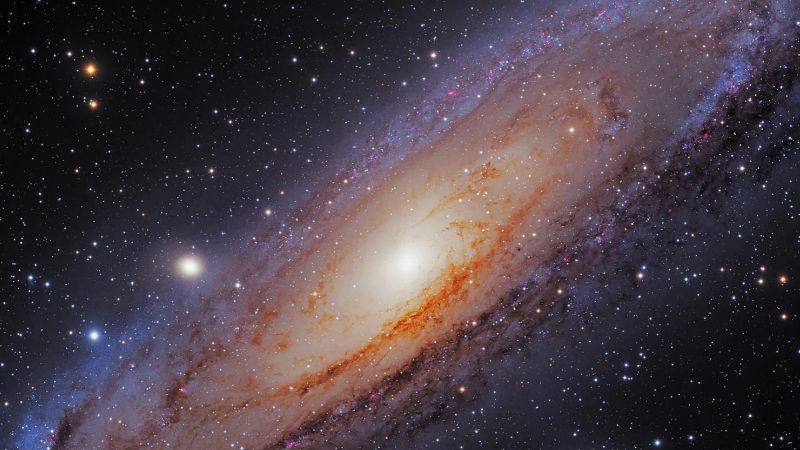
Roman eXtreme Deep Field Brings a Wider Perspective
An international team studies cosmic origins
Astronomer Haojing Yan at the University of Missouri leads the project. The collaboration brings together 130 researchers from 62 institutions, including major universities and NASA.
Their objective is to examine the young universe across a much larger sample than narrow observations can provide. Instead of relying on a few remarkable objects, researchers want enough examples to recognize meaningful patterns.
The program already has approved observing time. However, its scientific goals describe future investigations, not completed discoveries. The team’s September 2026 preprint outlines the survey and its intended contributions. showme.missouri.edu
Deep observations need time
Extremely distant galaxies deliver very little light to a telescope. Longer observations collect more of that faint signal, helping astronomers separate real objects from background noise.
Roman will combine this patient approach with extensive sky coverage. The result should provide a valuable record of distant populations, including objects that smaller surveys might miss.
Why Distant Galaxies Reveal the Past
Light carries an ancient view
Looking into deep space also means looking into history. Sunlight takes about eight minutes to reach Earth, so we never see the Sun exactly as it is now.
Light from distant galaxies takes billions of years to arrive. Consequently, telescopes reveal those systems as they appeared during earlier stages of their development.
This does not mean Roman will photograph the Big Bang itself. Instead, researchers will study later chapters, when stars illuminated their surroundings and galaxies began taking shape.
Infrared observations uncover faint signals
As the universe expands, it stretches traveling light toward longer wavelengths. Much of the light astronomers seek from early galaxies therefore reaches us in infrared wavelengths.
Roman’s Wide Field Instrument will gather this light across broad views of the sky. Scientists can then compare brightness measurements through different filters to identify promising distant objects.
Those measurements provide starting points for further investigation. Detailed follow-up observations can help confirm distances and clarify an object’s physical properties.
How Roman Complements James Webb
From unusual objects to larger populations
James Webb has revealed unexpectedly bright galaxies in the early universe. Such discoveries challenge researchers to explain how quickly stars and galaxies developed.
However, small survey areas can complicate that interpretation. A region containing several unusual galaxies might not represent the wider cosmos.
Roman offers a way to test the bigger picture. Its broad infrared coverage can identify larger populations and show how frequently particular kinds of objects appear.
Webb and Roman therefore serve complementary roles. Roman supplies wider context, while Webb can investigate selected targets with its powerful instruments.
Understanding the survey’s scale
The approved Roman eXtreme Deep Field targets roughly 140 times the full-depth area of Hubble’s eXtreme Deep Field. This comparison describes sky coverage, rather than magnification or a simple increase in sensitivity. arxiv.org
That wider sample should help astronomers distinguish widespread trends from local variations. It also increases opportunities to find rare objects that occupy only a small fraction of the universe.
Ancient Black Holes and Little Red Dots
How did black holes grow so quickly?
Some supermassive black holes reached enormous sizes surprisingly early in cosmic history. Researchers still debate the starting conditions and growth processes that made this possible.
Roman could identify additional candidates and reveal more about their surroundings. Comparing larger samples may help scientists assess which explanations best match the observations.
The telescope will not directly record a black hole’s entire growth history. Instead, astronomers will assemble evidence from objects at different distances and stages of development.
Investigating Webb’s compact red mysteries
Another target involves the compact sources astronomers call “little red dots.” Webb observations brought these unusual objects into focus, but their nature remains under discussion.
Some may contain actively growing black holes. Researchers must also examine how stars, gas, and dust contribute to their appearance.
A larger census could reveal whether these objects share consistent properties or include several distinct populations. Roman’s observations should help guide more detailed studies.
Repeated Visits Could Reveal Ancient Stellar Events
Watching the field change
The survey will revisit its chosen region rather than observe everything only once. Comparing images over time allows astronomers to identify sources that brighten, fade, or vary.
Distant supernovae are among the targets. These stellar events can offer clues about early stars and the elements they contributed to surrounding galaxies.
Repeated observations also add another dimension to the survey. Alongside positions and colors, scientists gain information about how objects behave over time. arxiv.org
What the Roman eXtreme Deep Field Could Change
The project’s greatest value may come from connecting individual discoveries with broader patterns. Larger samples could sharpen explanations for galaxy formation, black hole growth, and early stellar evolution.
Unexpected discoveries remain possible, too. Previous deep surveys revealed populations that astronomers had not anticipated, opening entirely new research questions.
Claims about reaching the universe’s first 100 million years should remain cautious. That possibility represents an ambitious frontier, not a guaranteed outcome.
Ultimately, the Roman eXtreme Deep Field could show how representative today’s most surprising discoveries really are. Its observations may help transform scattered glimpses of cosmic dawn into a more coherent history.
Main sources:
- University of Missouri — International team and survey announcement
- Research preprint — The Roman eXtreme Deep Field (RXDF)
- Roman program listing — Approved survey and observing allocation
- The Daily Galaxy — A Massive NASA Telescope Survey Could Reveal What the Universe Looked Like Near Its Beginning