BY:SpaceEyeNews.
When NASA released eerie audio linked to Saturn, the internet reacted instantly. Millions of people described it the same way: terrifying, ghostly, and strangely emotional. The audio sounded less like science and more like a soundtrack from a horror film. But the truth behind the viral recording is even more fascinating.
The famous Saturn sounds in space are not ordinary sounds at all. No microphone floated beside Saturn recording noise through the vacuum of space. Instead, NASA scientists converted electromagnetic activity into audio humans could hear. The result created one of the strangest and most haunting representations of another planet ever released to the public.
What makes the story remarkable is that the eerie tones are scientifically authentic. They came from real plasma waves and radio emissions surrounding Saturn’s magnetic environment. The haunting effect was never artificially added. Human brains simply interpret the translated data in a deeply emotional way.
The recordings came from NASA’s Cassini–Huygens mission, which studied Saturn for over a decade. During that time, Cassini collected enormous amounts of electromagnetic data from the planet’s magnetosphere, auroras, and surrounding plasma environment.
The result changed how many people imagine space itself.
What NASA Actually Recorded Around Saturn
The biggest misunderstanding surrounding Saturn sounds in space is simple. Many people think NASA recorded actual sound waves near the planet. That is not possible in the traditional sense.
Space is almost completely empty. Sound requires molecules to travel through, such as air or water. The region around Saturn does not contain enough particles to carry ordinary sound waves to a human ear.
NASA never placed a microphone near Saturn. Instead, the Cassini spacecraft used a scientific instrument called RPWS, short for Radio and Plasma Wave Science.
Cassini’s RPWS Instrument Explained
The RPWS instrument detected electromagnetic activity around Saturn. That included:
- Radio emissions
- Plasma oscillations
- Magnetic field fluctuations
- Charged particle interactions
These measurements came directly from Saturn’s magnetosphere. This enormous magnetic bubble surrounds the planet and interacts constantly with charged particles from the Sun and Saturn’s moons.
One of the most important discoveries involved something called Saturn Kilometric Radiation, or SKR.
The Source of Saturn’s Eerie Audio
SKR forms near Saturn’s polar auroras. Charged particles spiral along magnetic field lines and release radio emissions in the process. Those radio waves exist naturally around the planet, but humans cannot hear them directly.
Their frequencies sit outside the normal range of human hearing.
NASA scientists solved that problem through signal processing. They shifted the frequencies downward and compressed time intervals. That allowed the electromagnetic patterns to become audible without changing the structure of the data itself.
The strange whistles and descending tones heard in Saturn sounds in space represent real electromagnetic behavior detected by Cassini.
NASA confirmed that some audio files compressed nearly 27 minutes of plasma measurements into roughly 73 seconds of sound. Scientists lowered the frequencies by a factor of about 44 to place them within the human hearing range.
That detail matters because it shows the recordings are not fictional effects. They are translated scientific data.
Why Saturn Sounds So Haunting to Humans
The emotional reaction people experience while hearing Saturn sounds in space is surprisingly human.
The planet is not trying to sound frightening. Instead, human perception creates the emotional response.
Human Brains Search for Familiar Patterns
The human auditory system evolved around biological sounds. People naturally recognize speech patterns, emotional tones, animal calls, and environmental echoes.
Saturn’s translated electromagnetic emissions accidentally resemble several of those familiar patterns.
The recordings contain:
- Rising whistles
- Descending moans
- Layered frequencies
- Rhythmic pulses
- Distorted tonal sweeps
To the brain, those patterns feel strangely alive.
The Uncanny Effect of Space Audio
Scientists often compare this reaction to the “uncanny valley” effect. Humans feel discomfort when something appears almost familiar but not completely natural.
Saturn’s audio falls perfectly into that category.
The tones sound structured enough to seem intentional. Yet they remain impossible to identify fully. The brain struggles to classify them, which creates tension and unease.
Some listeners compare the audio to:
- Ghostly choirs
- Distorted voices
- Horror soundtracks
- Mechanical singing
- Distant screams
None of those interpretations reflect the actual physics. They reflect how human psychology processes unfamiliar sound patterns.
Other Planets Sound Different
NASA and other space missions have produced similar sonifications from other planets.
Jupiter produces broadband hiss mixed with sharp chirps. Its magnetosphere is the largest in the Solar System, creating extremely intense electromagnetic activity.
Uranus generates irregular bursts because its magnetic field tilts dramatically relative to its rotation axis.
Meanwhile, Voyager 1 recorded faint plasma vibrations after crossing into interstellar space in 2012. Those sounds feel quieter and more distant than Saturn’s recordings because the interstellar medium contains far less electromagnetic activity.
Each environment creates different patterns. Each one becomes emotionally interpreted once converted into audio.
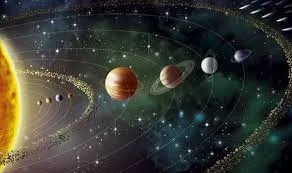
Saturn Sounds in Space Are Part of a Larger NASA Program
The famous Saturn recording is only one part of NASA’s much larger sonification effort.
Over the last several years, NASA expanded the idea far beyond planetary radio emissions. Scientists now convert many forms of astronomical data into sound.
NASA Turns Space Data Into Audio
NASA’s sonification projects involve data from missions such as:
- Chandra X-ray Observatory
- Hubble Space Telescope
- James Webb Space Telescope
The process transforms visual or electromagnetic information into structured audio.
Scientists map data characteristics into sound properties. For example:
- Brightness becomes volume
- Position becomes pitch
- Wavelength becomes tone or instrument type
- Motion becomes rhythm
The goal is not entertainment alone.
Sonification Helps Scientific Research
NASA developed sonification partly as a scientific analysis tool. Audio can reveal patterns that visual inspection sometimes misses.
Researchers can detect:
- Repeating structures
- Frequency shifts
- Hidden rhythms
- Irregular transitions
The method also improves accessibility for blind and low-vision scientists.
NASA’s Universe of Sound collaborations demonstrated that translated astronomy data can provide meaningful analytical insight while remaining understandable to the public.
Some projects even surprised the researchers involved. Certain datasets naturally produced highly dissonant or emotionally powerful sound combinations after conversion into audio form.
Again, the emotional impact came from the data itself.
The Biggest Misconception About Saturn Sounds in Space
Viral headlines often describe Saturn as “screaming” through space. While emotionally effective, the phrase creates scientific confusion.
Space Is Not Carrying Audible Noise
An astronaut floating near Saturn would not hear the famous recording directly. The environment remains far too empty for normal sound propagation.
The spacecraft measured electromagnetic waves instead.
NASA then translated those waves into human-audible frequencies through carefully documented processing methods.
That distinction matters scientifically.
The Audio Is Real — But Translated
The electromagnetic activity itself is completely real. Cassini directly detected it while orbiting Saturn.
However, the audio represents a scientific translation rather than a direct acoustic recording.
That does not make the recordings fake.
The process works similarly to translating invisible infrared light into visible color images. Scientists routinely convert data into forms humans can interpret more easily.
Saturn sounds in space follow the same principle.
The recordings reveal authentic behavior occurring inside Saturn’s magnetosphere. NASA simply converted that invisible activity into a format human senses can experience.
What Saturn’s Audio Reveals About the Universe
The popularity of Saturn sounds in space reveals something deeper about human curiosity.
People want to experience space directly. Traditional images already transformed astronomy by letting humanity see distant worlds. Sonification adds another sensory layer.
Space Is Full of Invisible Activity
The universe constantly vibrates with electromagnetic energy. Most of it remains completely invisible and inaudible to humans.
Modern spacecraft detect:
- Plasma waves
- Radiation bursts
- Magnetic interactions
- X-ray emissions
- Radio frequencies
Sonification gives those invisible processes a sensory form.
The result feels powerful because it turns abstract physics into something emotional and immediate.
Saturn’s “Voice” Reflects Human Perception
In reality, Saturn is not producing a ghostly choir for the cosmos. Human brains create that interpretation after hearing structured electromagnetic patterns.
Still, the emotional reaction remains meaningful.
The recordings remind listeners that the universe behaves in ways far stranger than everyday human experience.
Saturn sounds in space feel haunting because they expose people to an environment completely outside normal biological perception.
That discomfort may actually reflect scientific truth more accurately than silence ever could.
Conclusion
The viral Saturn recording did not come from a microphone floating through space. NASA never captured ordinary sound waves near the planet.
Instead, the Cassini–Huygens spacecraft measured real electromagnetic activity inside Saturn’s magnetosphere and transformed it into audio humans could hear.
The haunting effect emerged naturally from the data itself.
That distinction makes the story far more fascinating than the simplified viral version. Saturn sounds in space reveal how modern astronomy can translate invisible cosmic activity into something deeply human and emotional.
The planet is not screaming into the darkness.
Humanity simply learned a new way to listen.
Main Sources:
- NASA Science: https://science.nasa.gov/resource/eerie-sounds-of-saturns-radio-emissions/
- NASA JPL: https://www.jpl.nasa.gov/images/pia07966-eerie-sounds-of-saturns-radio-emissions/
- NASA Cassini RPWS Instrument: https://science.nasa.gov/mission/cassini/spacecraft/cassini-orbiter/radio-and-plasma-wave-science/
- Space Daily Article: https://spacedaily.com/j-there-is-no-sound-in-space-but-nasa-records-the-electromagnetic-vibrations-of-planets-and-converts-them-to-audio-and-saturn-sounds-genuinely-haunting/