BY:SpaceEyeNews.
🚀 Introduction: A Defining Soyuz 5 Rocket Launch Moment
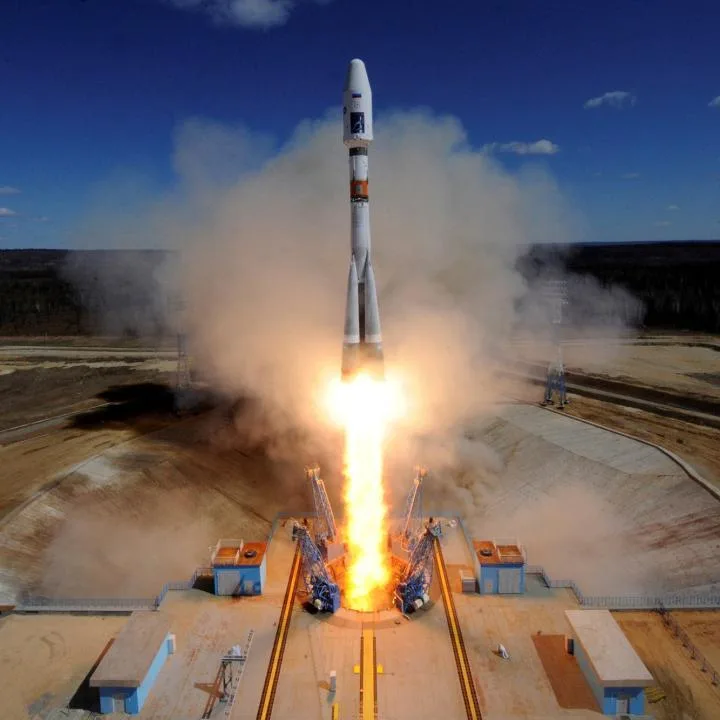
The Soyuz 5 rocket has finally taken flight after years of delays. This Soyuz 5 rocket launch represents more than a technical milestone. It signals a shift in Russia’s space strategy at a time when the global industry is evolving rapidly.
The test occurred at Baikonur Cosmodrome, with Roscosmos confirming a successful mission. Engineers focused on a controlled suborbital profile to validate performance and stability.
The outcome was clear. The rocket performed as expected. Now the focus turns to what this success really means in a competitive and fast-moving space environment.
🛰️ Soyuz 5 Rocket Launch: First Flight Performance and Validation
A Long-Awaited Debut Takes Shape
Development of Soyuz 5 began in 2017. Progress slowed over the years due to technical hurdles and external pressures. Even so, the project remained central to Russia’s long-term plans.
This first Soyuz 5 rocket launch delivered a clean and controlled test. The vehicle followed a planned suborbital path, while a mock payload completed a guided reentry over the Pacific Ocean.
What the Test Successfully Demonstrated
The mission focused on system validation rather than payload delivery. Engineers verified:
- First-stage engine performance
- Second-stage separation and ignition
- Flight stability during ascent
- Trajectory precision
Each element met expectations. That outcome confirms the design is viable under real flight conditions.
Why Suborbital Testing Still Matters
Suborbital tests reduce risk and improve reliability. They allow teams to refine systems before full orbital missions begin.
For Soyuz 5, this step establishes a solid baseline. It shows that the rocket can perform consistently, which is essential before scaling operations.
🏗️ Soyuz 5 Rocket Launch and Russia’s Push for Independence
Moving Beyond Zenit Dependence
The Zenit rocket once supported key missions but relied on production outside Russia. Over time, that reliance became a limitation.
The Soyuz 5 rocket launch addresses this issue directly. It introduces a fully domestic system that restores control over launch capabilities.
Building a Self-Sufficient Launch Framework
Soyuz 5 supports medium-lift missions while complementing existing rockets. More importantly, it forms part of a broader plan to rebuild a self-reliant space ecosystem.
Future concepts include integrating this platform into larger systems designed for deeper space missions. That long-term vision depends on stable and proven launch vehicles.
From Market Ambition to Strategic Focus
Early plans positioned Soyuz 5 as a cost-effective competitor in the global market. Conditions have since changed. International cooperation has narrowed, and private companies now dominate launch services.
As a result, the rocket serves a more strategic purpose. It ensures national capability rather than broad commercial reach.
⚙️ Soyuz 5 vs Falcon 9: Capability Meets Modern Expectations
Comparable Lift, Different Approach
The Soyuz 5 rocket launch introduces a vehicle capable of lifting about 20 tons to low Earth orbit. That places it close to the Falcon 9 from SpaceX in terms of raw capacity.
At this level, both rockets can support a wide range of missions.
Reusability Defines the Difference
The key distinction lies in design philosophy. Falcon 9 uses a reusable first stage. Soyuz 5 follows a fully expendable model.
Reusability lowers costs and increases launch frequency. It has become a defining feature of modern launch systems.
Soyuz 5 does not yet include this capability. That absence shapes its economic position.
Cost and Market Implications
Launch providers compete on reliability and price. Reusable systems deliver advantages in both areas.
The Soyuz 5 rocket launch confirms technical readiness. However, long-term competitiveness will depend on how well it adapts to cost-driven market demands.
🌍 Soyuz 5 Rocket Launch in Today’s Space Industry Context
A Strong Technical Signal
This successful test highlights Russia’s engineering strength. Developing a new rocket and achieving a clean first flight is a complex task.
The result reinforces confidence in the country’s ability to sustain advanced launch programs.
A Rapidly Changing Industry Landscape
The global space sector has shifted. Private companies now lead innovation. Reusable technology has set new standards for efficiency and scale.
In this context, traditional systems face new pressures.
The Soyuz 5 rocket launch enters this environment as a stable and proven platform. It does not attempt to redefine the market.
Strategic Stability Over Market Disruption
Soyuz 5 strengthens national capabilities. It ensures consistent access to space and reduces reliance on external systems.
At the same time, it does not immediately challenge leading commercial providers. Its role is clear. It supports stability and continuity within a changing industry.
🔮 Conclusion: Soyuz 5 Rocket Launch Opens the Next Phase
The Soyuz 5 rocket launch marks an important step forward. It confirms that Russia can develop and test modern launch systems with success.
Yet the broader picture remains complex. The space industry now rewards adaptability, cost efficiency, and rapid innovation.
Soyuz 5 delivers reliability and independence. These strengths matter. The next phase will depend on how the program evolves from this foundation.
The mission succeeded. The challenge now is what comes next.
🔗 Main Sources:
- https://dailygalaxy.com/2026/05/russia-successfully-launches-soyuz-5/
- https://www.space.com
- https://www.roscosmos.ru