BY:SpaceEyeNews.
Did humanity detect life on Mars in 1976 and then explain it away? Fifty years after Viking 1 landed at Chryse Planitia, that question still divides researchers. One onboard experiment produced a response that looked surprisingly biological. Yet other instruments failed to confirm it.
The Viking 1 life on Mars debate now matters more than ever. Later missions found organic molecules and reactive salts that Viking scientists did not fully understand. Those discoveries changed how researchers interpret the original evidence. Still, they have not settled whether Viking detected microbes or unusual Martian chemistry.
Viking 1 Life on Mars Experiments Broke New Ground
Viking 1 touched down on Mars on July 20, 1976. Soon afterward, its robotic arm collected surface soil and delivered it to a compact onboard laboratory.
The lander carried three biology experiments. It also carried a gas chromatograph–mass spectrometer, or GCMS, to search for organic compounds. Each biology test examined a different possible sign of microbial activity.
The Gas Exchange and Pyrolytic Release experiments tested possible biological processes. Most attention, however, focused on the Labeled Release experiment. Viking became NASA’s first mission designed to search directly for life on another planet.
The Labeled Release Result Looked Biological
The Labeled Release experiment added a dilute nutrient solution containing radioactive carbon to Martian soil. If microorganisms consumed those nutrients, they could release radioactive gas. Detectors then monitored the chamber for that signal.
Both Viking landing sites produced a rapid gas release after receiving the nutrient. More importantly, heating a control sample reduced or eliminated the reaction. Heat often destroys living cells, so this pattern appeared to support a biological explanation.
Gilbert Levin, who led the experiment, argued for decades that Viking had detected microbial metabolism. A NASA technical report later described the data as consistent with biology while also noting several chemical alternatives.
The result was not a simple instrument error. Viking clearly detected an active process in the Martian soil. The unresolved question was what caused it. Available evidence at the time could not confirm whether the source was biological or chemical.
Why NASA Did Not Announce Martian Life
One experiment cannot establish such an important discovery by itself. Viking’s other results failed to build a consistent biological case.
The GCMS did not find the organic compounds researchers expected in inhabited soil. Two biology experiments also produced negative or inconclusive findings. In addition, a second nutrient dose did not create the renewed gas release that some scientists expected.
Researchers therefore considered non-biological explanations. Reactive chemicals in the Martian surface could break down the nutrients and release gas without the help of organisms.
The absence of detected organics carried great weight. Scientists reasoned that metabolism would require carbon-based material. With no clear organics and no independent confirmation, the wider scientific community favored reactive chemistry over life.
NASA’s current mission summary reflects that caution. The combined biology results could appear weakly positive, while the GCMS result remained negative. This conflict prevented researchers from reaching a firm conclusion.
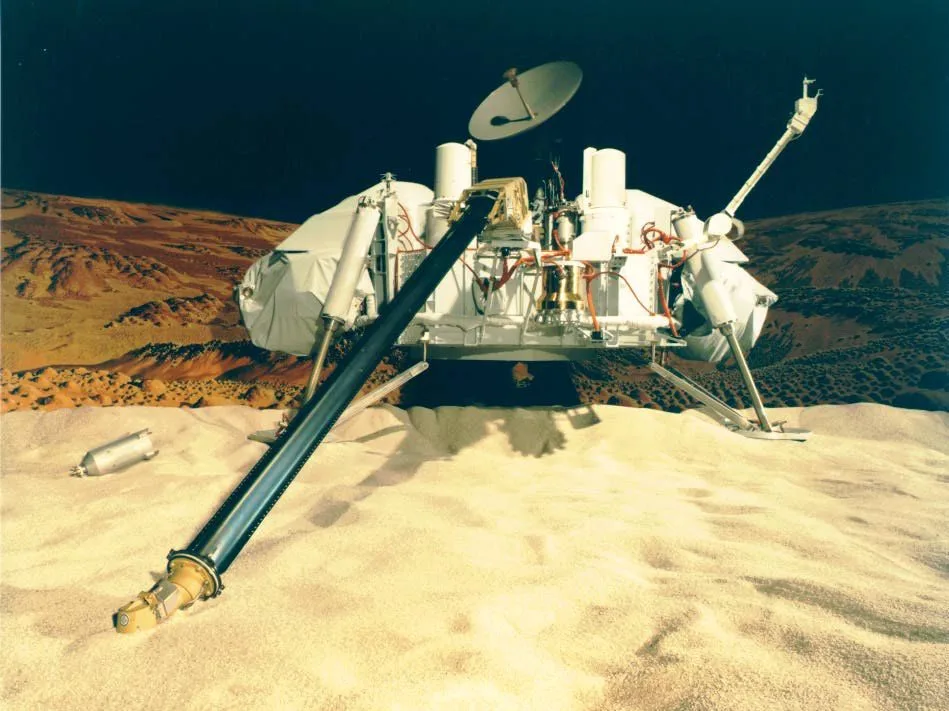
Life on Mars? 40 Years Later, Viking Lander Scientist Still Says ‘Yes’ .
Later Mars Discoveries Changed the Evidence
Decades later, new missions complicated the original verdict. NASA’s Phoenix lander detected perchlorate salts in Martian soil. Curiosity later confirmed organic molecules inside Martian rocks.
Organic molecules do not automatically indicate life. Non-biological reactions can also produce them. However, their presence showed that Mars was not simply free of organic material.
Perchlorates also revealed a potential problem with Viking’s method. The GCMS heated soil before analysis. When perchlorates become hot, they can destroy organic molecules or combine with their fragments.
Laboratory research found that this process can form chlorinated compounds similar to those Viking detected. At the time, researchers dismissed those compounds as contamination. Later evidence suggested they may have formed from Martian organic material during heating.
This finding weakened the old claim that Viking found no organics because none existed. The instrument may have altered the compounds during analysis. Radiation and reactive surface chemistry may also have destroyed much of the original material.
Curiosity has continued to expand the picture. In April 2026, NASA reported the most diverse collection of organic molecules yet found on Mars. The rover identified 21 carbon-containing molecules, including seven never detected there before. Researchers still cannot determine whether biological or geological processes created them.
Why Some Researchers Still Support Life
Astrobiochemist Steven Benner argues that scientists misunderstood the Viking findings. He says the negative GCMS result became the main reason for dismissing otherwise positive-looking biology data.
Once later missions confirmed Martian organics, Benner believes researchers should have reassessed the Viking evidence more openly. He has proposed that Viking probably detected autotrophic microbes at roughly 1,000 cells per gram.
That figure remains a hypothesis. Scientists have not confirmed it through another experiment, and it does not represent the accepted scientific consensus.
Skeptics also point to several major gaps. Chemical reactions can reproduce important parts of the Labeled Release response. No later mission has confirmed living organisms at either Viking site.
Moreover, Viking tested only tiny samples of exposed soil. Its nutrient solution also assumed that possible Martian organisms would react to compounds selected using knowledge of Earth life.
Viking Tested a Narrow Martian Environment
Mars may hide its strongest biological evidence beneath the surface. Radiation and reactive chemicals damage organic molecules in exposed soil. Ice-rich ground, sheltered rocks or deeper sediments could offer better protection.
Viking did not drill deeply. None of its biology experiments supplied hydrogen gas, even though some Earth microorganisms use hydrogen with sulfate as an energy source. A tank containing hydrogen sat nearby inside the lander, but the biology laboratory could not access it.
Scientists can now reanalyze Viking’s archived records using modern knowledge of extremophiles and Martian chemistry. However, old data cannot answer every new question.
A future life-detection mission would need stronger contamination controls. It would also require several independent biosignature tests and access to protected material below the surface.
Conclusion: Did Viking 1 Find Life on Mars?
The Viking 1 life on Mars evidence remains fascinating but inconclusive. The Labeled Release experiment detected a real and unusual reaction. Its pattern matched some expectations for microbial activity, but reactive soil chemistry could also explain it.
Later discoveries of organics and perchlorates made the original rejection less straightforward. Even so, they did not confirm that Viking found living organisms.
Viking’s lasting lesson remains clear. Finding life requires more than one promising signal. Scientists need several independent results that support the same conclusion. Until a future mission provides that evidence, the Viking 1 life on Mars debate will remain one of planetary science’s greatest unanswered questions.
Main Sources:
NASA – Viking 1 Mission:
https://science.nasa.gov/mission/viking-1/
NASA – Viking Project and Astrobiology:
https://science.nasa.gov/astrobiology/missions/viking-project/
NASA – 45 Years Ago: Viking 1 and 2 Off to Mars:
https://www.nasa.gov/history/45-years-ago-viking-1-and-2-off-to-mars/
NASA Technical Reports Server – Viking Labeled Release Interim Results:
https://ntrs.nasa.gov/citations/19770033065
NASA Technical Reports Server – Analysis of Viking Labeled Release Results:
https://ntrs.nasa.gov/citations/19790022948
NASA – First Detection of Organic Matter on Mars:
https://www.nasa.gov/solar-system/nasa-goddard-instrument-makes-first-detection-of-organic-matter-on-mars/
NASA – Curiosity Finds New Organic Molecules on Mars:
https://www.nasa.gov/missions/mars-science-laboratory/curiosity-rover/nasas-curiosity-finds-organic-molecules-never-seen-before-on-mars/
Original Space.com Article:
https://www.space.com/astronomy/mars/did-viking-1-find-life-on-mars-50-years-ago-heres-why-the-debate-continues