
BY:SpaceEyeNews.
Starship Flight 15 reached orbit and delivered satellites, but SpaceX missed a crucial part of its recovery plan. The Super Heavy booster diverted toward the Gulf of Mexico instead of returning to Starbase. Its loss ended hopes of recovering both rocket stages during the same mission.
Yet the spacecraft continued its flight, leaving another major objective ahead: its first catch after returning from orbit. As of November 14, before the planned return, that outcome remained pending.
The result highlights the challenge facing SpaceX. Launching useful cargo and recovering flight hardware represent separate achievements. This mission must deliver evidence on both.
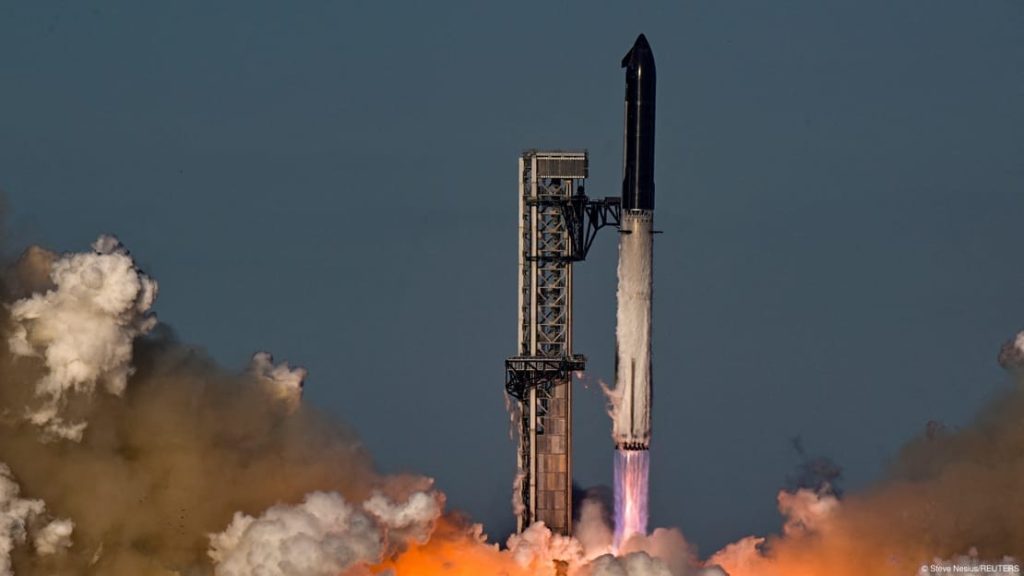
Both booster and Starship at the launch of the mission–Image: Steve Nesius/REUTERS.
Starship Flight 15: What Worked and What Failed
The rocket lifted off from Starbase in South Texas on November 13. Following stage separation, the two vehicles faced different tasks. Super Heavy needed to return for recovery, while Starship continued toward orbit.
The booster subsequently diverted offshore and did not reach the tower. SpaceX had not immediately explained why the planned recovery could not proceed. Assigning the problem to a particular engine or control system would therefore go beyond the available evidence.
Meanwhile, the spacecraft reached orbit and deployed its 26 Starlink satellites. That accomplishment gave the flight a practical result despite the booster setback.
Separate Objectives, Separate Results
A single success or failure label would obscure those differences. Payload delivery measures whether the spacecraft can perform useful work in space. Recovery tests whether SpaceX can bring its hardware home.
Both matter to the company’s business model. However, meeting one objective does not automatically satisfy the other. Losing Super Heavy also means SpaceX cannot reuse that particular booster, regardless of the spacecraft’s eventual outcome.
Why the Super Heavy Setback Matters
SpaceX has already demonstrated tower recovery. Its first successful booster catch occurred during Flight 5 on October 13, 2024. That achievement established that the approach could work under the required conditions.
Flight 15 presented a new step. SpaceX identified it as the first planned catch attempt for a Super Heavy V3 booster.
That distinction matters when comparing flights. Earlier recoveries provide valuable experience, but they do not guarantee success for every subsequent vehicle or mission.
Consistency Is the Next Measure
For a reusable launch system, the important question extends beyond whether a catch is possible. Operators need dependable recoveries across repeated flights.
The next useful evidence will come from SpaceX’s explanation of the diversion and any resulting changes. Without those findings, neither a quick fix nor a lengthy interruption follows automatically.
One unsuccessful recovery cannot establish the program’s eventual reliability. Equally, previous catches cannot erase the practical consequences of losing another vehicle.
The Spacecraft Catch Remains the Major Test
SpaceX planned an orbital flight lasting more than 22 hours before Starship’s return. The company made the tower approach conditional on the health of systems needed for reentry and landing.
That requirement puts the return decision at the center of the mission. Reaching the scheduled landing time alone does not justify attempting a catch.
Inspecting the Heat Shield
Three Starlink satellites carried cameras intended to examine the spacecraft’s heat shield. SpaceX planned to use their imagery alongside other information when assessing return readiness.
The inspection adds a useful layer of evidence before atmospheric entry. Still, imagery cannot establish every aspect of vehicle health. Engineers must consider the broader condition of the spacecraft.
A Catch Would Start Another Assessment
A successful recovery would allow teams to inspect the returned vehicle directly. They could examine its condition and determine what work another flight would require.
That is why catching Starship and demonstrating economical reuse are distinct milestones. A recovered spacecraft might still need substantial inspection, replacement parts, or repairs.
The most revealing follow-up would be an actual reflight, supported by information about the preparation involved. Until then, claims about routine turnaround remain expectations.
Useful measures include how much heat shielding needs replacement and whether engines require extensive servicing. Ground operations matter too. If inspections or repairs consume substantial time, a successful catch may still leave a gap between technical recovery and frequent, affordable launches.
Starlink Delivery Gives the Flight Practical Value
The satellite deployment deserves attention alongside the recovery attempt. Starship carried Starlink V3 spacecraft, connecting the development flight with SpaceX’s existing broadband business.
SpaceX says these satellites must raise their orbits and complete checks before entering service. Successful deployment therefore does not mean customers immediately receive the full benefit.
For readers, the distinction is straightforward: reaching space begins the satellites’ operational journey. It does not complete every step needed to provide connectivity.
Delivery and Reuse Serve Different Goals
Payload deployment demonstrates useful transport capability. Recovery addresses how SpaceX might repeat that service while retaining expensive flight hardware.
The two goals reinforce each other, but they require separate evidence. A productive satellite mission can coexist with a costly recovery setback.
That combination makes Flight 15 more informative than a headline focused solely on the lost booster. It also prevents an orbital achievement from overshadowing unfinished work.
What Starship Flight 15 Means for Lunar Plans
NASA’s interest extends beyond satellite launches. The agency is working with SpaceX on the Starship Human Landing System, which would transport astronauts between lunar orbit and the surface.
In its July 2026 update, NASA described an Artemis III demonstration planned for 2027. It also identified a later crewed lunar landing targeted for 2028. These remain program milestones, rather than outcomes this flight can guarantee.
Recovery Does Not Prove Lunar Readiness
Earth return testing and lunar lander development contribute different evidence. Recovering an orbital spacecraft would represent progress without completing every requirement for astronaut missions.
Likewise, the booster loss alone does not establish a change to NASA’s schedule. Any firm conclusion would require an identified technical consequence and an updated program assessment.
For now, the practical questions concern what SpaceX learns, what it changes, and how subsequent vehicles perform. Those answers will carry more weight than predictions based on one event.
Starship Flight 15: Progress Still Needs a Return
Starship Flight 15 has delivered a mixed result: orbital operations and satellite deployment succeeded, while booster recovery did not. The spacecraft’s planned return remains a separate, consequential test.
Even a successful catch would leave further questions about condition, preparation time, and eventual reuse. Conversely, the booster setback does not remove the value of the completed payload mission.
SpaceX’s next advances must connect those achievements. Delivering cargo, recovering hardware, and flying it again would provide stronger evidence of a sustainable system. This flight brings that ambition into sharper focus, while leaving essential work ahead.
Main sources:
SpaceX — Starship Flight 15 mission plan: https://www.spacex.com/launches/starship-flight-15
DW — SpaceX launches Starship rocket, fails to recover booster: https://www.dw.com/en/spacex-launches-starship-rocket-fails-to-recover-booster/a-79946091
SpaceX — Starship’s Fifth Flight Test: https://www.spacex.com/launches/starship-flight-5
NASA — NASA, SpaceX Advance Wind Tunnel Tests for Starship Rocket: https://www.nasa.gov/directorates/esdmd/artemis-campaign-development-division/human-landing-system-program/nasa-spacex-advance-wind-tunnel-tests-for-starship-rocket/
You Might Also Like:
NASA Moon Race: Can Its Bold New Strategy Deliver?
China Electric Rocket Launch Pad: A New Space Bet-Video
China Long March-10 Moon Rocket Test Marks Historic Step Toward 2030 Lunar Mission-VIDEO