
BY:SpaceEyeNews.
The Leonids meteor shower 2026 brings a chance to catch bright fireballs and long meteor trails this November. Timing matters, especially when peak dates differ between popular viewing guides. Dark skies after moonset could improve the experience, but patience remains essential.
This year’s appeal lies in the possibility of a memorable individual meteor. A steady stream of spectacular streaks is far from certain. For viewers planning a late night, the priorities are straightforward: choose a suitable observing window, check local clouds, and find darkness.
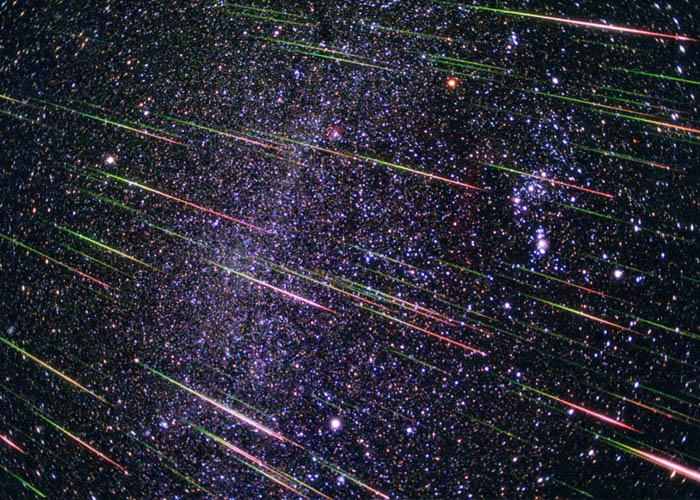
Leonids meteor shower 2026: When is the peak?
The International Meteor Organization places the regular maximum around 23:45 UTC on November 17. Spain’s National Geographic Institute gives the same timing, during the night of November 17–18.
However, The Weather Channel’s November 15 coverage lists November 16–17. NASA’s general Leonids page also gives that earlier night. These sources disagree, so presenting one date without context could confuse readers.
For planning, the detailed annual forecast supports prioritizing November 17–18. The early hours of November 17 offer another opportunity, particularly if clouds threaten the following night.
A peak time is a guide
The forecast does not mean meteors appear only at that moment. Leonid activity extends from November 6 through November 30, although the peak attracts the most attention.
Your location also matters. A UTC prediction can fall during daylight or before suitable viewing conditions elsewhere. Choose a local observing window that combines darkness with Leo above the horizon.
Treat the maximum as useful guidance, rather than a deadline. Arriving early and allowing a longer session makes more sense than watching for one precise minute.
Fireballs and Earth-grazers: The visual highlights
The Weather Channel emphasizes two distinctive possibilities: fireballs and Earth-grazing meteors. Both can make a modest shower worth watching, although neither comes with a guarantee.
Fireballs are unusually bright meteors. Larger cometary particles can create these striking flashes, sometimes with noticeable color. Their brightness makes them stand out from ordinary, fainter streaks.
Earth-grazers offer a different spectacle. These meteors travel along shallow atmospheric paths and can trace long streaks near the horizon. An open view helps observers follow more of that apparent path.
Fast flashes reward attention
Leonids travel at roughly 71 kilometers per second, placing them among the fastest meteor showers. That speed helps explain why a glance away can mean missing a brief appearance.
A photograph showing numerous streaks should not set expectations for a single moment outdoors. Images may combine exposures or record activity over an extended period.
Enjoy any bright appearance as a possibility, rather than the promised outcome of your evening. The experience includes quiet intervals, and those pauses are normal.
How many Leonids could you see?
The IMO’s calendar gives the regular peak a zenithal hourly rate of about 15. This standardized figure assumes ideal observing conditions, including a dark sky and the radiant directly overhead.
It is not a guaranteed backyard count. Light pollution, cloud, and a lower radiant can reduce actual sightings. A short session may also give a misleading impression of activity.
NASA’s overview describes much lower observed rates, underscoring the need to distinguish general viewing expectations from an idealized peak estimate.
Keep storm expectations measured
The detailed 2026 calendar also lists possible encounters with additional debris trails. Its descriptions indicate weak or low activity, rather than a confidently predicted major storm.
For this year’s regular peak, modest expectations fit the forecast. Avoid planning around dramatic historical photographs or assuming that every Leonid return produces similar numbers.
Several quiet minutes do not necessarily mean the shower has ended. Likewise, a brief cluster does not establish a sustained increase.
Why moonset matters this year
The Moon reaches its first-quarter phase around the Leonids’ peak. Its evening light can make faint meteors harder to notice. Conditions improve after it drops below the horizon.
The Spanish National Geographic Institute highlights moonset as a favorable feature of the 2026 viewing window. The IMO likewise identifies useful near-maximum observing conditions without moonlight interference.
Still, avoid treating midnight as a universal moonset time. Local timing varies, and a location-specific sky calendar provides better guidance than a headline alone.
Darkness cannot remove clouds
Moonset solves only one part of the visibility problem. Cloud cover can still hide the display, while nearby lighting can weaken an otherwise promising view.
Before leaving, compare the forecast for your observing site with nearby alternatives. Consider the full session, including expected changes after midnight.
A practical plan might include a first-choice location and an accessible backup. Check conditions again before traveling, especially when forecasts show patchy cloud.
That preparation helps turn a favorable astronomical window into a realistic observing opportunity.
You do not need to travel far simply to follow the forecast. An accessible site with a clear outlook may suit your plans better than a distant location. Decide how long you can comfortably stay before setting out. That way, the evening remains enjoyable even if only a few meteors appear.
Where to look for the Leonids
Leo marks the shower’s apparent origin, but it does not contain every visible meteor. Look across a broad area of sky instead of fixing your attention on one constellation.
NASA recommends observing from around midnight local time and continuing toward dawn. Viewing away from the radiant can reveal longer-looking trails because of perspective.
Choose a site with few obstructions. Buildings and trees limit the sky available, even when the surrounding area feels dark. Telescopes and binoculars narrow the view, so leave them aside for meteor watching.
Set up for a comfortable session
A reclining chair makes prolonged watching easier. Bring clothing suited to local conditions and settle into a position that avoids constant neck movement.
Allow roughly half an hour for your eyes to adjust. Keep bright screens out of your direct view and finish checking directions before settling down.
If you watch with friends, agree on a simple approach to lighting. Comfort and fewer interruptions help everyone spend more time looking upward.
Make the most of the Leonids meteor shower 2026
The Leonids meteor shower 2026 offers a worthwhile reason to spend time under a dark November sky. Prioritize the night of November 17–18 using the detailed peak forecast, while considering nearby nights when weather allows.
Choose a clear location, check moonset, and give the sky more than a passing glance. A brilliant meteor could become the evening’s highlight, but no forecast can promise that moment. Good preparation simply puts you in a better position to notice it.
Main sources:
The Weather Channel — Original viewing guide: https://weather.com/2026/11/15/science/space/video/leonids-meteor-shower-peak-fireballs-earth-grazers
International Meteor Organization — 2026 Meteor Shower Calendar, Leonids section: https://www.imo.net/files/meteor-shower/cal2026.pdf
Spain’s National Geographic Institute — Leonids forecast and viewing guidance: https://astronomia.ign.es/en/leonidas
NASA Science — Leonids overview and observing advice: https://science.nasa.gov/solar-system/meteors-meteorites/leonids/
You Might Also Like:
Draconid Meteor Shower 2026: What to Expect
Lost Moon-Sized World Revealed by Rare Meteorite
How Earth got its water: Moon Dust Puts Meteorites in Their Place.