
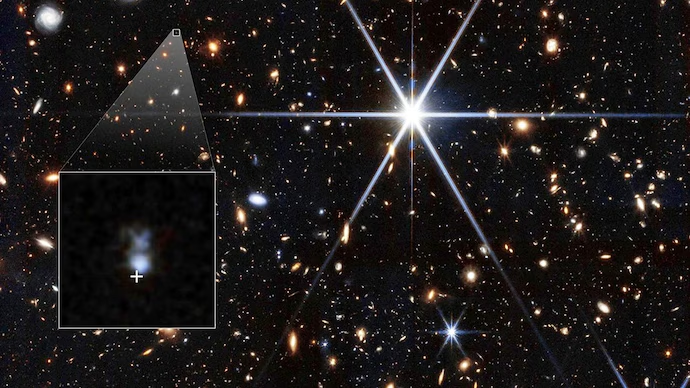
Most Distant Fast Radio Burst Reveals a Surprising Galaxy
BY:SpaceEyeNews. The most distant fast radio burst ever identified has led astronomers to an unexpected home: a tiny galaxy buzzing with star formation. Its radio…
BY:SpaceEyeNews. The most distant fast radio burst ever identified has led astronomers to an unexpected home: a tiny galaxy buzzing with star formation. Its radio…
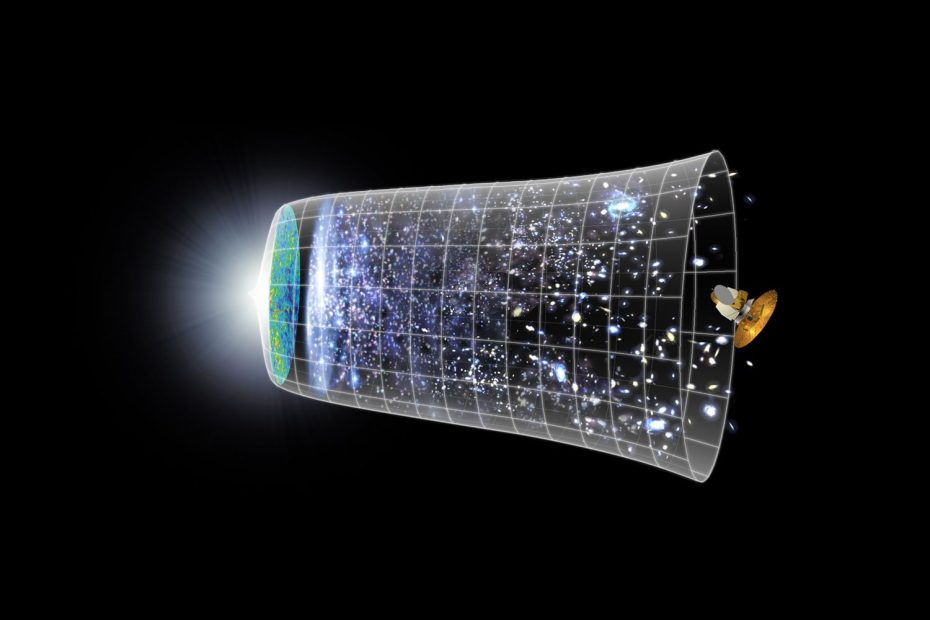
BY:SpaceEyeNews. Cosmic inflation may have lasted only a tiny fraction of a second, yet its possible fingerprints still shape the sky. Researchers have now sharpened…
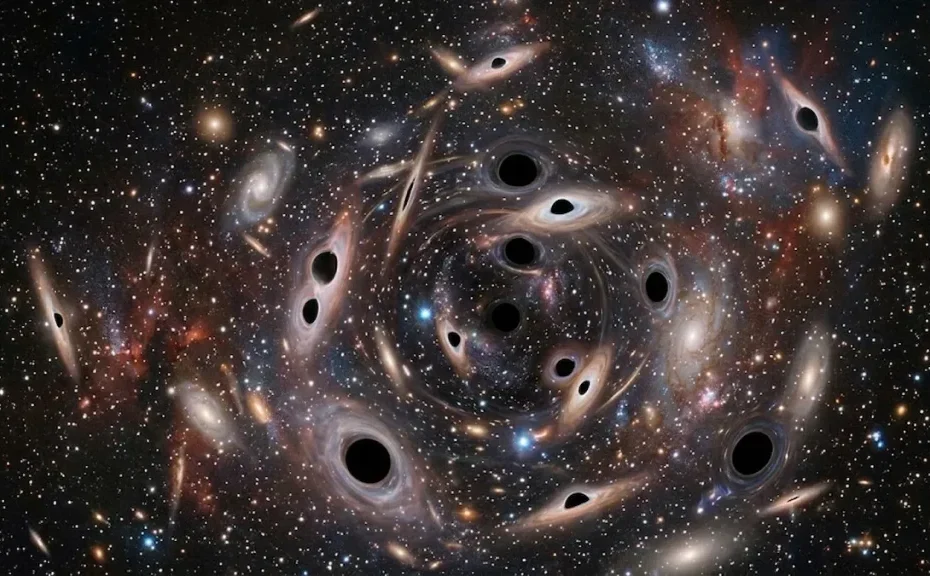
BY:SpaceEyeNews. Primordial black holes could hold clues to a hidden dimension of the universe. New theoretical research explores how an extra spatial dimension might change…
BY:SpaceEyeNews. Relativistic Heavy Ion Collider(RHIC) experiments have revealed an unexpected dip in particle behavior, opening a fresh question about matter under extreme conditions. Scientists studying…
BY:SpaceEyeNews. Tiny magnetic fields from the early universe could help explain the Hubble tension, a stubborn mismatch in cosmic expansion measurements. Their influence may have…
Little Red Dots may reveal how the Universe built its first massive black holes. A new simulation suggests these compact sources contain rapidly growing black…
BY:SpaceEyeNews. Wandering black holes could help astronomers uncover events that shaped galaxies billions of years ago. Their locations may preserve traces of past mergers, while…
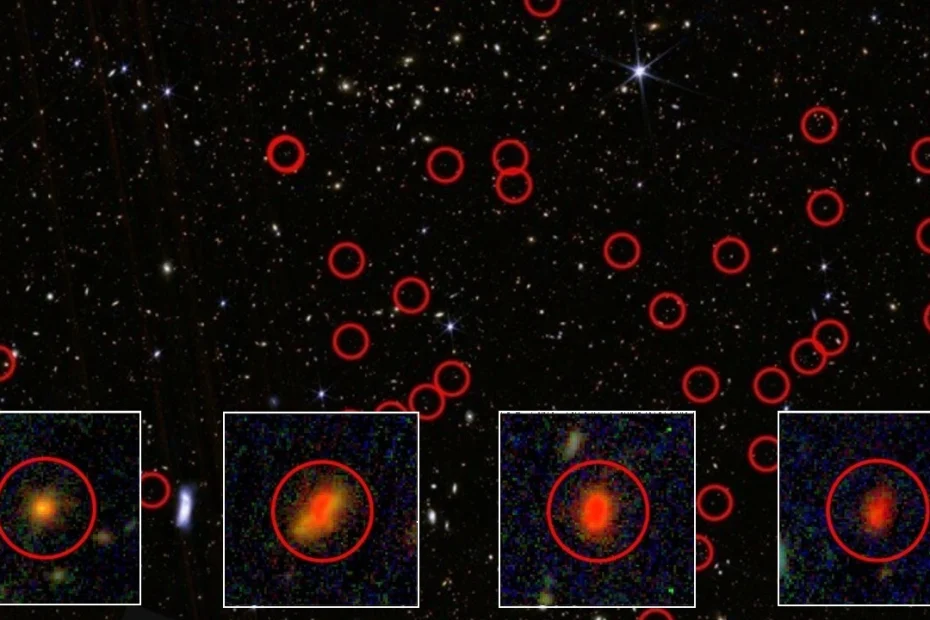
BY:SpaceEyeNews. Little Red Dots may owe part of their mystery to the galaxies surrounding them. Astronomers studying James Webb Space Telescope images have uncovered faint…
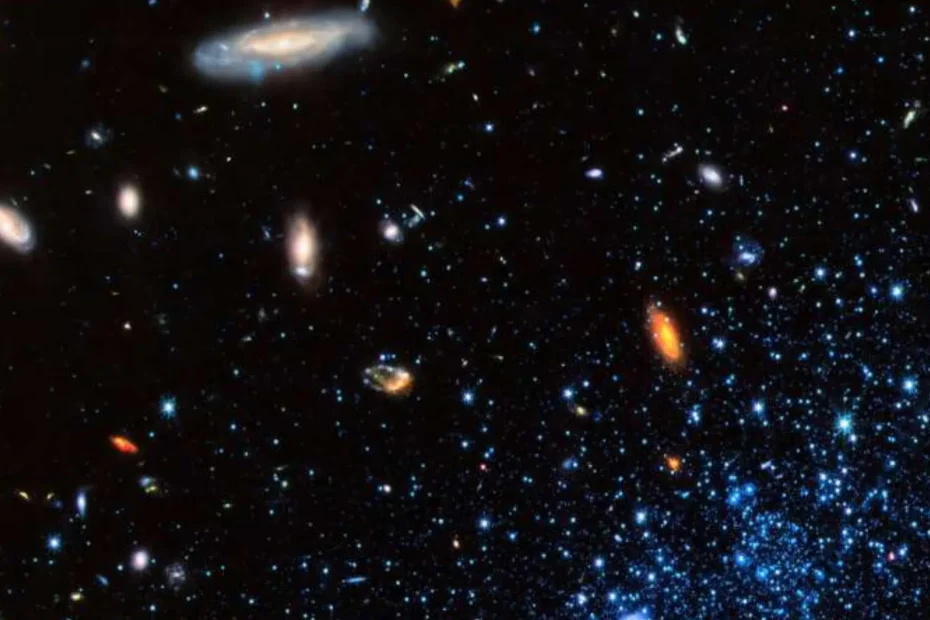
BY:SpaceEyeNews. Primordial helium has given scientists a sharper view of the universe’s first five minutes. An international team has measured its original abundance with approximately…
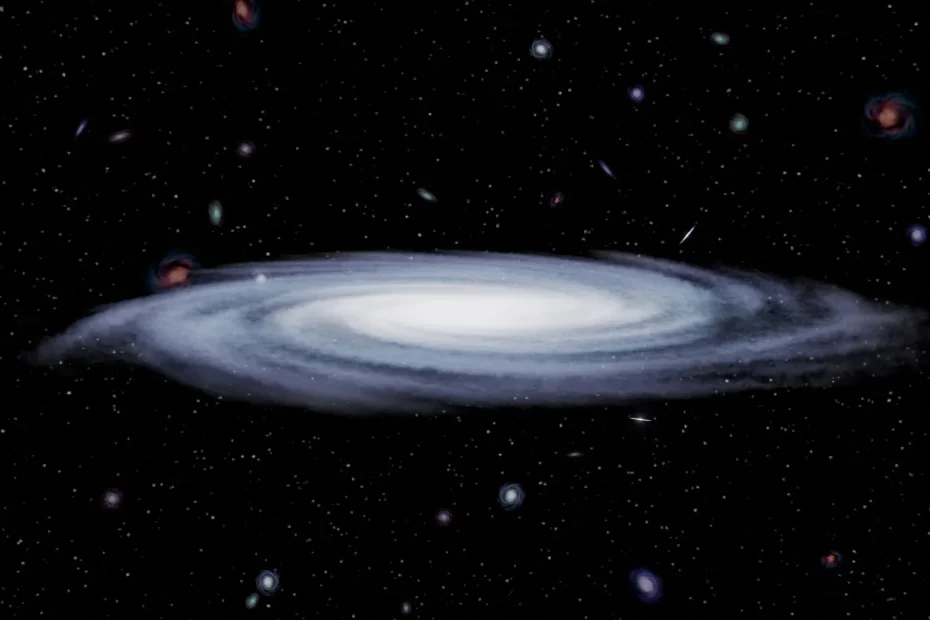
BY:SpaceEyeNews. Oxygen in an early galaxy reveals how quickly the young universe began developing chemical complexity. Astronomers detected the element in JADES-GS-z14-0, a galaxy we…